Custom Pre-Roll Tubes Wholesale: Sizing, CR Laws & Cost Guide
Buying pre-roll tubes in bulk sounds easy until you pick the wrong size or end up with a label that doesn’t meet state rules.
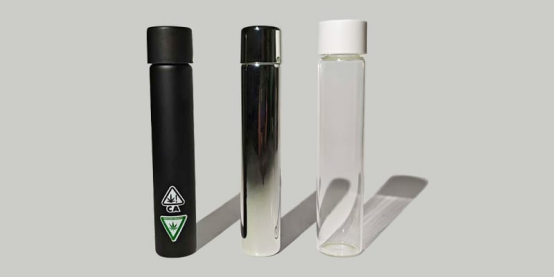
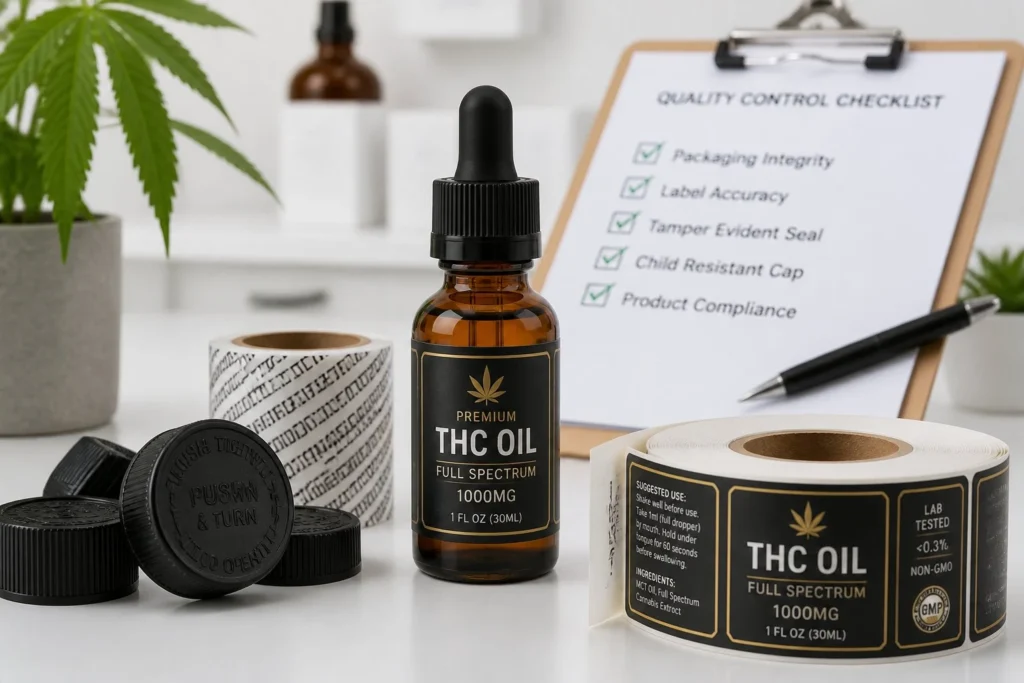
The right custom pre-roll tubes protect your product, keep you compliant with child-resistant (CR) laws, and help your brand actually get noticed in dispensaries.
To get it right, you need to know the sizing charts, material choices, and the printing rules before placing a wholesale order.
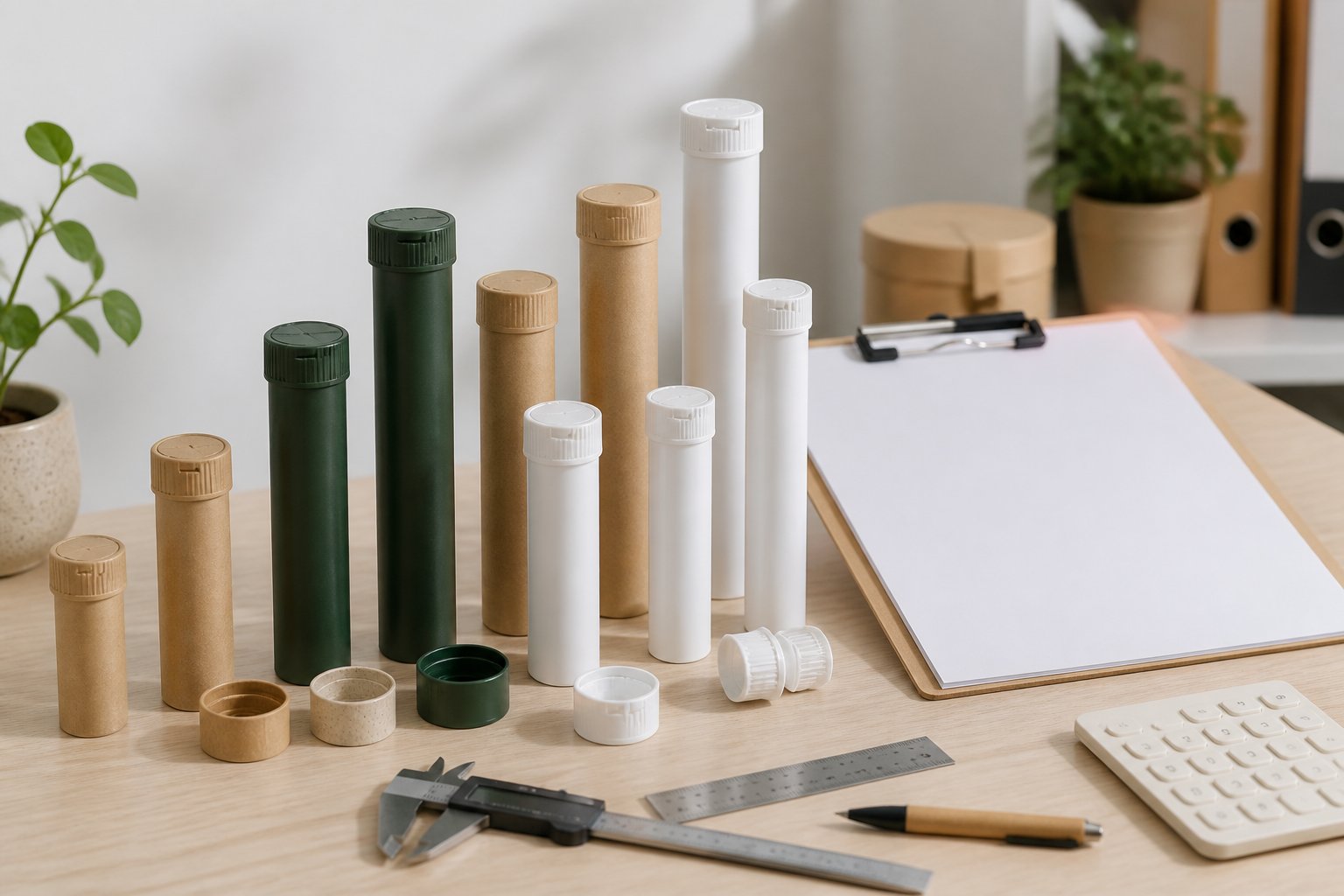
Your packaging is one of the few things a customer physically interacts with before even opening your product.
If your tubes don’t fit your cones, you risk damage, returns, and a look that just doesn’t stack up against other brands.
Custom packaging also gives you a direct shot at building brand recognition. A tube with your logo, your colors, and clear labeling tells people who you are before they read a word.
This guide covers the sizing matrix for matching cones to tubes, material options that balance protection and compliance, and labeling rules to keep your branding both legal and eye-catching.
You’ll also find some practical tips for cutting costs on bulk orders, so you can scale your pre-roll packaging without slicing into your margins.
Key Takeaways
- Picking the right tube size for your cones keeps your product safe and your packaging looking sharp.
- The best packaging balances sturdy materials with CR compliance, so your product stays protected and appealing on shelves.
- Following labeling and printing rules helps you build your brand without risking compliance headaches.
Sizing & Fit Matrix: Matching Your Cones to the Right Tubes
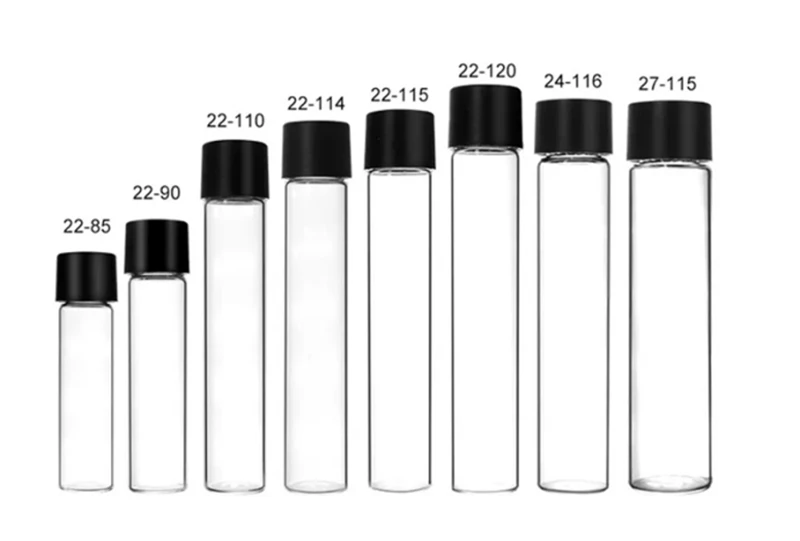
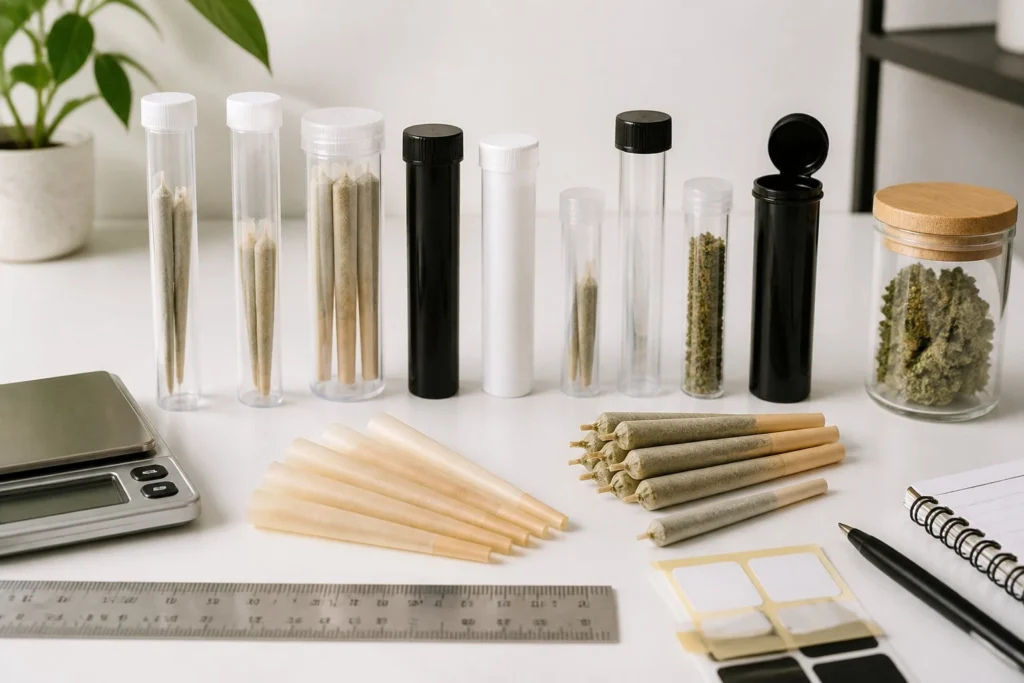
Getting the right tube size depends on your cone length, if you’re packing infused pre-rolls, and how much headspace you need for a tight seal.
Here’s a breakdown of the most common cone-to-tube pairings used in wholesale packaging.
Comprehensive Sizing Breakdown
Always give yourself a small buffer above your cone’s length.
This extra space helps prevent crushing during transport and makes it easier to remove the pre-roll without tearing the paper.
Here’s how standard cone sizes match up with tube sizing:
| Cone Type | Cone Length | Recommended Tube Size |
|---|---|---|
| 84mm cones (half-gram pre-rolls) | 84mm | 98mm tubes |
| 98mm cones | 98mm | 98mm to 109mm tubes |
| 109mm king-size cones | 109mm | 116mm tubes |
| Infused pre-rolls (any size) | Varies | Size up one tier |
For half-gram pre-rolls using 84mm cones, 98mm tubes give you enough clearance without too much empty space.
Standard 98mm cones fit in 98mm tubes, but if you’re using thick papers or extra filters, 109mm tubes give you more wiggle room.
King-size cones at 109mm need 116mm tubes to keep the tip from getting bunched up. You’ll see this size a lot in shops that carry bigger flower formats.
Infused pre-rolls? Go up a size. Oil and kief coatings add bulk, so a bigger tube keeps residue off the walls and makes packaging easier.
Materials & Compliance: Balancing Protection, CR Laws, and Shelf Appeal
Picking the right pre-roll tube means juggling three things: product protection, legal safety standards, and shelf appeal.
Nail this balance, and your packaging strategy just works.
16 CFR 1700.20 Child-Resistant (CR) Compliance
If you’re selling cannabis pre-rolls, your packaging probably needs to meet 16 CFR 1700.20.
This federal rule sets the testing standards for child-resistant packaging in the US.
The rule says your packaging has to pass tests with both kids and adults.
Children in the test group shouldn’t be able to open the package within a set time, while adults have to open and reclose it without too much trouble.
You’ll need CR certification from an accredited lab before you can sell in most states.
This isn’t optional if you’re using pop-top tubes or any kind of child-resistant pre-roll tube for cannabis.
Skipping this step can mean fines, recalls, or even losing your license.
Material Comparison Matrix
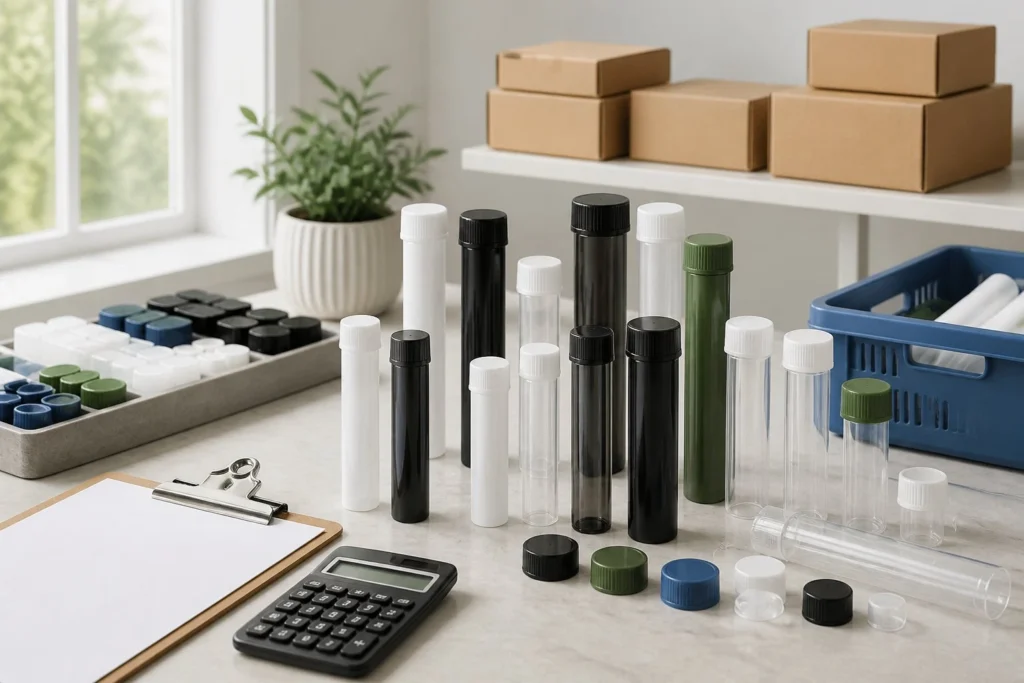
Your material choice affects freshness, cost, and how your product looks to buyers.
Here’s how the most common options stack up:
| Material | Freshness Protection | Cost | Shelf Appeal | CR Compatibility |
|---|---|---|---|---|
| Glass tubes | Excellent (airtight, UV-resistant options available) | Higher upfront cost | Premium, clear appearance | Good with CR closures |
| Plastic pop-top tubes | Good (depends on seal quality) | Lower cost | Standard, functional look | Excellent, widely certified |
| Glass pre roll tubes with CR closures | Excellent | Mid to high cost | High-end feel | Strong, tested designs |
Glass pre-roll tubes usually give the best protection against moisture and light, keeping your product fresh and extending shelf life.
Plastic pop-tops cost less and are easy to source in bulk, but they don’t really match the look and feel of glass.
Regulatory Nuances
CR compliance isn’t the only rule you need to keep in mind.
If your tubes also claim any protective barrier properties, you might need to reference ASTM D3475 standards. These relate to material performance and labeling accuracy for certain packaging.
State laws are all over the place. Some require third-party lab testing on top of federal CR certification, while others accept manufacturer self-certification in some cases.
Check your state’s cannabis packaging rules before you lock in a supplier.
Your suppliers should hand over documentation proving their CR compliance test results.
No paperwork? You’re taking a legal risk that could get your product pulled from shelves. Always confirm compliance details in writing before you place a wholesale order.
Labeling & Direct Printing Rules: Compliance-Friendly Branding
Your branding has to balance looking good with meeting legal requirements for pre-roll tubes.
That means knowing your options for labels versus direct printing, following layout rules, and picking finishes that fit your brand without breaking any regulations.
Custom Labels vs. Direct Printing
You’ve got two main options for branding pre-roll tubes: custom labels or direct printing.
Custom labels are great if you need to update packaging often or want to try different designs.
They’re printed separately and applied to the tube, so you get flexibility for full-color printing and detailed graphics.
Shrink sleeves are a popular label style—they wrap around the whole tube and shrink to fit, covering seams and curves.
Direct printing puts your design right onto the tube’s surface.
This includes screen printing (or silk-screen printing), which works best for simple designs with just a color or two.
Here’s a quick comparison:
| Method | Best For | Turnaround |
|---|---|---|
| Custom labels | Frequent design changes | Faster |
| Direct printing | Permanent branding | Slower |
Layout Design Rules
Your layout needs to leave space for required warning labels and state compliance text.
Most states require this text to stay a certain size and remain unobstructed, so you can’t cover it up with graphics or custom colors.
Plan your design around a clear zone—usually about 25% to 30% of the tube’s surface.
This space holds warnings, batch numbers, and any required QR codes for lab testing.
Keep your logo and brand name in the rest of the space.
Plenty of brands put their logo on one end and compliance text on the other. That way, your branding stays visible and you still meet the rules.
Color matching matters, too. If you use a specific brand color, work with your printer to make sure the shade matches across every batch.
Finishing Options
Finishing options shape how your tubes look and how well they last.
A gloss finish brings a shiny, polished vibe and really pops with bold custom printing. Matte finishes create a flat, understated look if that’s more your style.
Spot UV puts a raised, glossy layer over just certain parts of your design—maybe a logo—while leaving the rest matte. This contrast looks sharp without running up your costs.
Hot stamping adds metallic foil, usually for gold or silver accents. Embossing raises sections of your design so you get a textured, tactile feel.
If you want your tubes to pop on a shelf, try mixing gloss finishes with foil stamping or embossing. You’ll get a premium look without breaking any labeling rules.
4 Strategic Tips to Reduce Bulk Procurement Costs

Cutting your spending on pre-roll tubes wholesale really boils down to four things: how many SKUs you order, which finishing method you pick, how you plan shipping, and how you handle quality before mass production. Nail those, and you can lower your per-unit cost without sacrificing quality.
Tip 1: SKU Consolidation
If you order more SKUs, your average cost per unit usually climbs. Suppliers price based on total volume, so splitting your order across lots of tube sizes and colors can push you under minimums for each variant.
Try to standardize your tube diameter and length across product lines when you can. Selling three strains? Use the same tube size for all, then just swap out the label design.
This way, you combine quantities into one production run and hit better price breaks faster. You also dodge juggling a bunch of different minimum order thresholds.
Tip 2: Match Finishing Method to Order Scale
Screen printing, UV coating, and digital labels all have different cost structures. Screen printing has higher setup fees but gets cheaper per unit at high volumes, so it’s great for big runs.
Digital printing skips the setup fee but costs more per tube, making it ideal for small batches or new launches. If your order is under 5,000 units, digital labeling usually comes out cheaper.
Once you go above that, screen or offset printing often wins on price per unit. Don’t lock in a finishing method until you know your real volume.
Tip 3: Freight & Lead Time Planning
Shipping costs on wholesale pre-roll tubes can get as high as the product cost if you don’t plan ahead. Ordering full container loads instead of partial shipments drops your per-unit freight rate a lot.
Ask your supplier for production and shipping lead times separately. Delays often hit during customs, not manufacturing. Build in a buffer of four to six weeks to protect against stockouts.
Consolidate orders with other packaging—labels, boxes, whatever—into one shipment to save on freight. Try to plan around peak shipping seasons, like right before big holidays, so you don’t get caught paying higher rates during rush times.
Tip 4: Pre-Production Quality Inspection
Skipping sample approval before a big run is a classic way to lose money. A physical sample lets you check tube thickness, cap fit, and print accuracy before you commit to thousands.
Ask for a pre-production sample, not just a digital proof. Colors and materials can look totally different once they’re printed and molded. Make sure the child-resistant closure works right on the sample, since that’s a compliance deal-breaker in regulated markets.
Catching a defect in a sample costs a few days and a small fee. Finding the same problem after a 50,000-unit run? That’s your whole order down the drain.
Conclusion & Call-To-Action (CTA)
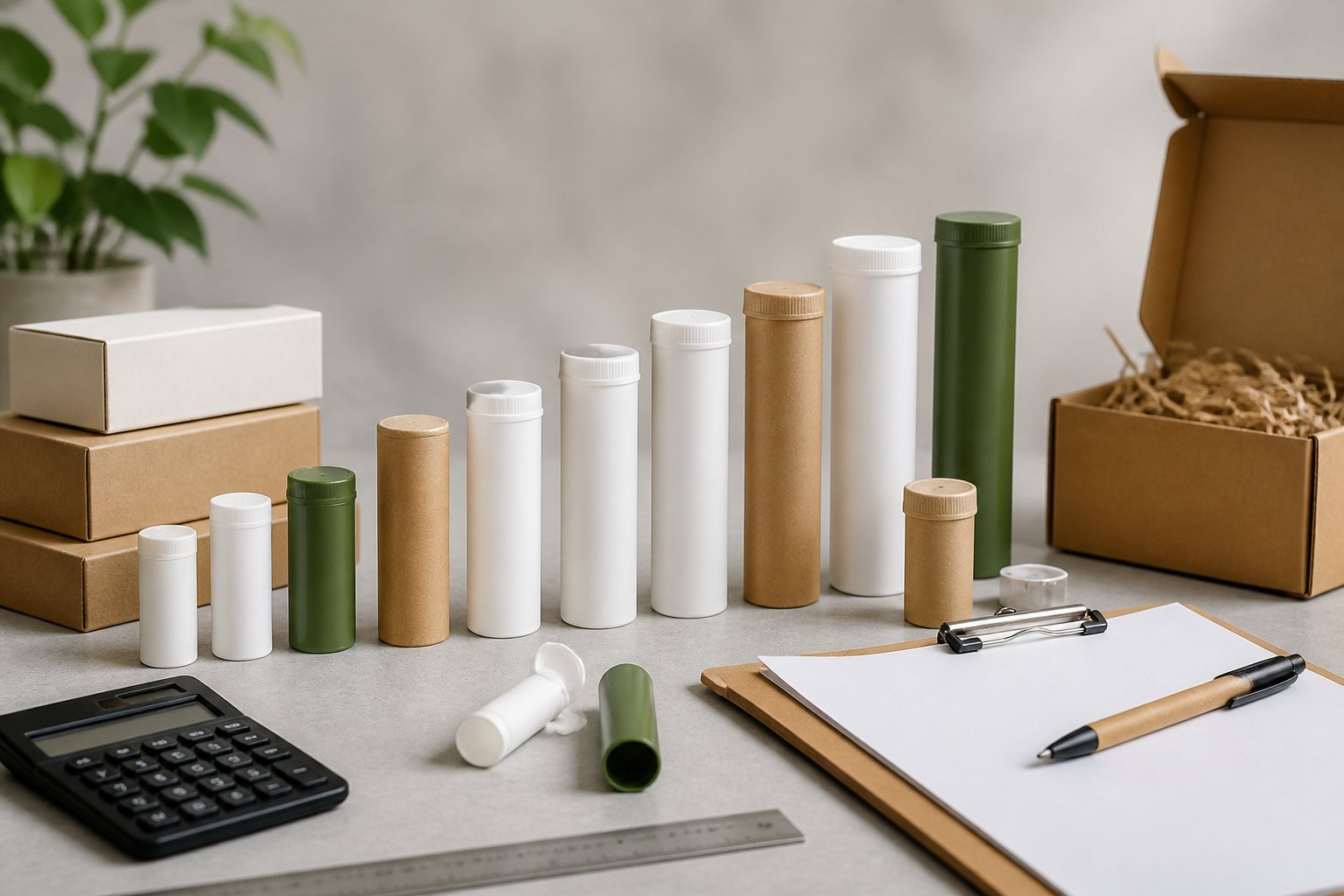
Custom pre-roll tubes do more than protect your product—they help build your brand, too. The right size, material, and safety features keep your tubes practical and compliant.
Before you order, check these:
- Size: Make sure the tube actually fits your product, whether it’s a pre-roll or something else.
- Child-resistant features: Stick to your state’s rules for CR packaging.
- Cost: Compare pricing across a few suppliers to snag the best value.
- Branding: Go for designs that match your product and speak to your customers.
A clear call-to-action button nudges buyers to decide. That same logic works for your own next move.
Your next step:
Request samples from at least two or three suppliers. Compare the materials, fit, and CR mechanism in person. That’s how you dodge expensive mistakes later.
Once you find a supplier who meets your size, safety, and budget needs, place a small trial order. Test the tubes with your real product before you go in on a big purchase.
Packaging shapes how people see your brand. It also decides if you meet legal requirements in your market.
Take the time now to pick tubes that fit your product and your business. A smart decision today can save you time, money, and compliance headaches down the road.
Frequently Asked Questions
Buyers looking at custom pre-roll tubes usually have questions about sizing, child-resistant compliance, costs, and branding options. Here are straight answers to the most common ones.
What are the standard sizes for pre-roll tubes?
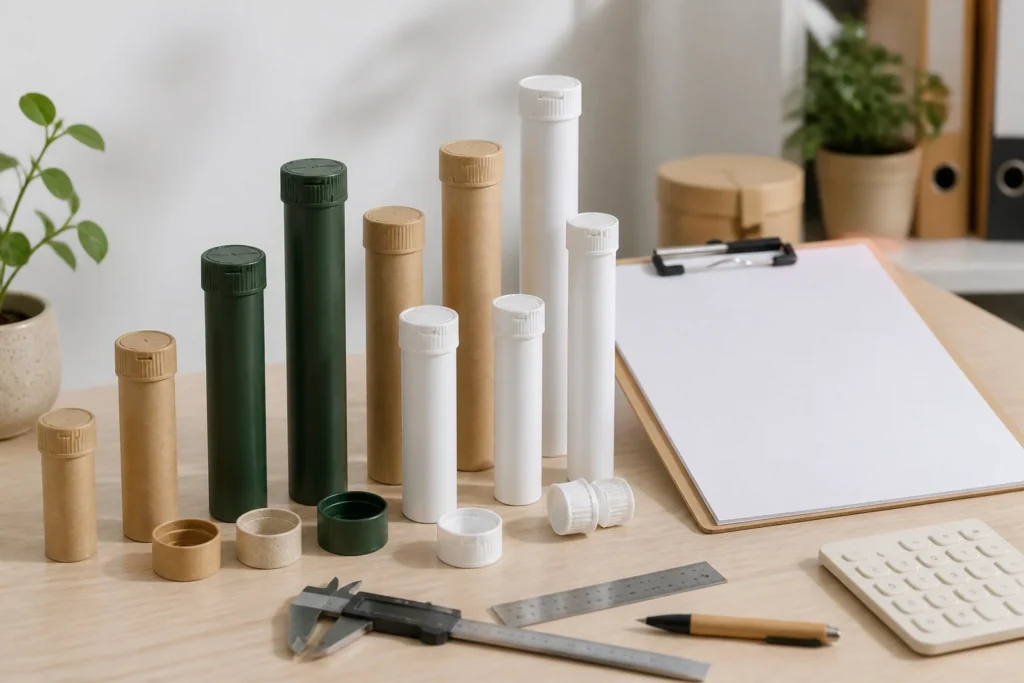
Most pre-roll tubes fall into a handful of common lengths. Standard options include 3 inches for mini pre-rolls, 3.5 inches for singles, 4 inches for slightly bigger singles, and 5 or 6 inches for king-size or multi-packs.
Diameter counts, too. Tubes usually run from 12mm to 19mm wide, depending on the thickness of your pre-roll.
Some brands want custom lengths outside those ranges, but that usually bumps up tooling costs and minimum order quantities.
How do I choose the right tube size for single, multi-pack, or king-size pre-rolls?
First, measure your actual product—don’t just guess. A single 0.5-gram pre-roll fits fine in a 3-inch tube, but a 1-gram joint often needs 3.5 or 4 inches.
For multi-packs, factor in the combined width of all the joints lined up, not just the length. King-size pre-rolls, which are longer and sometimes thicker, usually need 5 to 6-inch tubes with a wider diameter so they don’t get crushed in shipping.
Always order sample tubes before you go big. That way you can double-check the fit, the seal, and how your label looks in real life.
Are custom pre-roll tubes required to be child-resistant?
In most legal cannabis markets, yep. Any packaging meant for retail cannabis has to meet child-resistant standards before it hits the shelf.
This rule applies no matter the tube’s material, size, or branding. You can have fully custom-printed tubes, but they still need to pass CR testing to be legal.
Some places make exceptions if products go into child-resistant exit bags at checkout, but that varies by state.
What child-resistant packaging laws apply to pre-roll tubes in different markets?
In the U.S., the baseline is the Poison Prevention Packaging Act, tested under 16 CFR 1700.20. States add their own rules on top, and the details change depending on where you’re selling.
California follows Bureau of Cannabis Control rules, with tests for both child access and senior-friendly use. Colorado, Washington, and Michigan have their own certification processes, and some require third-party lab checks before you can sell a design.
Canada regulates under the Cannabis Act, with CR requirements set by Health Canada. If you’re selling in multiple states or countries, you’ll probably need separate CR certifications for each one—approval in one place doesn’t automatically transfer to another.
Businesses trying to juggle cannabis packaging rules with state-specific delivery method regulations often find packaging compliance and product delivery format go hand in hand—both affect what you’re legally allowed to sell.
What factors affect the wholesale cost of custom pre-roll tubes?
Order volume is the big one. Larger minimum orders bring down your per-unit price, while small custom runs cost more per tube.
Material matters, too. Plastic tubes are usually cheaper than glass or metal, and adding child-resistant mechanisms bumps up the cost compared to basic pop-tops.
Printing complexity plays a role. A simple, single-color label is cheaper than a full-wrap, multi-color design with foil or embossing.
Tube size and wall thickness also matter. Thicker walls for shipping durability add material cost, and non-standard sizes can mean extra tooling fees.
Can custom pre-roll tubes be printed with a logo, brand colors, and compliance information?
Absolutely, you can print custom pre-roll tubes with your logo and brand colors. Most manufacturers make full customization pretty straightforward, letting you add things like warning labels, THC content, or even batch numbers.
The printing method depends on the material. Plastic tubes usually get screen printing or shrink sleeves.
Paperboard tubes, on the other hand, can use direct offset printing, which gives sharper detail. It’s honestly impressive how crisp those graphics can look.
Compliance info has to stay clear and easy to read. State regulators often set rules for minimum font sizes, so brands really need to double-check those before signing off on artwork.
If you miss something and fail a label inspection, your launch might get delayed. Nobody wants that kind of headache.