The Practical Guide to Custom Pre-Roll Tubes: Sizes, Materials and Closures
The right pre-roll tube should do more than look good on a shelf. It needs to fit your finished product, work smoothly on your packing line and leave room for the information your market requires.
Whether you are launching a new product or replacing an existing package, this guide will help you compare sizes, materials and closures. You will also find a practical fit example and a short checklist to help you request the right samples.
Already have a tube in mind? Send your specifications to YPC to discuss your project and request a quote. If you are replacing an existing package, a photo or drawing can help us understand what you need.

Start with the measurements that matter
Before comparing tubes, measure a finished pre-roll just as it comes off your production line. Include the filter and closed tip, and check the widest part of the product.
Then look beyond the tube’s outside dimensions. The opening, the base and the cap all affect how much space your pre-roll actually has inside.
| Specification | What it means for your order | Ask the supplier for |
| Finished pre-roll length | Product length after filling and tip closure | Measurement method and representative maximum |
| Usable internal length | Space available when the selected cap is closed | Drawing and closure intrusion |
| Opening inner diameter | Smallest entry through which the product must pass | Minimum opening including manufacturing tolerance |
| Body inner diameter | Space available once the product is inside | Minimum body diameter and internal shape |
| Neck finish | Geometry required to match the closure | Full neck drawing and approved cap model |
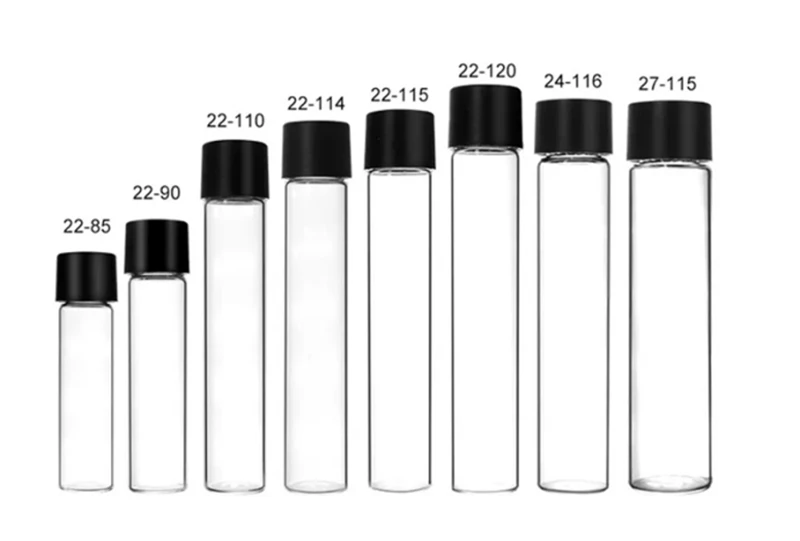
Use the pre-roll tube sizing guide for an initial comparison, then test the tube and cap with your own finished pre-rolls. If your product requires child-resistant or tamper-evident packaging, check those functions separately. Neither one, by itself, tells you how well the package controls moisture or odor.
Which pre-roll package is right for your product?
| Configuration | Best starting use | Confirm before ordering |
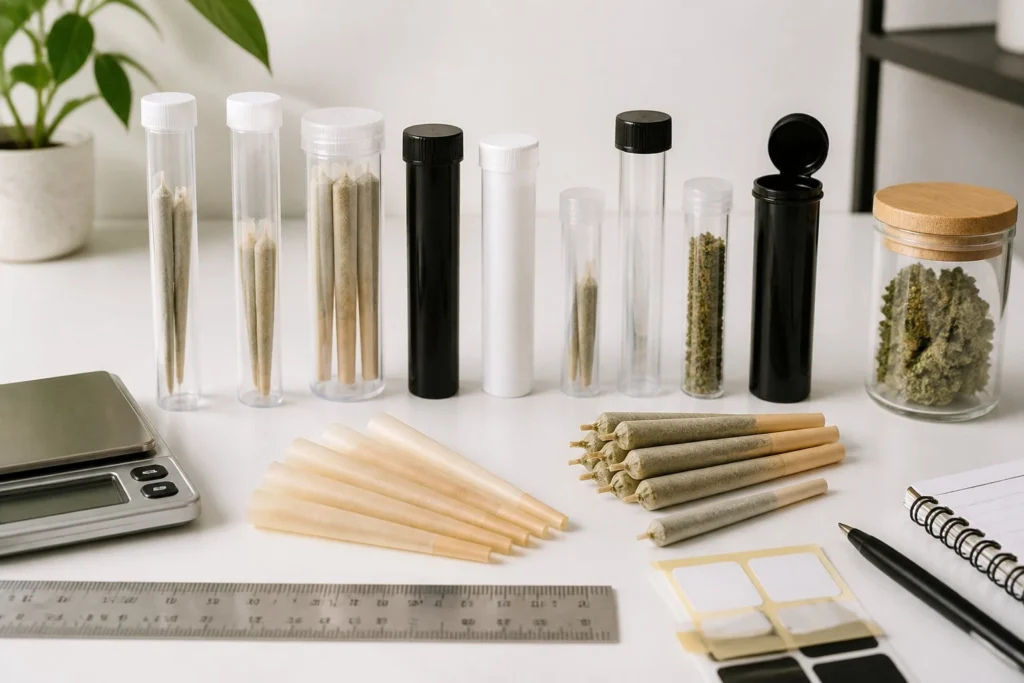
| Short glass tube | Compact single pre-roll | Usable length after cap intrusion; opening ID; label panel |
| Long glass tube | Longer finished pre-roll | Tip clearance, excess movement, exact closure fit |
| Wider glass format | Thicker or infused product | Maximum finished diameter, residue, loading and removal |
| Glass multipack jar | Multiple finished products | Arrangement, movement, closure, pack count and label area |
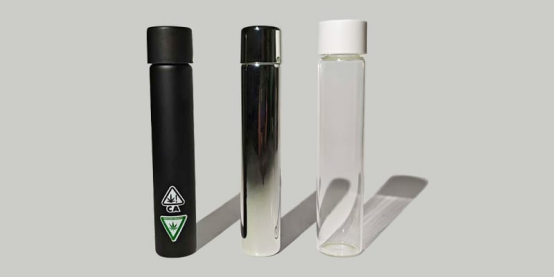
YPC lists several glass pre-roll tubes and multipack jars, including a 22 × 84 mm glass tube. These listed sizes are a useful place to start, but they are not a guarantee that your product will fit. Ask for the internal dimensions and drawing for the particular tube and cap you are considering.
Not sure which configuration fits your product? Share the finished length, maximum diameter and target market so the packaging team can discuss suitable samples.
Three common mistakes to avoid before ordering
Choosing a tube by its outside length
A tube listed as 116 mm long may have less than 116 mm of usable space once the cap is closed. The base also takes up room. Measure your finished product and ask for the tube’s internal dimensions before you order.
Measuring the body but overlooking the opening
A pre-roll may have plenty of room inside a tube and still catch at the neck. Check that its widest point can pass through the smallest opening, then try representative samples using your normal loading process.
Assuming a compatible-looking cap is enough
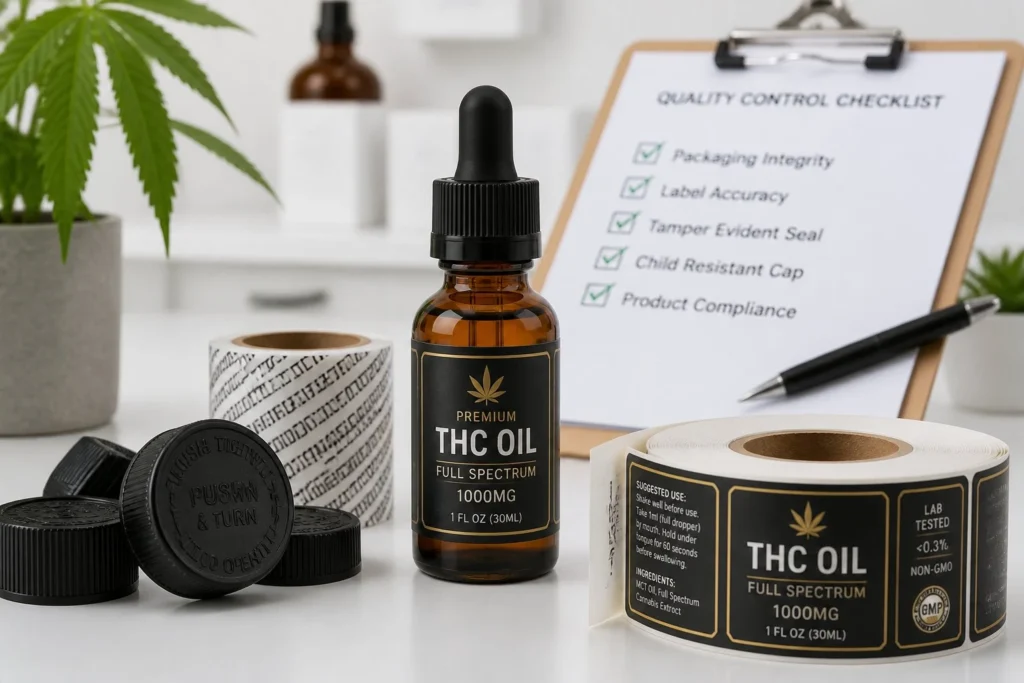
Caps that look alike may have different threads, and a test report for one package does not automatically cover another. Review the tube, cap and any seal together against the requirements in your target market. A tamper-evident band can show that a package has been opened, but it does not make the package child-resistant.For the approved package, discuss inspection and acceptance criteria with the supplier. YPC describes its glass, decoration and closure checks on its quality-control page; confirm which checks apply to your order.
A simple example: checking the fit
Suppose your finished pre-roll measures 108 mm long and 10.5 mm at its widest point. You are considering a sample tube with 114 mm with its closure fitted and a minimum opening inner diameter of 12.0 mm. The numbers are hypothetical and do not describe a specific YPC product.
Axial clearance = 114 − 108 = 6 mm
Diametral clearance = 12.0 − 10.5 = 1.5 mm
On paper, that leaves 6 mm of space along the length and a 1.5 mm difference between the opening diameter and the widest part of the pre-roll. The 1.5 mm is the total diameter difference, not the space on each side.
These figures help you compare a sample, but they are not a universal fit standard. Variations in the finished product, tube and loading position can all affect the result.
Check samples at the limits of your production tolerances, then test how they load, close, travel and come out of the tube. Choose your final configuration only after those checks. Send the measurements and a drawing if you need to discuss a sample.
Choosing a material and finish
| Option | Useful consideration | Trade-off to verify |
| Clear glass | Product visibility and rigid presentation | Light protection, breakage and transport packing |
| Amber or coated glass | Appearance and potential light screening | Actual transmission data, coating and label requirements |
| Plastic | Light weight and impact behavior depend on resin/design | Barrier, closure, material specification and destination requirements |
| Paperboard or metal | Alternative look or light shielding | Closure design, internal protection, documentation and supply |
Once you have a suitable tube, consider how much of the design needs to change between products or markets. Labels can make variable information easier to update, while direct printing may suit a design you plan to reorder regularly.
Ask to see a proof on the actual tube. Compare setup and application costs, order quantity and the risk of being left with outdated packaging before making a decision.Review cannabis packaging and decoration options and agree on which finish is available for the exact model. A color, label or seal must not obstruct required copy, barcode scanning or closure operation.
When your product needs a closer look
- Infused or wider products: measure the widest finished point, including any coating or wrap, and assess residue on the opening and label.
- Multipacks: test the actual count and arrangement; products can wedge or rub even when their combined theoretical volume fits.
- Replacement tubes: compare opening, internal length, full neck finish, cap, label panel, case pack and filling-line handling. Reassess the completed package when any component changes.
- Market-specific rules: confirm applicable packaging, child-resistance, opacity, warning and language requirements for each product and sales jurisdiction. Canada and individual US states have their own rules; there is no universal global certificate.
Where relevant, review the Health Canada packaging guide or your destination regulator’s current instructions. Ask for test documentation that identifies the actual container and closure configuration and scope. Do not rely on a cap photograph or an unsupported claim of automatic compliance.

What to include in your quote request
You do not need a finished specification to start a conversation. The following details will help your packaging partner understand your product and suggest the next steps:
| Information | Your project |
| Finished product | Length, widest diameter, count per pack and product variation: ______ |
| Package and closure | Tube or jar, material, finish, closure, existing drawing or sample: ______ |
| Sales markets | Countries/states, category, CR, tamper evidence and label requirements: ______ |
| Customization | Color, label or print, artwork, SKU count and required label area: ______ |
| Commercial plan | Quantity, destination, target delivery date, documentation and sample needs: ______ |
Ready to find the right tube? Share your project details with YPC. If you are replacing an existing tube, a photo or drawing of the tube and cap is a helpful starting point. The final combination should still be checked for fit and the requirements of your market.
Q1 What size tube fits my pre-roll?
A: Start with the length and widest point of your finished pre-roll. Compare those measurements with the usable internal length and opening of the tube with its intended cap, then confirm the fit with a physical sample.
Q2 Is every pre-roll tube child-resistant?
A: No. Some tubes use child-resistant closures, while others do not. Ask for documentation covering the complete tube and closure, and check the requirements for your product and sales market.
Q3 Can a cap from another tube be reused?
A: Possibly, but first check the complete neck finish and physical fit. If child resistance is required, the applicable test documentation must also cover the new combination. The same nominal diameter alone is not enough.
Q4 Is a label or direct print better for custom orders?
A: It depends on your order size and how often the information changes. Labels can offer flexibility; direct printing may work well for a consistent design. Ask for quotes and samples of both on the tube you intend to use.
EDITOR NOTE: Google removed FAQ rich results from Search in 2026. The visible Q&A remains useful for readers; FAQPage markup is optional for other consumers and should not be represented as a way to obtain Google FAQ rich results. Source: Google Search Central updates. No guarantee of free engineering review, response time or certification is made without company confirmation.