How to Lower Total Costs When Ordering Custom Pre Roll Tubes in Bulk
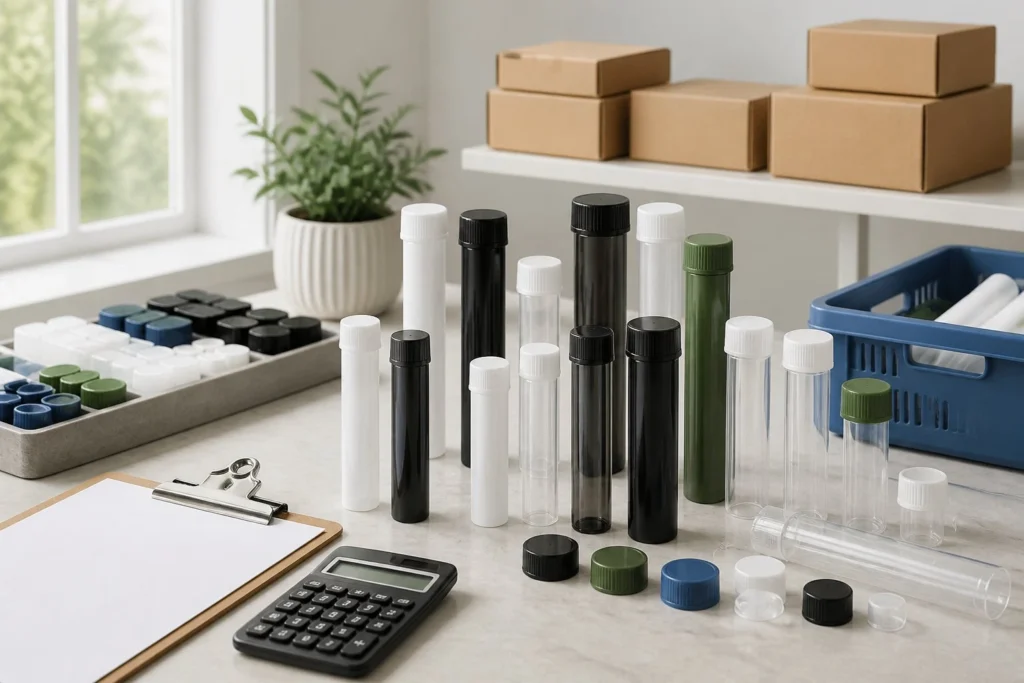
Buying custom pre-roll tubes in bulk can reduce the price per package, but the lowest quoted unit price is not always the lowest total cost. A tube that does not fit the finished pre-roll, a decoration method that forces excess inventory, or a closure that is not suitable for the destination market can create rework, delays and write-offs that outweigh an initial saving.
The most useful approach is to treat the tube, closure, label, carton and delivery plan as one packaging system. Start with the completed pre-roll and the sales market, then compare the total landed and operating cost of a small number of workable specifications.This guide helps cannabis brands, co-packers and packaging buyers make that comparison before a bulk order. It does not replace legal or regulatory advice for a specific product or market.
What determines the total cost of custom pre roll tubes
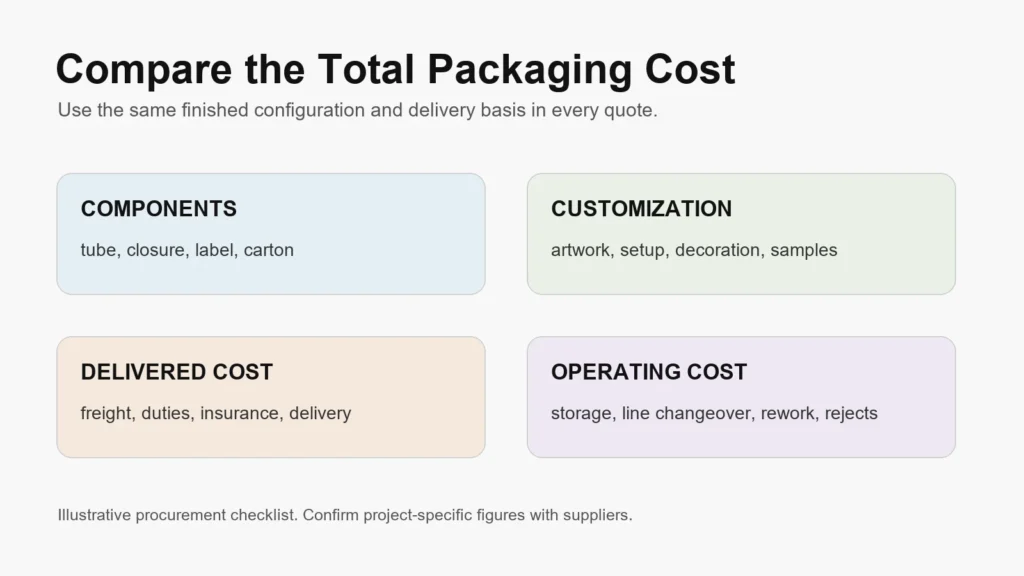
The invoice price is only one part of the cost. A useful comparison includes:
- tube and closure price;
- tooling, setup, artwork and decoration charges;
- sample and testing costs;
- freight, duties, insurance and delivery charges where applicable;
- case quantity, warehouse space and inventory carrying cost;
- labor or equipment changes for filling, closing and labeling; and
- the cost of rejects, rework, obsolete artwork or an urgent replacement order.
A lower-cost tube can become expensive if it slows the packing line, breaks in distribution or has to be relabeled. Ask suppliers to quote the same finished configuration and delivery basis so that comparison is meaningful.
1 Choose the tube around the finished pre roll before customizing it
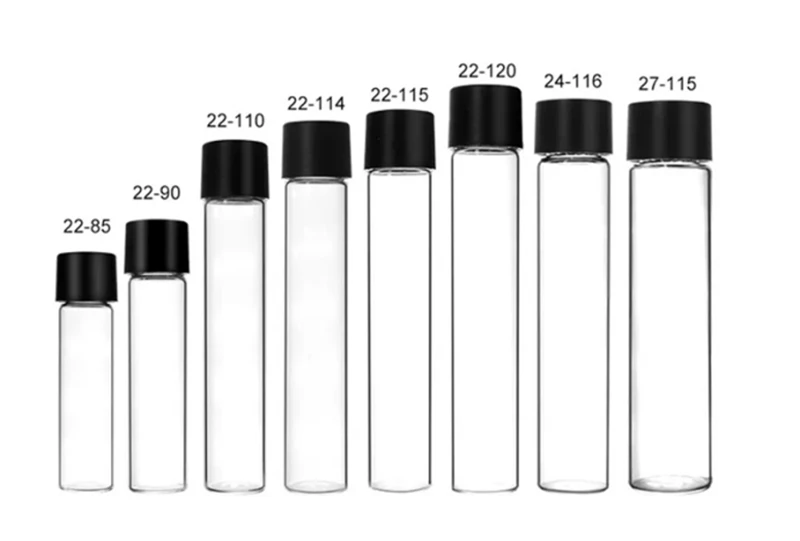
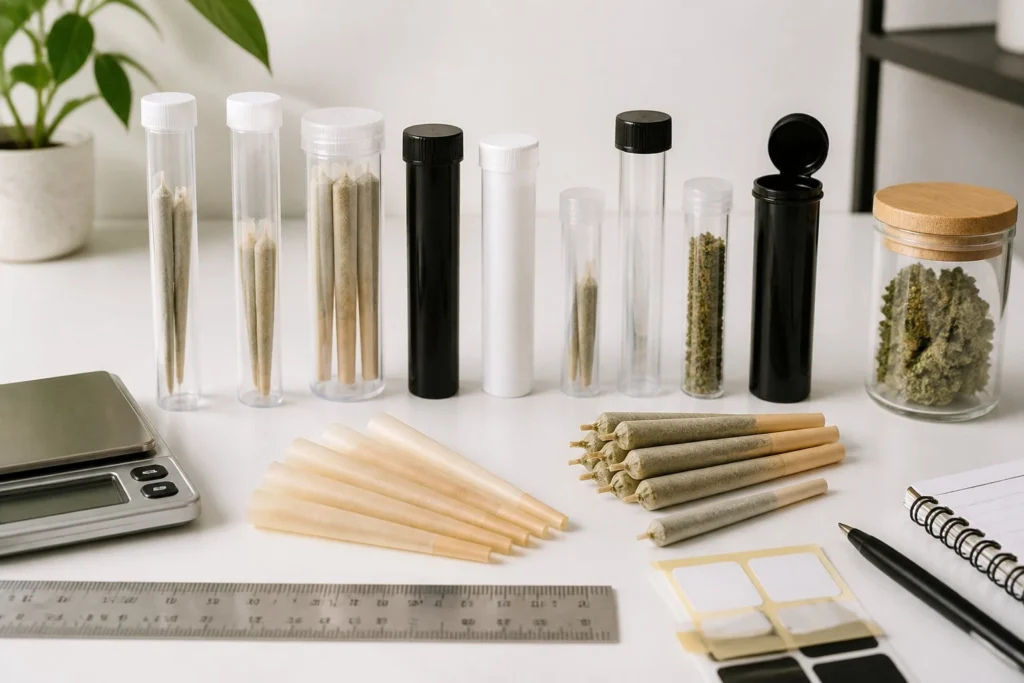
Do not select a tube only from a nominal length in a catalog. Measure a fully finished pre-roll from the end of the filter or crutch to the closed tip, and measure its widest point. Filling density, taper and the way the tip is closed can change the final dimensions compared with an empty cone.
The most useful supplier dimensions are usable internal length, internal diameter, cap or closure intrusion, overall exterior size and wall thickness. A tube can look long enough from the outside while the closed cap reduces the space available inside. Likewise, a tube that is too wide can allow unnecessary movement during handling.
Order samples and test the actual finished product in the exact tube and closure combination. Check loading and removal, tip clearance, product movement, closure operation, label location, case packing and how the pack performs after transport. This small step can prevent an expensive bulk order that does not work on the production line.
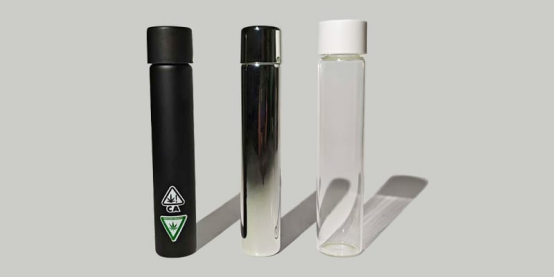
For a starting point, YPC’s pre-roll tube range includes single-joint glass tube formats and wider glass jars for multipacks. Confirm the usable internal dimensions and the approved closure for the selected SKU rather than treating a general size description as a fit guarantee.
2 Match the customization method to your volume and SKU plan
Decoration should fit the amount you expect to buy and the frequency with which compliance information or product variants change. There is no printing method that is always least expensive.
| Approach | Often useful when | Cost and operations to compare |
| Stock tube with a pressure-sensitive label | Launches, short runs, variable data or frequent artwork changes | Lower commitment to decorated tube inventory; label application, label stock and changeover time remain part of the cost |
| Direct screen or pad printing | Stable artwork and repeatable, higher-volume programs | Setup, color count, print area, approved color standard and the cost of an obsolete printed tube |
| Shrink sleeve or full-body label | A broad graphic area is needed on a cylindrical pack | Sleeve material, application equipment, seam position, opening instructions and recyclability considerations |
| Foil, coating or other premium finish | A defined premium line where the finish supports the product position | Added process, approval time, yield risk and whether the finish affects required copy or scanning |
Start with the information that must be variable: batch data, market-specific warnings, cannabinoid information, SKU name, barcode or language. If it changes often, a label or a designated variable-data area may create less obsolete packaging than direct printing every detail onto the tube.
Use direct decoration for stable brand elements only after the volume and artwork have been proven. Ask for a production proof on the actual tube surface, not only a flat digital mockup. Curved surfaces, cap overlap and the opening mechanism can affect what remains legible after application.
3 Reduce complexity before increasing quantity
Larger orders can lower the per-unit price, yet excess inventory ties up cash and becomes a loss if a regulation, design or product format changes. The decision should compare the saving from the larger quantity with the cost of carrying and potentially writing off the additional stock.
Begin with an order quantity based on actual monthly consumption, the supplier’s confirmed lead time, expected transit time and a documented buffer for variability. Do not use a generic eight- or ten-week rule as a substitute for these inputs.
Then look for complexity that can be removed without changing the customer-facing product. Common examples include:
- standardizing one tube diameter across compatible single-pre-roll SKUs;
- using one neutral tube color with SKU-specific labels;
- sharing a cap style only where the complete tested package remains the same;
- consolidating duplicate artwork and carefully planned color variants; and
- ordering generic components in larger quantities while ordering variable labels closer to demand.
This is often more valuable than negotiating a few cents off an over-customized item. It also makes storage, line setup and repeat purchasing easier to manage.
If a supplier offers stock holding or scheduled releases, compare the written terms, storage responsibility, release quantities, artwork ownership and what happens to remaining inventory. A release program is valuable only when it aligns with your forecast and the components do not become obsolete.
4 Choose material and protection for the actual supply chain
Material selection should be driven by product protection, pack format, handling and brand goals, not by a blanket claim that one material is always best or always cheapest.
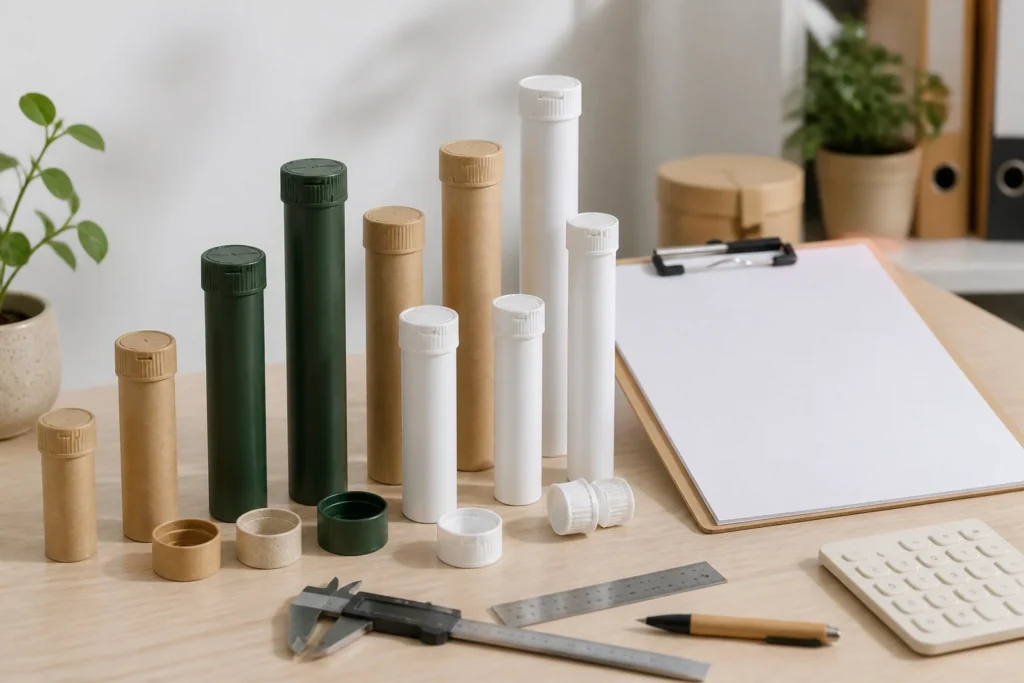
Plastic tubes are commonly used where low weight and impact resistance are priorities. Glass can support a premium presentation and a rigid barrier, while it requires a careful review of transport weight, breakage exposure and case separation. Paperboard, tins and secondary cartons can add protection or display value but also add components and assembly steps.
For each option, compare the complete shipment rather than the empty tube alone. Ask for the packed case dimensions, gross weight, units per case, pallet pattern and protective packing method. A heavier component may increase freight and handling cost; a lighter package may still require secondary protection if it does not survive the distribution route.
Environmental claims also need evidence for the actual material and destination. Recycled content, recyclability and compostability are not interchangeable claims, and local collection systems vary. Ask what claim can be substantiated for the exact SKU, decoration and closure instead of choosing a material based only on a general sustainability label.
5 Confirm compliance and product performance before bulk production
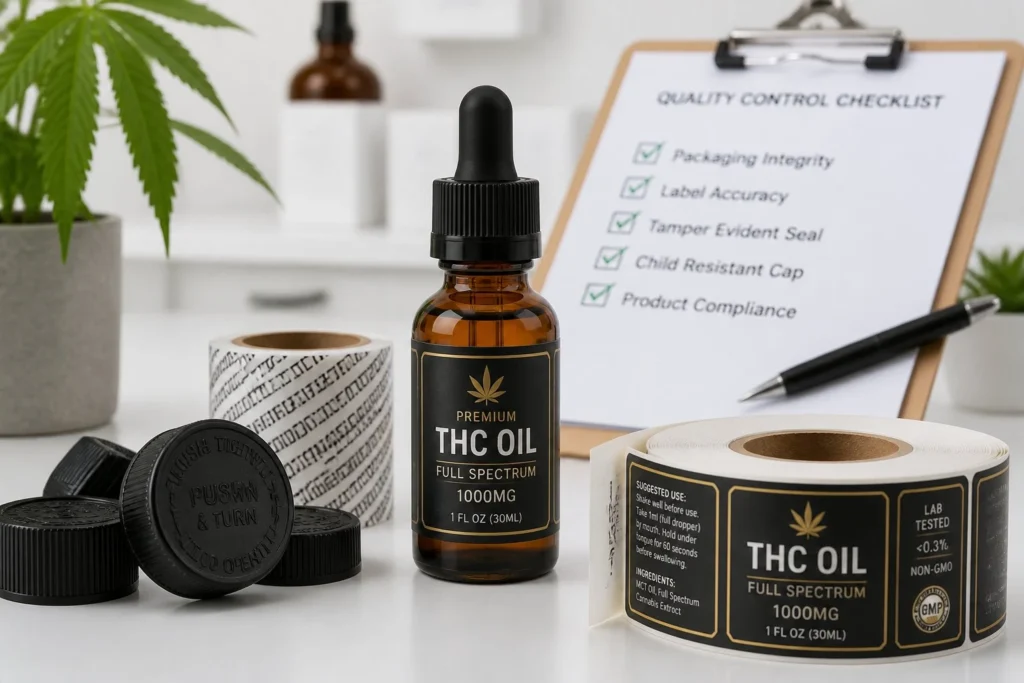
Child resistance, tamper evidence and package integrity are separate functions. A tamper-evident band or label can show that a package was opened, but it does not automatically make the tube child-resistant. A tube marketed as child-resistant must also be assessed as the complete, specified package in the target market.
Requirements differ by product category and jurisdiction. For example, Health Canada states that cannabis products must be packaged in a child-resistant container and carry specified label information. California’s Department of Cannabis Control identifies separate child-resistant packaging requirements that include pre-rolls. These examples are not a global checklist.
Before approving an order, identify the destination market and have the responsible regulatory and quality teams confirm the applicable requirements. Request documentation for the exact closure and packaging configuration, including the model, dimensions, material and test scope. Do not rely on a certificate for a similar cap, an untested decoration change or a different tube size.
Use a sample and pre-production approval plan that checks:
| Check | What to verify |
| Fit and handling | Finished product loads, removes and closes without crushing, binding or excessive movement |
| Closure function | The approved cap matches the tube neck and operates correctly across the intended use cycle |
| Artwork | Required information is legible, positioned correctly and does not interfere with opening or scanning |
| Package performance | The filled and labeled pack withstands the expected storage, case packing and transit conditions |
| Documentation | Material, closure and applicable compliance evidence match the ordered configuration |
| Production readiness | Filling, capping, labeling and inspection steps work with the selected components |
YPC’s quality-control information describes checks for items such as glass defects, dimensional specifications, decoration and closure performance. For a specific project, agree in writing on the acceptance criteria, sampling method and documentation required before production begins.
6 Plan the calendar and logistics as early as the artwork
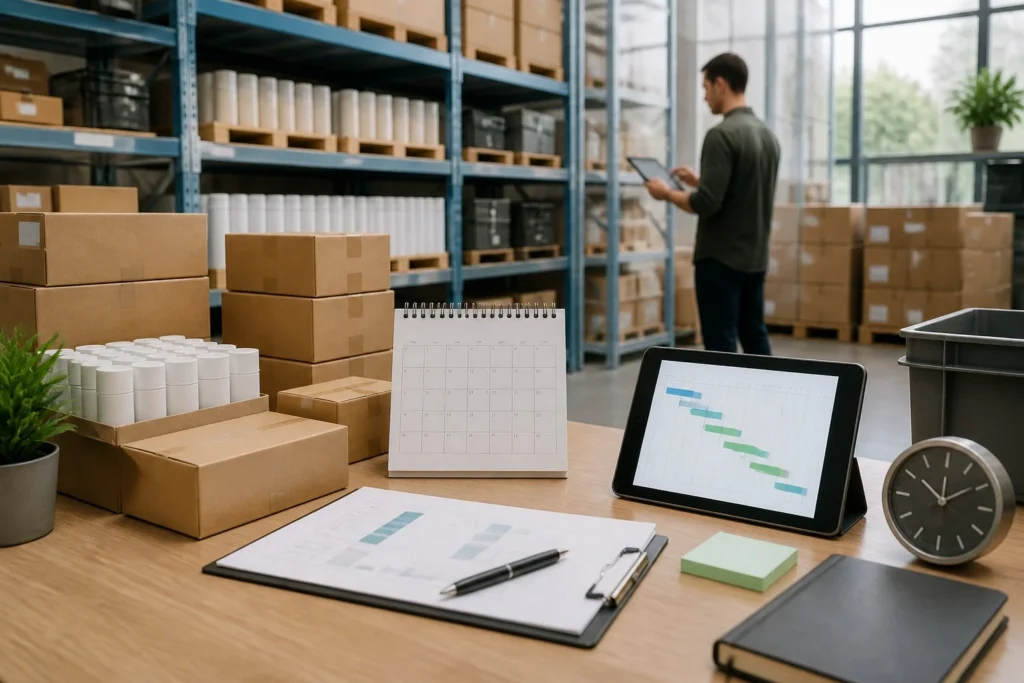
Illustrative bulk-planning scene. Actual production, transport and delivery timing must be confirmed for each order.
Custom packaging timing is not only factory production time. It can include specification confirmation, artwork revisions, proof approval, samples, testing, raw-material availability, production, inspection, packing, booking, freight, customs clearance and final delivery.
Build the project schedule backwards from the required in-market date. Ask each supplier to separate the steps in writing, identify which dates depend on your approval and state the delivery terms. A quoted production window does not necessarily include transport or the time needed to resolve an issue found in a sample.
Set a reorder trigger from consumption and the confirmed end-to-end replenishment time. Review it after the first few orders, because actual usage, seasonal demand and delivery performance may differ from the original forecast. This prevents the common false economy of paying for expedited transport to rescue a late order.
For international purchasing, agree on the Incoterm, import responsibility, destination delivery point and who provides the documents needed for clearance. Compare freight on packed case or pallet data rather than an estimate based only on individual tube weight.
What to send in a request for quotation
A clear request reduces revisions and makes supplier quotes comparable. Include:
- finished pre-roll length, maximum diameter, count per pack and target format;
- the preferred tube or jar, material, color and closure;
- destination market and product category;
- child-resistant, tamper-evident and labeling requirements confirmed for that market;
- decoration method, artwork status, number of SKUs and variable-data requirements;
- required label panel, barcode area and any required warnings or languages;
- expected order quantities and annual forecast where available;
- sample, pre-production, quality-control and documentation requirements;
- requested delivery date, destination, Incoterm and freight preference; and
- whether you need only components or a complete tube, closure and decoration program.
This information helps a packaging partner recommend a workable configuration instead of quoting an incomplete specification that changes later.
Frequently asked questions
Does a larger bulk order always lower the total cost
It may lower the unit price, but it can increase cash tied up in inventory, warehouse space and the risk of obsolete tubes or artwork. Compare the total saving with the cost and risk of holding the additional units.
Is direct printing cheaper than using labels
It depends on quantity, color count, artwork stability, application equipment and how often information changes. Labels can reduce commitment to decorated tube inventory; direct printing can suit stable, repeat programs. Request comparable quotations for the same completed pack.
Can one child resistant cap be used on several tubes
Only if the tube, neck finish, cap and complete tested configuration match the requirements for the intended market. A similar-looking cap or the same nominal diameter is not enough evidence of compatibility or compliance.
What should be tested in a pre roll tube sample
Use the actual finished pre-roll. Check dimensional fit, product movement, closure function, label placement, customer opening experience, production-line handling and packed transit performance.
How should a brand compare material options
Compare the full package system: product protection, closure, case packing, freight weight, breakage risk, labeling, end-of-life claim support and the way the product will be handled. The least expensive empty component may not be the least expensive delivered package.
Discuss a bulk pre roll tube project
Bring the finished-product measurements, market requirements, artwork plan and delivery target into the first packaging discussion. YPC can help compare custom glass pre-roll tube options and compatible closures for a defined project. Contact the YPC packaging team with your specification and sample requirements before committing to bulk production.