Cannabis Flower Packaging Guide: Comparing Jars, Pouches and Wholesale Costs
The right package needs to do more than look good on a shelf. It needs to protect your flower through storage and distribution, work on your packing line, and meet the rules in each market where you sell.
For one brand, that may mean a glass jar with a verified closure. For another, a well-specified barrier pouch may make more sense. The best choice depends on your product, the complete packaging system and the way it will be handled.
This guide helps you compare formats, plan a practical test and prepare a wholesale packaging request.
Have a package or project in mind? Contact YPC with your fill weight, market and packaging requirements to discuss glass jar options.
What flower packaging needs to protect
Flower quality can change during storage and distribution. Temperature, light, oxygen, moisture and handling are among the factors to consider, but their effects depend on the product and storage conditions. A study of nitrogen-modified packaging found that results for volatile compounds are not always straightforward, so a processing method should be evaluated with the actual product rather than assumed to guarantee terpene retention. Research indexed by PubMed.
| Buyer concern | What to check | Evidence to request |
| Moisture and oxygen | The entire container, closure and any heat seal | Material barrier data and a relevant finished-pack test |
| Light exposure | Actual glass color, coating or film structure | Transmission data for the selected package |
| Physical protection | Space around the flower, package strength and case packing | Filled samples and transport-test results |
| Product consistency | Flower condition at filling and after storage | A stability plan using your own flower and conditions |
| Compliance | Closure, tamper evidence and required label space | Documentation for the exact configuration and market |
A child-resistant closure and an airtight seal are different features. A closure described as child-resistant should not automatically be treated as a moisture or oxygen barrier.
Compare the main packaging formats
| Format | Where it may work well | What deserves a closer look |
| Glass jar | A rigid presentation for premium or display-oriented flower | Closure and liner, shipping weight, breakage, case packing and light exposure |
| Barrier pouch | Lightweight storage and a broad printed area | Actual film structure, seal integrity, puncture resistance and resealing |
| Rigid plastic jar | Lightweight rigid packaging and established filling systems | Resin and package barrier data, closure fit and material compatibility |
| Metal tin with a suitable inner pack | Gift or display formats that benefit from a rigid outer container | Whether the complete system provides the needed barrier, labeling and closure functions |
Do not compare formats on material name alone. A glass wall, a pouch film and a plastic body each form only part of the package. The closure, seams, liner, filling process and transport conditions can make a substantial difference.
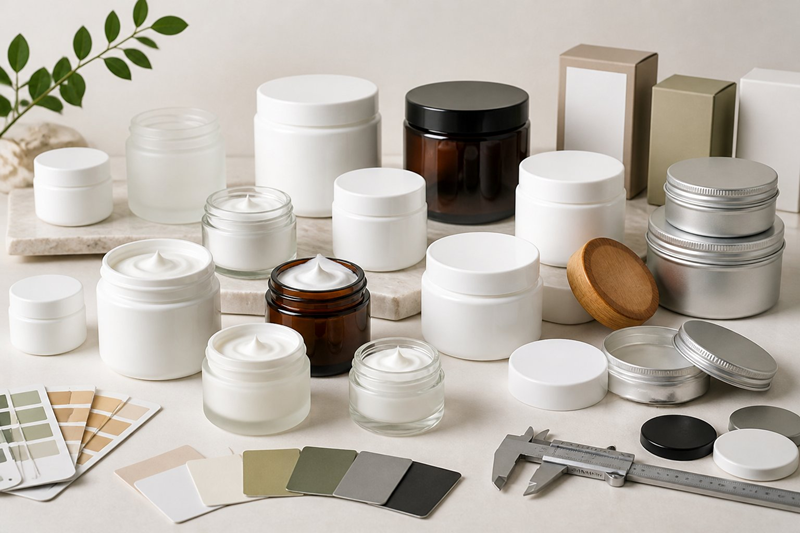
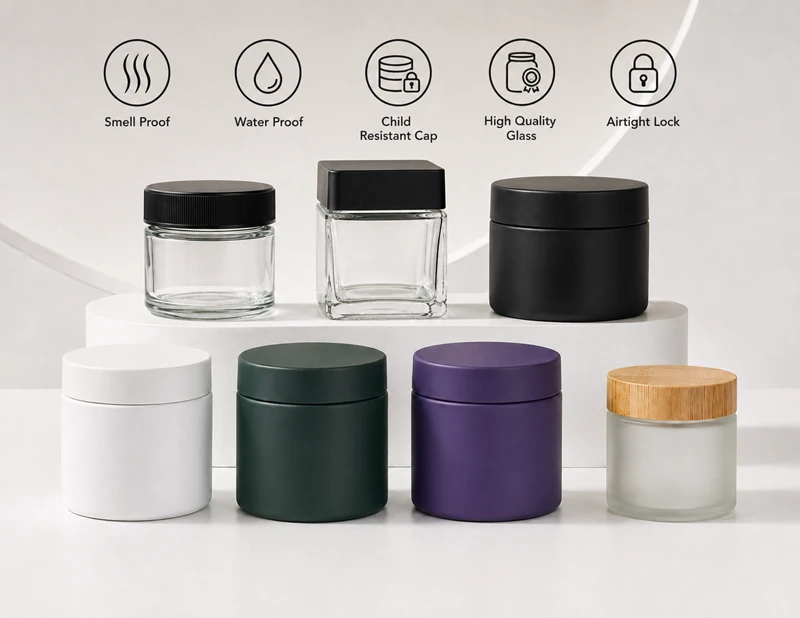
YPC’s cannabis glass jar range provides a starting point for comparing jar shapes and closure options. Request the drawing and documentation for the specific jar and lid you intend to use.
Need help narrowing your options? Send YPC your fill weight, target market and current packaging format to discuss suitable glass jar samples.
Choose capacity around the actual flower
Two flower batches with the same net weight can occupy different volumes. Bud size, density, shape and filling method all affect whether a product fits comfortably in a jar. Avoid selecting a container solely from a rule such as “one jar size fits every eighth.”
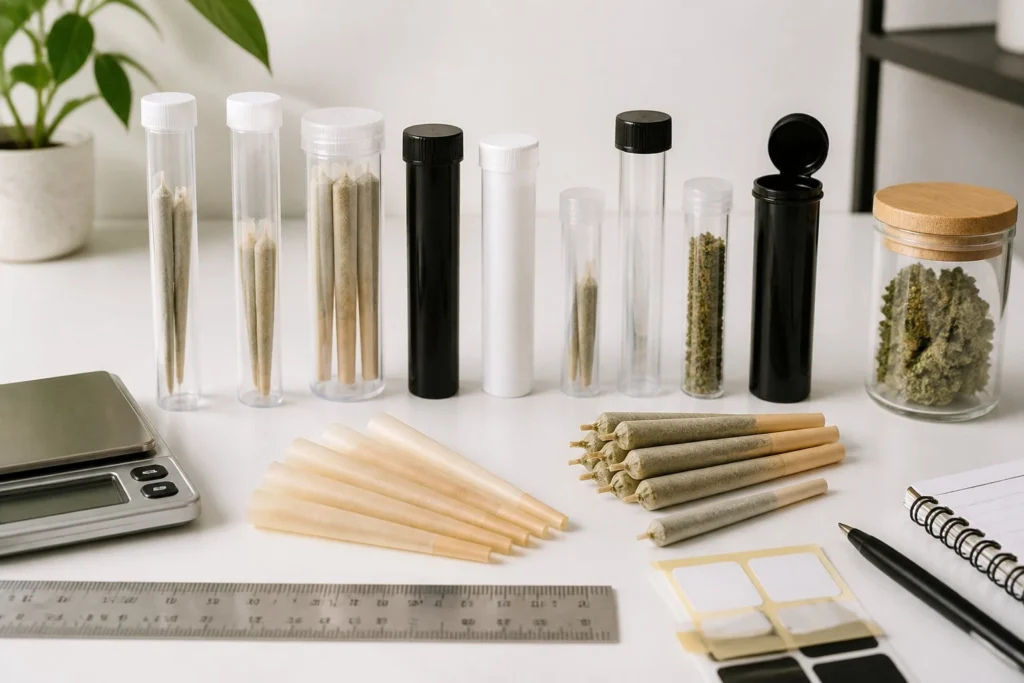
Begin with representative finished flower and your intended net fill. Fill sample containers using your normal process, then check the closure, label area, visible presentation and the amount of movement during handling. Include normal product variation and any insert you plan to use.
An illustrative headspace calculation
Suppose a supplier confirms that a selected, closed container has an internal capacity of 120 mL under an agreed measurement method. A hypothetical fill occupies an estimated 70 mL of bulk volume, including the spaces between buds.
Estimated remaining headspace = 120 − 70 = 50 mL
This is a simple illustration, not a measured YPC SKU or a recommended target. Bulk volume varies with the flower and filling method. Headspace volume alone does not establish the oxygen available inside the pack or predict terpene loss; gas composition, seal integrity and storage also matter. Use actual measurements and stability testing before setting a specification.
Three mistakes to avoid before a bulk order
Treating a jar and its lid as separate decisions. A compatible-looking cap may have a different neck finish or liner. Confirm the complete jar, closure and seal configuration, and test it on your filling line.
Approving a package from an empty sample. Fill samples with your own flower, apply the intended label and close them using the planned process. Check presentation, handling and the filled case after transport testing.
Comparing quotes on unit price alone. Decoration, closure, protective dividers, case quantity, freight, labor and rejects all affect landed cost. Ask each supplier to quote the same package and delivery basis.
Plan storage and testing for your product
Ask your quality team to define the conditions and acceptance criteria before comparing samples. A practical program can include initial flower measurements, the intended closure process, storage conditions, inspection intervals and relevant analytical or sensory checks.
Humidity-control inserts are an option for some products, not a substitute for validating the flower and packaging system. Avoid promising a universal relative-humidity range or shelf life without product-specific evidence. If you use a pouch, ask for oxygen and water-vapor transmission information for the actual film structure and test conditions; the finished seal also matters.
For glass, request any available light-transmission information for the exact container. An opaque carton can add protection while the jar remains inside it, so consider display and customer use after the carton is removed.
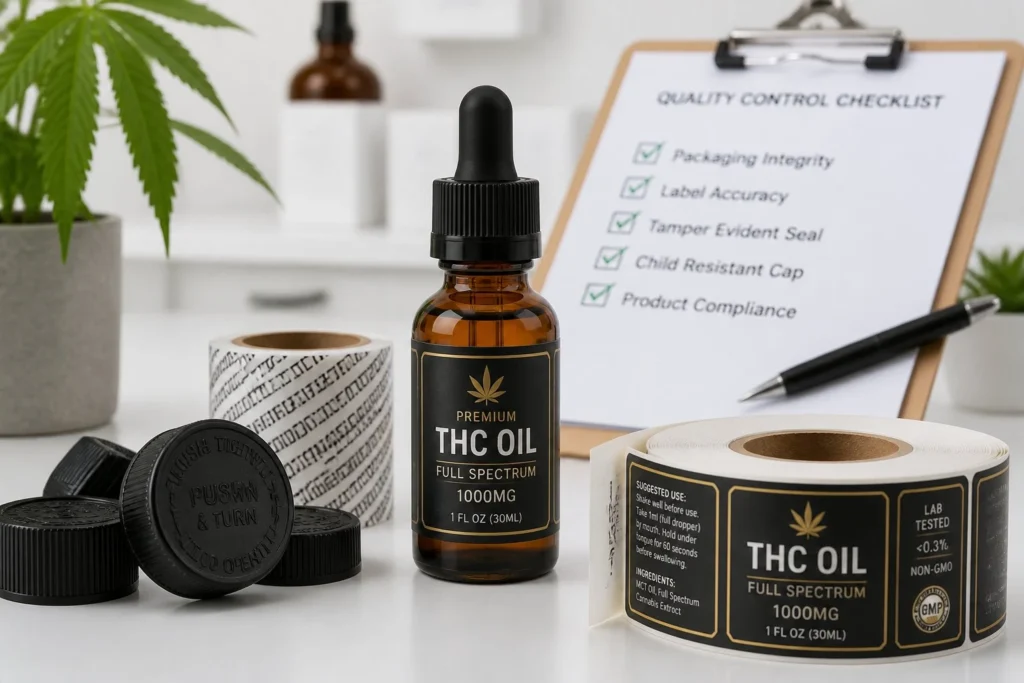
Check closures, labels and destination markets
Requirements for cannabis packaging vary by country, region and product category. Identify the market before approving the container and artwork, and have the responsible compliance team confirm child-resistance, tamper-evidence, opacity, warning and language requirements.
For example, Health Canada’s packaging and labelling guide addresses Canadian requirements. It is not a substitute for checking rules elsewhere. Request documentation that identifies the actual container-and-closure configuration, the test scope and any relevant limitations.
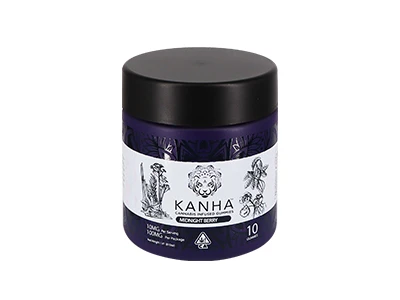
Design the label around the information that must appear on the package. A QR code can provide additional information where allowed, but it should not be assumed to replace mandatory printed text. Test adhesion, legibility and barcode scanning after normal handling.
Make wholesale logistics part of the decision
Ask for the units per case, case dimensions, gross case weight, pallet configuration and protective packing. Compare inbound empty packaging and outbound filled cases separately: a compact inbound pack does not necessarily use space efficiently after filling.
If you operate several SKUs, a shared jar and cap with product-specific labels may simplify inventory. Check that the configuration works for each fill and market. Before switching a supplier or jar, run samples through your actual filling, capping and labeling equipment and confirm the agreed tolerances.
YPC describes its general quality-control process. Agree on the project-specific inspection plan, acceptance criteria and documentation before production.
IMAGE PLACEMENT: Add an approved YPC case-packing or quality-inspection photograph here. Source: YPC quality-control page. Suggested alt: Glass packaging inspection and case packing. Confirm the image depicts the stated process before publishing.
Five details to include in your request for quotation
| Information | What to send |
| Product and fill | Flower type, net weight, representative samples and intended pack count |
| Package | Preferred jar shape, material, color, closure and current drawing or sample |
| Destination | Markets, product category and required packaging functions |
| Branding | Label or decoration, number of SKUs, artwork and required copy area |
| Order plan | Quantity, delivery destination, deadline, samples and documentation needed |
Contact YPC with these details to discuss a glass jar and closure for your project. If you are replacing an existing pack, include the current drawing or a clear photo of the jar, neck and cap.
Frequently asked questions
Does a glass jar automatically preserve terpenes?
No. The complete package, flower condition and storage environment all matter. Verify closure performance and evaluate the finished product under relevant conditions.
Is a child-resistant lid also airtight?
Not necessarily. Child resistance and seal performance address different requirements. Request evidence for each function on the exact jar-and-closure combination.
What jar size should I use for a given flower weight?
Use the weight as a starting point, then test representative flower in actual containers. Density, bud size and the filling method affect how much space the product occupies.
Can I use a QR code instead of printed warnings?
Do not assume so. Check the applicable rules in each market and keep mandatory information on the package where required. A QR code may be useful for additional information where permitted.hout relying on virgin plastic.