Rosin, Badder, Live Resin & Wax: Which Jar Is Best?
Cannabis concentrates like rosin, badder, live resin, and wax have become pretty popular for their potency and flavor. Each one has its own texture and properties, and that actually changes how you should store them.
The right glass jar really depends on your concentrate’s consistency and moisture content. Dry stuff like crumble needs wide-mouth jars so you can get at it easily, but sticky concentrates like live resin call for small, airtight containers that lock in terpenes.

Pick the wrong storage and you can ruin your concentrate’s quality—fast. Moisture, air, and light break down the good stuff that gives concentrates their effects and flavors.
A glass jar actually protects your product and keeps it fresher, longer. You can’t really skip this step if you care about quality.
This guide breaks down which jar works best for each type of concentrate. You’ll see how extraction methods change storage needs and how to match your container to what you’ve got.
Getting storage right saves you money by preventing waste and keeps your concentrate as good as the day you bought it. That’s something everyone can get behind, right?
Key Takeaways
- Different concentrate textures need different jar styles—sticky products do better with narrow openings, while dry ones need wide access.
- Airtight glass containers in cool, dark spots help preserve terpenes and keep cannabinoids from breaking down.
- Solventless concentrates like rosin need extra protection from air and moisture compared to solvent-based ones.
Understanding Concentrates: Rosin, Badder, Live Resin, and Wax
Each concentrate has its own quirks that affect storage. Production, texture, and chemical makeup all play into the best way to package and preserve them.
What Defines Each Concentrate Type
Rosin is a solventless concentrate. Pressing cannabis flower, kief, or hash with heat and pressure squeezes out the resinous oil—no chemicals needed. That makes it one of the cleanest concentrates out there.
Live resin comes from freshly frozen cannabis, not dried buds. Extractors use solvents like butane or CO2 to pull out cannabinoids and terpenes, then purge the solvents to make a safe final product.
Badder is all about texture. It’s creamy and butter-like, made by whipping the extract at specific temps after extraction. You can make badder from resin or rosin, depending on what you start with.
Wax is another texture-driven concentrate. It’s soft and sticky, usually made with solvent-based methods like BHO (butane hash oil). The texture makes it easy to handle for dab rigs or pens.
Key Differences in Production and Consistency
The big split between concentrates is in the extraction method. Rosin only uses heat and pressure, so it’s totally solventless. Live resin and most waxes come from hydrocarbon solvents or CO2 extraction.
Consistency is all over the map. Rosin might be sappy or waxy, depending on the material and how you press it. Live resin usually has a saucy or crystalline texture and lots of terpenes. Badder is always smooth and creamy, while wax is sticky and holds its shape.
Starting material matters a lot, too. Live products use fresh-frozen cannabis to keep those terpenes at their peak. Traditional concentrates stick with cured, dried flower.
Importance of Potency and Terpene Content
Cannabis concentrates pack much more THC than regular flower. Most concentrates hit 60% to 90% THC, while flower tops out around 30%. You don’t need much to feel the effects.
Terpenes give concentrates their flavor and aroma. Live resin and live rosin keep the most terpenes since they start with fresh-frozen material. But these terpenes are volatile—they break down with heat, light, or air.
High potency and rich terpenes mean storage is a big deal. Your packaging choice makes a real difference in how long those compounds last. If you store concentrates carelessly, you’ll lose both potency and flavor as the good stuff breaks down and evaporates.
Extraction Methods and How They Influence Storage Needs
The way producers extract concentrates really shapes their stability, texture, and storage needs. Solvent-based and solventless methods make products with different care requirements—it’s worth knowing the difference.
Solvent-Based vs. Solventless Extraction Explained
Solvent-based extraction uses chemicals like butane, propane, or CO2 to pull cannabinoids and terpenes out. BHO and other hydrocarbon methods work fast and give big yields. CO2 is a bit cleaner but still counts as a solvent.
Solventless extraction skips the chemicals. Ice water extraction uses cold water and agitation to separate trichomes. A rosin press just uses heat and pressure to squeeze out resin. These methods make purer products with no leftover solvents.
Extraction method changes what your concentrate needs from storage. Solvent-based products could have trace chemicals, so you want containers that won’t react with those. Solventless extracts like rosin are more sensitive to heat and light since they keep more fragile terpenes.
Impact of Extraction on Terpene Preservation and Safety
Terpene preservation really depends on how you extract. Solventless methods protect delicate terpenes better—they don’t use harsh chemicals or high heat. That makes live rosin especially flavorful, but also a bit more fragile.
If your concentrate is high in terpenes, you need airtight glass jars that block UV and stay cool. Without that, terpenes break down fast and your concentrate loses its punch.
Lab tests confirm terpene levels and check for contaminants. If your product has a ton of terpenes, you’ll need to store it even more carefully to keep that lab-tested profile.
Residual Solvents and Purging Process
Producers purge BHO and other solvent-based concentrates to remove leftover solvents. They use vacuum ovens to evaporate chemicals in a controlled way. Proper purging brings solvent levels down to safe amounts, and labs check this.
Even well-purged concentrates sometimes have trace solvents. Glass jars are the best bet because glass doesn’t react with any leftovers. Plastic or silicone can interact with solvents and mess with flavor or safety over time.
Think about purging quality when you pick a jar. Better-purged concentrates are more stable. If there’s more solvent left, the product might keep off-gassing a bit—so you want airtight, but not vacuum-sealed, jars to let a tiny bit of air exchange happen without flooding the concentrate with oxygen.
Optimal Glass Jar Selection for Rosin, Badder, Live Resin, and Wax
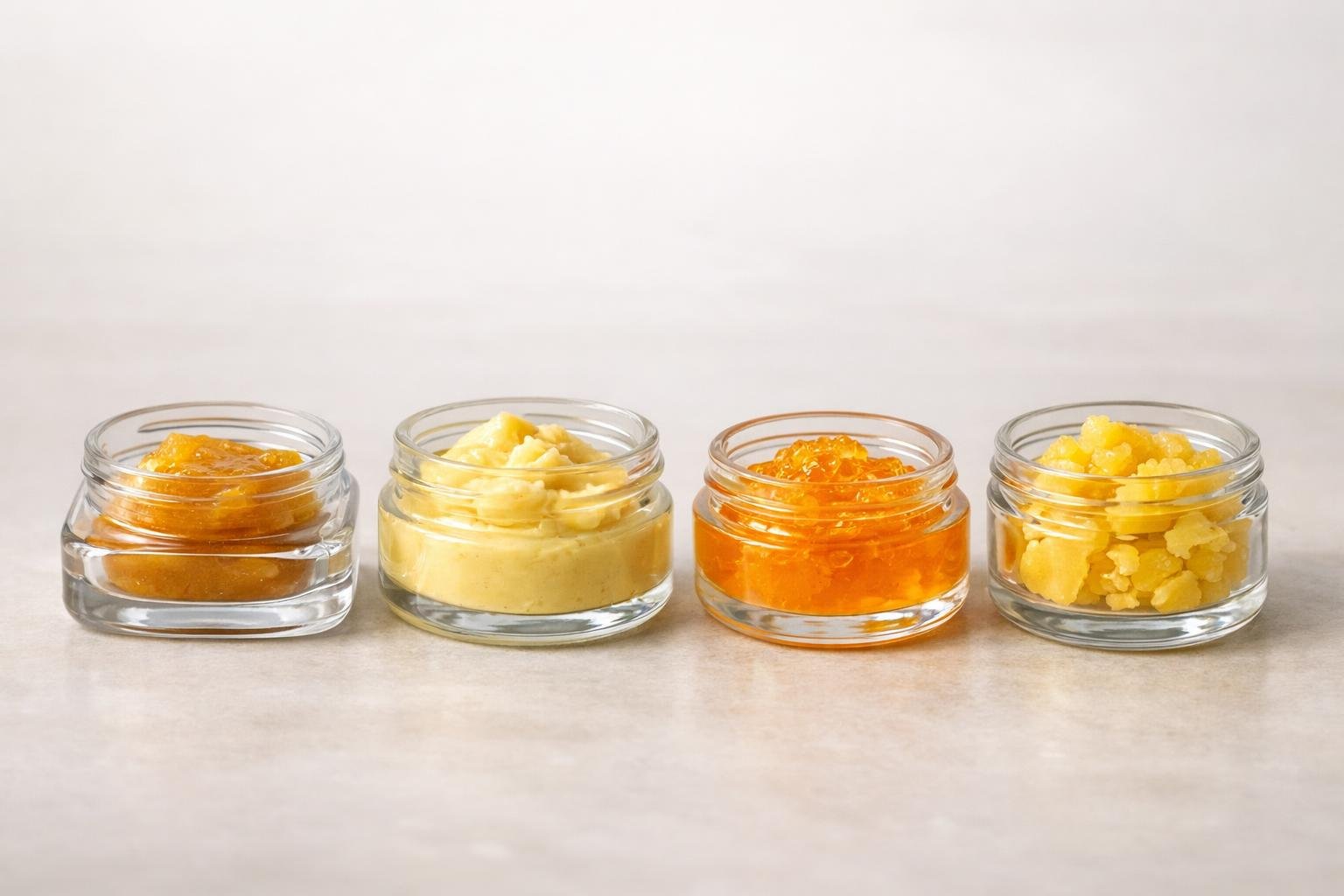
Picking the right glass jar depends on your concentrate’s texture and how long you want to keep it. Different consistencies interact with glass in their own weird ways, so some jars just work better for certain products.
Essential Features of Glass Storage Jars
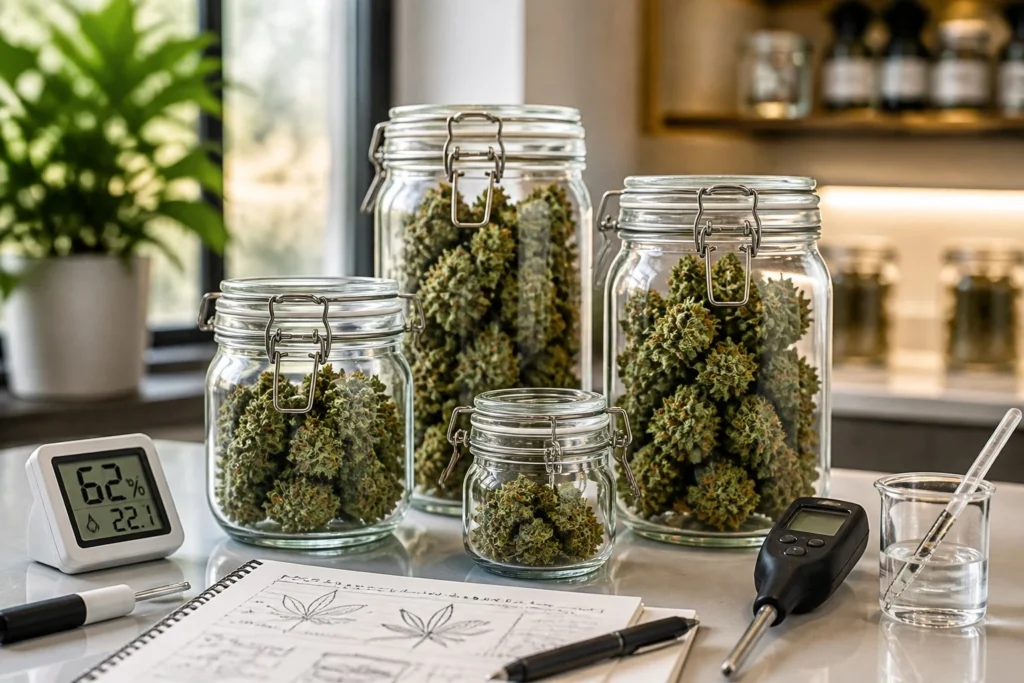
Your glass jar should have a tight-sealing lid to keep air out. Air exposure breaks down your concentrate over time—nobody wants that.
Go for medical-grade or borosilicate glass. These don’t leach chemicals into your concentrate, and thick glass helps protect against temperature swings.
Smaller glass jars are better than big ones. Extra air space means more oxidation. Try to match your jar size to the amount of concentrate you have.
Wide-mouth jars make it easier to scoop out your concentrate. You don’t want to scrape and waste product. Dark glass blocks light, but clear glass lets you keep an eye on what’s inside—pick your poison.
How Texture and Consistency Impact Jar Choice
Sticky textures like shatter stick like glue to glass. You’ll waste time and product scraping it out. For those, silicone containers or parchment paper make more sense.
Creamy stuff like badder and live resin sauce scoops right out of glass. It doesn’t bond to the surface as much, so you can get most of it out with a dab tool.
Runny concentrates need containers with really secure lids. Live resin sauce can leak if your jar tips, so make sure the lid seals tight.
Crumbly concentrates need a little space. If you cram crumble into a tiny jar, it’ll just get squished. Give it room to breathe and keep its texture.
Best Jar Options for Each Concentrate
| Concentrate Type | Best Container | Jar Size |
|---|---|---|
| Rosin | Small glass jar | 5-9ml |
| Badder | Small glass jar with wide mouth | 5-9ml |
| Live Resin | Small glass jar with tight seal | 5-9ml |
| Wax | Small glass jar or parchment | 5-9ml |
Rosin is happiest in a small glass jar. It scoops out easily and doesn’t stick too much. Use the smallest jar that fits what you have.
Badder needs a glass jar with a wide mouth. The creamy texture makes it easy to scoop, and twist-off plastic caps work fine if you’re not storing it long-term.
Live resin needs jars with really good seals. The terpenes in live resin disappear faster than in other concentrates, so a tight lid keeps the flavor inside.
Wax is a toss-up. If it’s not super sticky, glass is fine. Some waxes stick more than others, so check your product before you commit.
Avoiding Common Storage Pitfalls
Don’t pop open cold jars right away. If you grab a jar from the fridge or freezer, let it warm up first—opening it cold lets moisture sneak in and mess up your concentrate.
Skip oversized jars. Extra air speeds up degradation, and your concentrate loses potency and flavor faster in a jar that’s too big.
Don’t keep glass jars in hot spots. Stay away from windows, radiators, or appliances that throw off heat. Room temp—say, 50-70 degrees—is best for storage up to a few days.
Never use a jar that’s chipped or cracked. Damaged glass lets air in, which defeats the whole point. Always check your containers before you fill them up.
Storing Rosin: Solventless Protection and Freshness
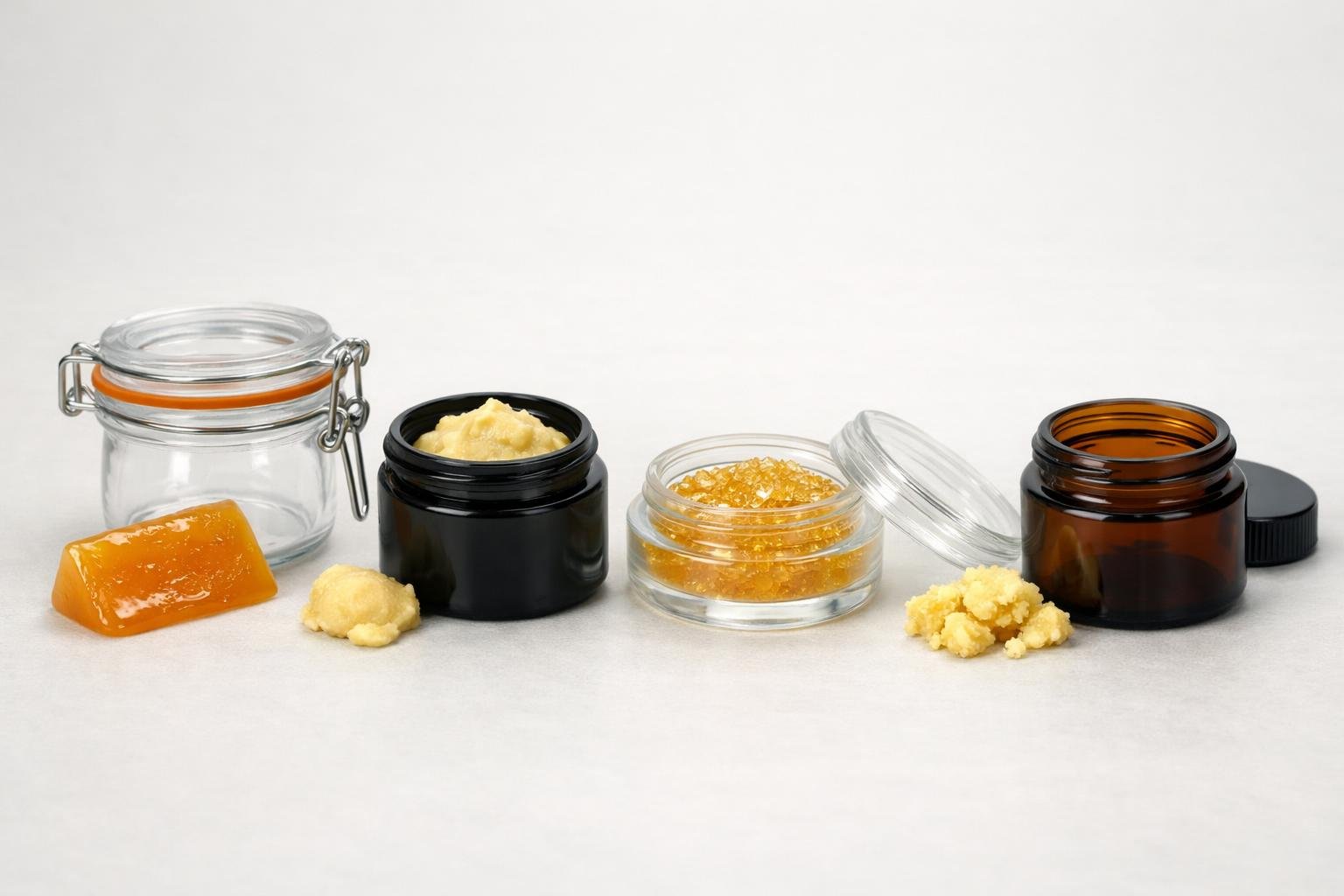
Rosin needs careful storage. Its solventless extraction leaves behind delicate terpenes and cannabinoids that break down fast when exposed to heat, light, or air.
If you want to keep your rosin dab tasting great, you have to keep it cold, block UV, and limit oxygen as much as possible.
Rosin’s Sensitivity to Light, Heat, and Air
Rosin degrades faster than a lot of other concentrates because it doesn’t have solvents to help stabilize it. UV light can break down THC and other cannabinoids in just a few hours.
Heat makes terpenes evaporate, so your rosin loses its flavor and aroma way too quickly. Keep your rosin between 40-55°F to slow down the process.
Room temperature is okay for a day or two, but after that, you’ll notice changes in color and texture. Air exposure causes oxidation, turning your rosin darker and making it go from fresh and sticky to dry and crumbly.
Every time you open the jar, more oxygen gets in and starts breaking down your concentrate. That’s why small containers are better—less air space, less oxidation.
Fresh-frozen rosin is even more sensitive because it keeps more of those volatile terpenes. Those compounds evaporate at low temps, so heat protection is extra important here.
Jar Recommendations for Solventless Rosin
Amber glass jars are the top choice for storing rosin. The dark glass blocks UV and doesn’t react with your concentrate, so you don’t get weird flavors or chemical leaching.
Pick small glass containers with airtight lids. Match your jar size to your rosin—a 5ml jar for a gram is so much better than a big 30ml jar because you have less air inside.
Silicone containers are convenient if you’ll use your rosin in a few days, but they absorb terpenes over time. I wouldn’t use them for long-term storage.
Wrapping your rosin in PTFE sheets before it goes in the jar gives you a little extra protection. That non-stick layer keeps the rosin from sticking to the glass and adds a barrier.
Cold Cure and Preserving Quality
If you’ll use your rosin within 1-3 months, keep it in the fridge. Cold temps preserve terpenes but don’t freeze the concentrate solid.
Let the jar warm up to room temperature before opening it. That way, you avoid condensation inside, which can mess up your rosin.
For storage past three months, the freezer is your best bet. Use vacuum-sealed containers to get rid of oxygen completely.
Break up bigger batches into smaller jars so you’re not thawing and refreezing the same stuff over and over.
Cold cure rosin really benefits from steady refrigeration. The curing keeps going at low temps, and you end up with that badder-like consistency a lot of people love.
Label every jar with the strain and storage date. It helps you stay organized and use the oldest stuff first.
Best Storage Practices for Badder and Wax
Badder and wax need steady temps and sealed containers to keep their texture and terpenes. The right jar keeps them from drying out and losing flavor.
Maintaining Creamy or Whipped Consistency
Badder gets that creamy texture from whipping during extraction. If you let it get warm or expose it to air, the texture falls apart.
Keep your badder in a cool place. If you’ll store it longer than a week, just throw it in the fridge.
Wax is a little more stable, but it’ll still dry out and crumble if you leave it open or store it hot. Room temperature is fine if you finish it in 3-7 days.
For longer storage, use a sealed jar in the fridge. Don’t leave jars open between dabs. Air speeds up texture changes so much.
If your badder turns sugary or wax gets hard and brittle, that’s oxidation. You can still use it, but honestly, it’s just not as good.
Preventing Oxidation and Terpene Loss
Terpenes disappear fast when exposed to oxygen, light, or heat above 77°F. Badder and wax aren’t as fragile as live rosin, but they’ll still lose flavor and smell if you don’t store them right.
Keep your jars in a dark spot. Avoid windows and bright lamps. UV light makes oxidation worse and darkens your concentrate.
If you notice the color shifting from light gold to amber or brown, you’re losing terpenes and cannabinoids. Don’t let your jar sit open—grab what you need with your dab tool and seal it up right away.
Jar Selection for Badder and Wax
Small borosilicate glass jars with airtight lids are the way to go for badder and wax. Glass doesn’t mess with terpenes like silicone can over time.
Stick to 5 to 7 ml jars for single grams. Medical-grade silicone containers work for short-term storage or travel, especially for sticky stuff like budder.
Avoid cheap silicone that smells weird. If you use silicone, stash it in a cool, dark drawer and finish it within two weeks.
For storage longer than a month, use glass and keep it in the fridge. Always let the jar reach room temp before opening so you don’t get condensation inside.
Live Resin Storage: Preserving a Fresh-Frozen Experience
Live resin keeps the terpene profile and potency from fresh-frozen cannabis, but those qualities drop off quickly without good storage. Glass jars protect against air and temp swings that wreck terpenes and lower THC.
Protecting Terpene Profiles and Potency
Live resin’s real value is in those preserved aromatic compounds. When growers freeze cannabis right after harvest, they lock in volatile terpenes that would normally vanish during drying.
But terpenes break down with heat, light, and oxygen. Every time you open the jar, oxygen starts to degrade both flavor and potency.
Temperature matters more than people think. Room temp storage speeds up terpene loss.
Keep live resin in the fridge for daily use. Cold slows down the chemical reactions that break down cannabinoids and terpenes.
If you’re storing it for more than a month, move it to the freezer. Let the jar sit at room temp for 15-20 minutes before opening, so you don’t get condensation inside.
Water droplets can mess up the texture and dilute your concentrate. If you store live resin right, you’ll keep flavor and THC for six months to a year.
Preferred Jars for Live Resin Extracts
Glass jars are best for live resin since they don’t react with terpenes. Silicone can actually soak up those aromatic compounds over time, dulling the flavor.
Use small glass jars with airtight lids. Fill the jar as much as possible—a full jar means less oxygen to spoil your concentrate.
Opaque glass or a dark bag helps too. Even inside your fridge, light can break down cannabinoids and terpenes. Amber glass gives extra UV protection.
Wide-mouth jars make it easier to get your dab out without scraping the sides. You want enough space for your tool, but not so much air that it ruins your stash.
Managing Stickiness and Sauce-Heavy Consistencies
Live resin often comes as sauce or terp sauce, with liquid terpenes and THCA diamonds mixed together. This stuff sticks to everything.
Glass makes it way easier to scrape out every last bit. Silicone just grabs onto sauce and makes it tough to collect.
Store diamonds and sauce together in one jar. If you separate them, the crystals lose terpenes and the flavor drops off.
The liquid terpene layer actually helps protect the THCA diamonds from oxidation. If your sauce is super runny, keep the jar upright in the fridge.
That way, you won’t get leaks if the seal isn’t perfect. Check the gasket on your jar now and then and swap it out if it starts to wear out or doesn’t fit tight.
Additional Considerations: Safety, Labeling, and Usage
Proper storage isn’t just about picking the right jar. Keeping quality high means watching out for contamination, labeling your jars right, and thinking about how your storage affects dabbing, vaping, or whatever else you’re doing.
Preventing Contamination in Storage
Make sure your concentrate jars are totally clean before you use them. Any leftover residue, dust, or moisture can ruin your live resin, rosin, badder, or wax.
Wash glass jars with hot water and a little soap, then rinse them well. Let them air dry or use a lint-free cloth. Moisture inside the jar is a recipe for mold, and that’ll destroy your concentrate.
Biggest contamination risks:
- Dirty dab tools touching your stash
- Fingerprints or oils inside the jar
- Mixing up different concentrate types
- Letting airborne stuff in during transfers
Keep jars in a clean, dedicated spot away from dust. If you’re storing a bunch of products—distillate, bubble hash, dry sift—use separate tools for each one.
Don’t use the same dabber for different types unless you clean it first. Temperature swings cause condensation, so keep your storage area steady to avoid moisture buildup.
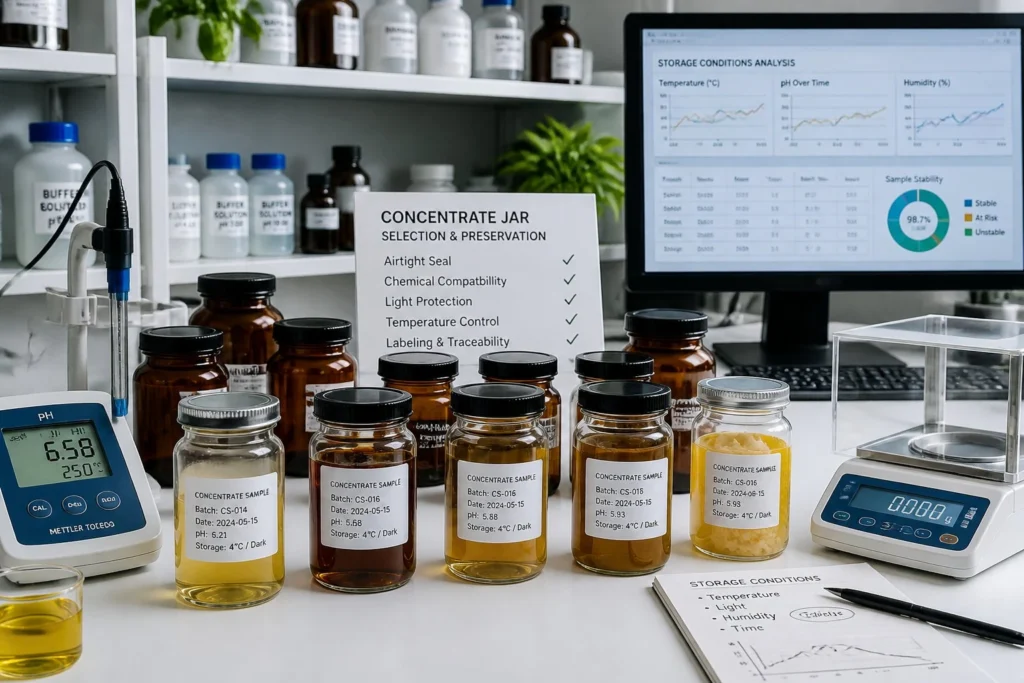
Proper Jar Sealing and Labeling
Air-tight lids are a must to keep terpenes in and dryness out. Check that the jar closes tight with no gaps. Silicone-lined lids work best for a solid seal.
Your labels should actually help you. Write down the strain, concentrate type, extraction date, and THC/CBD percentages if you know them.
What to include on your label:
- Product name and type (live resin, rosin badder, wax, etc.)
- Date it was made or packaged
- Strain or blend details
- Storage instructions
- Potency levels, if you have them
If you’re saving stuff for vape carts, edibles, or tinctures, note the intended use. That way you don’t accidentally use distillate meant for vaping in your brownies or something.
Go with waterproof labels that won’t smudge or peel. Add handling warnings if it’s super strong. Date your jars so you use the oldest ones first and can actually keep track of freshness.
User Tips: Dabbing Tools and Storage Integration
Match your dabbing tools to the jar openings. Wide-mouth jars work better with larger dabbers, while narrow jars fit precision tools for sticky concentrates like honeycomb.
Keep your dab rig or e-rig tools separate from storage jars when you’re not using them. This way, you won’t introduce residue back into fresh product.
Use dedicated dabbers for each concentrate type. That helps preserve the distinct flavors.
Tool and storage pairings:
| Concentrate Type | Best Jar Opening | Recommended Tool |
|---|---|---|
| Badder, Wax | Wide-mouth | Flat-tip dabber |
| Live Resin | Medium | Scoop-style tool |
| Distillate | Narrow | Syringe or needle tip |
| Bubble Hash, Dry Sift | Wide | Small spoon or spatula |
Store jars near your consumption area, but don’t keep them right next to heat sources like torches. Keep vape pens and cartridges in separate containers from your bulk concentrate storage.
This organization helps prevent accidents and keeps your product in better condition.
If you’re using e-rigs, just load a small amount from your jar instead of keeping concentrate in the device. That keeps things fresher and stops unused product from drying out in the heating chamber.
Frequently Asked Questions
Proper storage directly impacts concentrate quality. Picking the right container material and size really helps prevent degradation and keeps the flavor and potency locked in.
What are the optimal storage conditions for different cannabis concentrates?
All cannabis concentrates need cool, dark, and dry storage to stay at their best. Try to keep jars where temperatures stay between 60 and 70 degrees Fahrenheit.
Light breaks down cannabinoids and terpenes over time, so stash your concentrates away from windows and direct sunlight.
Humidity matters, too. Keep your storage area dry and on the lower end of humidity to stop moisture from messing with texture and potency.
Rosin and live resin do better in the fridge since they have more volatile terpenes. You can store these at 35 to 40 degrees Fahrenheit for longer freshness.
Badder and wax are fine at room temperature if you store them right. They don’t need as strict temperature control as live products.
How does container material impact the quality of cannabis extracts?
Glass gives your concentrates the best protection because it doesn’t react with cannabinoids or terpenes. Your product stays pure in glass containers.
Plastic containers can leach chemicals into your concentrates after a while. Plus, some plastics soak up terpenes, which kills flavor and aroma.
Silicone works for short-term storage, but it’s not great for the long haul. Terpenes can react with silicone and tweak your concentrate’s profile.
Borosilicate glass is extra tough and resists chemicals better than regular glass. It also handles temperature changes without cracking.
UV-resistant glass jars block out harmful light but let you see what’s inside. Amber or violet glass gives the highest level of light protection.
Can the size of the glass jar affect the preservation of rosin or live resin?
The size of your jar absolutely matters. Smaller jars with less empty space help keep your concentrate fresher for longer.
Air exposure leads to oxidation, breaking down cannabinoids and terpenes. Pick a jar that matches how much concentrate you have, so there’s less air inside.
Large jars with just a little concentrate leave too much air, which speeds up degradation.
Try using several smaller jars instead of one big one. That way, you only open what you need and keep the rest sealed tight.
Reducing headspace extends shelf life for rosin and live resin. The right jar size keeps flavor and potency in better shape.
Are there specific types of glass jars recommended for long-term storage of badder or wax?
Airtight glass jars with silicone-lined lids give you the best seal for long-term storage. These lids keep air and moisture out.
Screw-top glass jars work well for badder and wax. You can open and close them a bunch of times without losing the seal.
UV-protected glass jars stop light from degrading your stash. Amber glass blocks up to 99 percent of UV rays that hurt concentrates.
Small jars—think 5 to 30 milliliters—fit most concentrate amounts. Match the jar size to your usual usage.
Thick-walled glass containers protect against breaking and temperature swings. They keep the inside conditions more stable.
What is the difference in storage requirements between cured and live concentrates?
Live concentrates need colder storage than cured ones. Refrigerate live resin and live rosin to save their terpene profiles.
Cured concentrates like wax and badder stay stable at room temperature. Processing makes them less sensitive to temperature swings.
Live products have more moisture and volatile compounds, so your storage method needs to account for that.
Cured concentrates lose terpene volatility after drying and curing. You can store them in cool, dark spots without a fridge.
Temperature swings hit live concentrates harder than cured ones. Keep live products in steady cold storage and avoid moving them in and out of the fridge.
How should I label my concentrate containers to ensure proper identification?
Start by jotting down the concentrate type, strain name, and the purchase or production date. That way, you’ll have a quick way to spot what’s what and keep tabs on freshness.
If you know the THC percentage or terpene profile, add those too. It makes picking the right concentrate a lot easier.
Writing the date helps you avoid using old or stale stuff. You’ll know exactly how long each one’s been sitting around.
It’s also smart to note the extraction method. Is it solvent-based or solventless? That detail can save you some confusion later.
Jot down any special storage needs—like if it should stay in the fridge or just on a shelf. Those little reminders can make a difference.
Honestly, waterproof labels are a game-changer if you keep things in the fridge. They don’t smudge or fade, even when it gets a bit damp.