Beyond Basic Storage: Advanced Guide to Concentrate Jar Selection
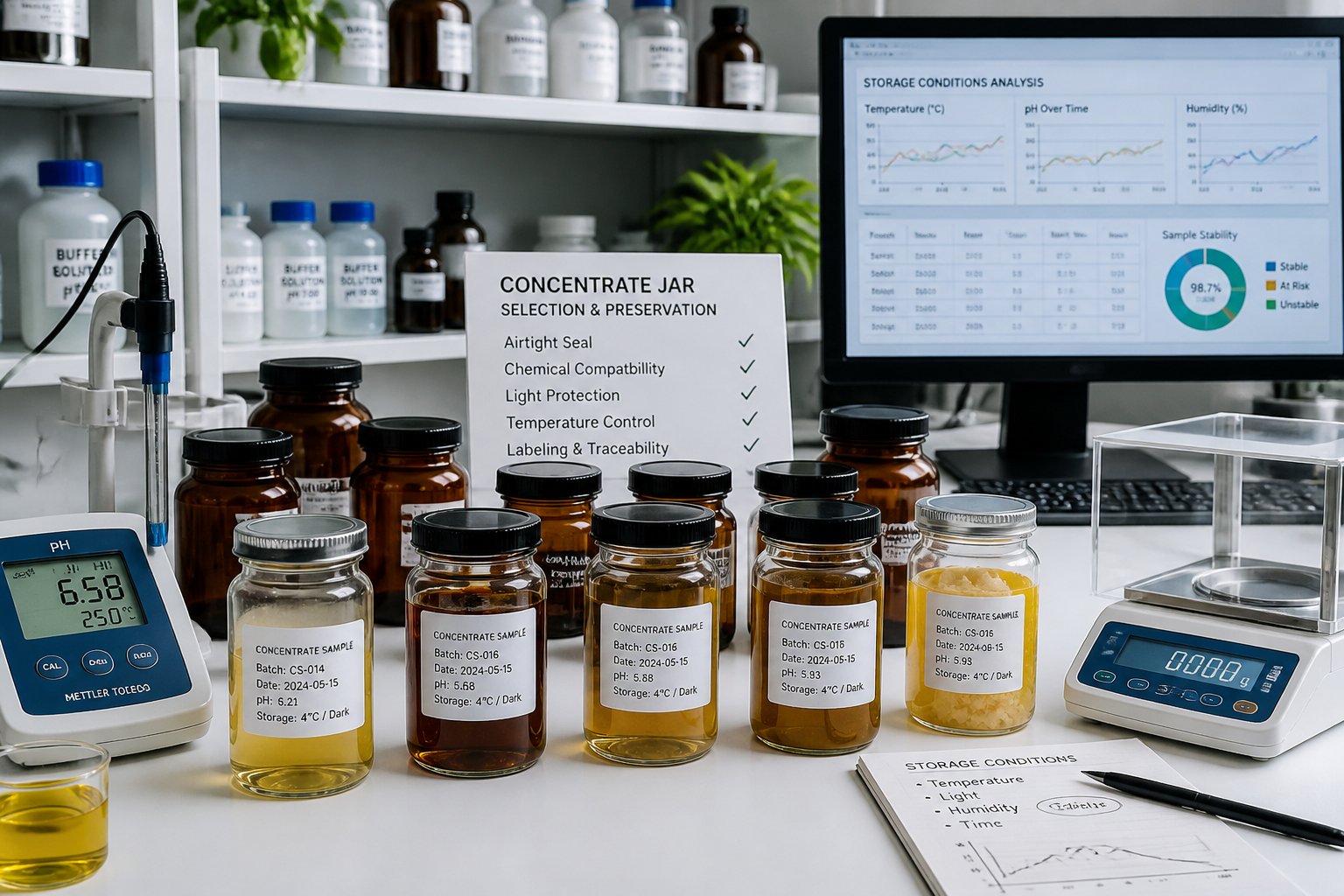
Lots of concentrate users figure any jar will do the trick, but the way terpenes and cannabinoids behave on a molecular level tells a different story. If you really want to protect your product, you’ve got to understand what’s actually happening inside those jars.
Terpenes are super volatile—they’ll evaporate at room temperature, especially if air gets in. Even the tiniest gaps in a jar’s seal let those molecules escape, which means you lose both flavor and effects.
Your concentrates lose terpene content way faster with jars that don’t close tightly. Air exposure also triggers oxidation, breaking down cannabinoids into less desirable stuff.
THC turns into CBN when oxygen hangs around too long, which takes away potency and leaves you with a more sedative effect. UV light makes this whole process even worse.
Key degradation factors:
- Temperature fluctuations speed up molecular movement
- Light exposure provides energy for oxidation reactions
- Oxygen contact directly attacks cannabinoid structures
- Time allows cumulative damage to accumulate
Good sealing and opaque containers really slow these problems down. You want jars that create actual airtight barriers to keep terpenes in and cannabinoids safe.
Chemical Incompatibility Risks Between Concentrates and Container Materials
Terpene-rich extracts act like natural solvents and can react with certain storage materials. Silicone containers, for example, tend to absorb terpenes over time, which makes the material swell or even leach stuff back into your concentrate.
This back-and-forth isn’t great—it messes with your product’s purity and can ruin the container itself. Borosilicate glass, though, stays chemically inert, even with acidic or terpene-heavy concentrates.
That’s why it’s the go-to for long-term storage. Some glass, like UV-blocking Miron glass, adds another layer by filtering out nasty light wavelengths.
Silicone’s okay for short-term storage if your product isn’t super terpene-heavy. But if you’re storing high-terpene extracts or planning to stash them for a while, the risks go up.
Match your jar material to your concentrate and how long you’ll keep it around.
Surface Roughness and Residue Retention
Not all glass is created equal, especially when you look close. Cheap glass often has tiny grooves and pits that trap sticky concentrates, making it a pain to recover everything.
High-quality borosilicate glass usually has a smooth, polished interior. That’s great for dab tools, which can glide across the surface without catching on anything.
Manufacturing quality indicators:
- Fire-polished edges create seamless surfaces
- Annealed glass reduces internal stress fractures
- Uniform wall thickness prevents weak points
When you actually look at residue patterns, the difference between cheap and premium glass jumps out. Premium jars let you scoop out almost every last bit, while lower-quality ones just hang onto your concentrate in all those micro-gaps.
Pitfall Avoidance: Micro-Level Packaging Selection
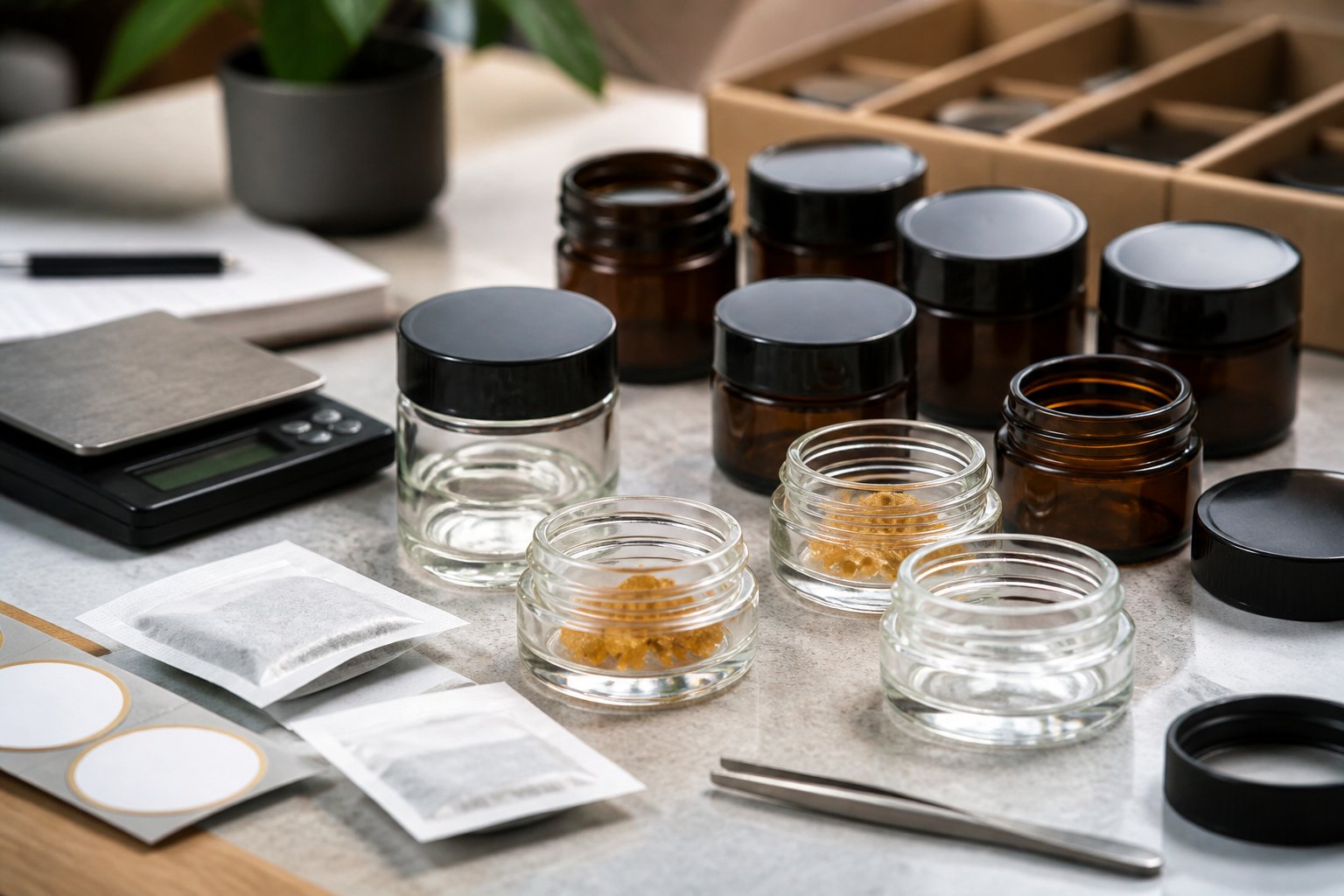
Most problems with concentrate storage actually start at the closure, not the jar itself. Things like cap liners, child-resistant features, and the way the jar’s shaped inside all play a part in how fresh your product stays—or if it leaks and wastes material.
The Hidden Science of Cap Liners
Your cap liner touches the concentrate directly, so it matters more than people think. Standard foam or cheap silicone liners can dissolve when they meet terpene-rich extracts like sauce or live resin.
PTFE (polytetrafluoroethylene) liners handle these extracts like a champ. They don’t break down, and they keep an airtight seal even if liquid pools at the top.
Glass jars with PTFE-lined caps stop cross-contamination and help hold onto those volatile compounds. Foam liners, on the other hand, soak up moisture and expand, making tiny gaps where oxygen can slip in and terpenes can escape.
Silicone liners swell if they get too oily, breaking the vacuum seal in supposedly airtight jars. You’ve got to check that your liner’s thickness matches the cap’s torque needs—too thin, and it tears; too thick, and it won’t close right, leading to leaks.
Balancing Child-Resistant Compliance and User Experience
Child-resistant (CR) caps have to pass strict tests—basically, 85% of kids under five can’t open them in five minutes.
The catch? CR caps can drive adults nuts, especially if they have hand issues. Push-and-turn designs usually strike the best balance, as long as the push isn’t too deep for adult fingers.
Squeeze-and-turn mechanisms are fine for wider jars but need more grip strength. If a design takes more than 8 pounds of force, it’s probably overkill.
Some companies use reversible caps—child-resistant one way, easy-open the other. That’s handy if you want to switch after the initial safety period.
Always test your CR design with real users before buying in bulk. If most adults can’t open it on their first try, that’s a red flag for usability.
Ergonomic Jar Geometry and Internal Contours
Sharp corners inside jars trap concentrate, wasting your product. Every time you dip a dab tool in, you lose a bit to those dead zones.
Radiused internal corners (smooth, curved bases) let parchment or PTFE sheets fit snugly and make it easy for tools to reach every bit. Some glass jars with these rounded bases can help you recover up to 0.2 grams more per jar compared to sharp-cornered ones.
Jar mouth size matters too—a 40mm opening fits most dab tools. Anything smaller than 30mm just makes life harder and ups the risk of cross-contamination.
Surface finish plays a role as well. Polished glass with sub-micron roughness keeps sticky concentrates from clinging. Cheaper jars with rougher interiors just hold onto more residue.
Wide, low jars (height-to-diameter ratio under 1:1) are way more stable for liquids. Tall, skinny jars tip easily, especially when concentrates settle. Wider bases also handle pressure changes during air travel better than tall jars.
Temperature and Environmental Management
Different concentrates react to temperature swings in their own ways. Liquids need jars that stop leaks and migration, while solids need stability and protection from trapped moisture if you’re storing them cold.
Viscous and Liquid Formulations
Live resin, distillate, and sauce-style concentrates flow easily at room temp. If you store them in tall, narrow jars, they’ll creep up the walls and into the threads.
Wide, low-profile jars are just better for liquids. The broad base keeps them from tipping, and the short height limits how far product can travel.
Smooth internal necks are a must, so you don’t get channels where liquid can sneak up.
Temperature control tips for these:
- Keep them below 70°F to slow terpene loss
- Avoid heat sources that separate your product
- Go for dark or UV-resistant glass to block light
BHO and live resin have tons of terpenes that vanish fast when warm. Daily use at room temp is fine, but if you want to store them longer, keep them cooler.
Refrigeration helps, but you have to watch for condensation.
Butter, Paste, and Solid Formulations
Wax, rosin, and badder are semi-solid or solid at room temp. You’ll want jars with wide mouths for easy access with dab tools.
The best jars have a depth-to-width ratio around 1:1 or less. That way, you can reach everything without scraping your knuckles.
Curved internal corners beat sharp ones every time—they don’t trap product. Solid concentrates are less fussy about temperature swings, so you can store shatter and wax at room temp for weeks with no big changes.
But if it gets hotter than 80°F, butter and paste can turn into a sticky mess.
Storage tips for solids:
- Room temp (65-75°F) is fine for up to 30 days
- Use dark glass for light protection
- Refrigerate only for longer-term storage
Condensation Risks in Cold Storage
Refrigerating or freezing concentrates can add months to their shelf life. Cold slows oxidation and helps keep terpene profiles sharp.
But here’s the catch: when you open a cold jar in a warm room, moisture from the air condenses on your concentrate. That’s a recipe for mold and diluted product.
Here’s how to avoid it:
- Take the jar out of the fridge or freezer
- Let it sit, sealed, for 20-30 minutes until it feels room temp
- Open it only when it’s warmed up
- Seal it right after you’re done
Don’t open jars straight from the cold. The temp difference between your fridge (35-40°F) and room (70°F) causes instant condensation.
Even a few drops of water can mess up your concentrate’s texture and potency. Dark glass adds extra protection during these transitions, blocking light while your jar warms up.
Maximizing Yield and Cleaning SOPs

Getting every last bit out of your jar takes careful heating—enough to loosen the concentrate but not so much that you lose terpenes. Cleaning matters, too; you want to sterilize without leaving behind any weird residues or chemicals.
Non-Destructive Thermal Recovery Techniques
If your concentrate is stuck, try using gentle, indirect heat to liquefy it without causing damage. The safest bet? Place your closed jar in a warm water bath—95-105°F is the sweet spot—for about three to five minutes.
This temperature softens sticky extracts but stays below terpene boiling points. Don’t crank up a direct flame or use heat guns above 120°F; that’ll just vaporize the good stuff and mess with your cannabinoids.
Keep the jar upright in the bath, making sure the waterline stays below the cap threads. Once the concentrate settles at the bottom, it’s much easier to scoop out with your dab tool.
Some folks like heating pads on low, but honestly, water baths spread heat more evenly. If your product’s been in the fridge, let it warm up to room temperature on its own before opening it.
Quick temperature swings can cause condensation inside, which waters down your concentrate and, even worse, can lead to mold.
Zero-Residue Cleaning Standard Operating Procedure
For cleaning glass concentrate jars, grab some 91% (or higher) Isopropyl Alcohol (IPA) and make sure you dry everything right. Pour in enough IPA to cover the residue, seal it up, and shake hard for half a minute or so.
The IPA dissolves sticky films that water just can’t touch. Dump out the dirty alcohol and repeat with fresh IPA until the jar looks clean.
If you’re fighting stubborn buildup, an ultrasonic cleaner with IPA works wonders—run it for 5-10 minutes at room temp. When you’re done, focus on drying:
- Rinse jars three times with distilled water to get rid of any alcohol
- Set jars upside-down on a clean, lint-free towel
- Let them air dry for a full day in a dust-free spot
- Skip paper towels inside—they leave annoying fibers behind
If you’re in a hurry, put the jars in a 200°F oven for 20 minutes, then let them cool off completely. When storing, keep the caps slightly loose so trapped air doesn’t add moisture.
Branding and Commercial Packaging Strategies
Packaging weight really shapes how customers judge your product before they even open it. Special surface treatments and security features keep your brand safe and make life tough for counterfeiters.
Packaging Weight and Perceived Premium Value
Thick, heavy glass jars instantly signal “luxury” in concentrate packaging. Consumer psychology studies back this up—weight equals value, at least in the mind of a shopper.
Pick up a jar with thick walls and a solid base, and you’ll probably assume the contents are higher quality.
This isn’t just a cannabis thing; it goes for shatter, live resin, and pretty much every concentrate. A jar that weighs 60-80 grams (empty) feels more premium than a 20-gram one, even if both do the job.
Weighted glass can justify higher prices—sometimes 15-25% more at retail—and most customers don’t even blink. That first tactile impression really matters.
But don’t go overboard. Super-heavy jars just drive up shipping costs and your carbon footprint, and at some point, nobody cares about the extra heft. Test with focus groups before you order a mountain of glass.
Surface Finishing Techniques and Anti-Counterfeiting
Frosted glass, matte coatings, and spot UV finishes help your packaging stand out in a crowded dispensary. They also make counterfeiting way harder and more expensive.
Frosted glass uses acid etching or sandblasting for a soft, grippy, fingerprint-hiding finish. Matte sprays look similar but cost less—though they can wear down with heavy use.
Spot UV gives logos and labels a glossy pop against matte backgrounds, catching the light just right. It’s a favorite for direct-print or label designs.
Anti-counterfeiting measures by cost tier:
- Basic: Holographic labels, serialized QR codes
- Mid-tier: Custom mold textures, proprietary color mixes
- Premium: Embedded RFID tags, laser-etched micro text
Layer your security features. A unique bottle mold plus tamper seals makes copying your packaging a real headache for would-be fakers.
Labeling and Tamper-Evident Design
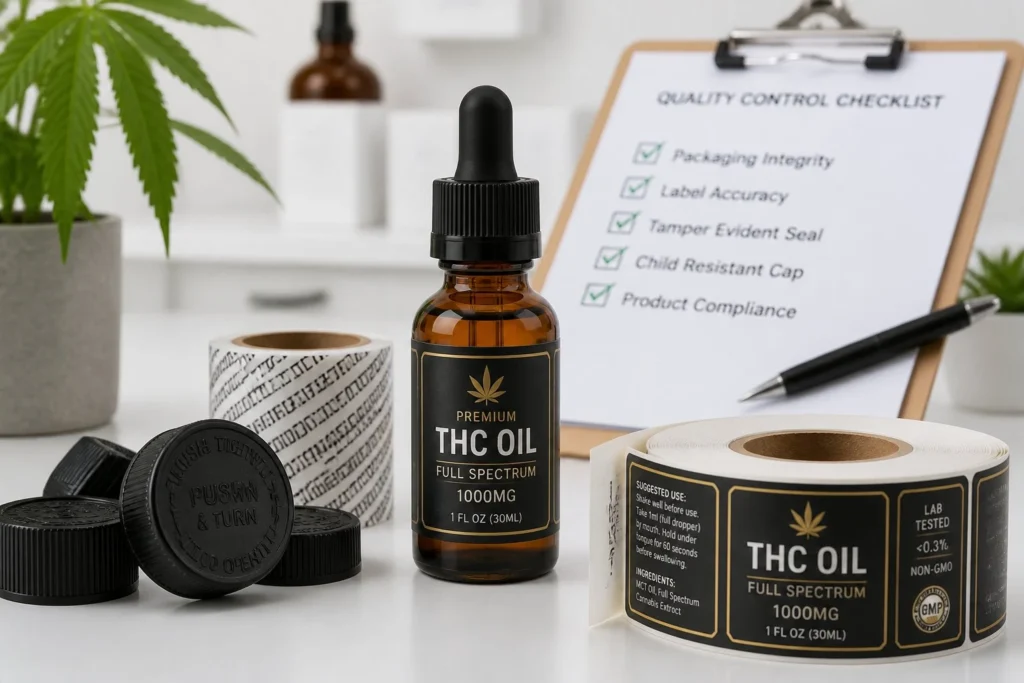
State regulations demand clear info on concentrate packaging—cannabinoid percentages, batch numbers, warning icons, and so on. Make sure labels show this data without blocking your branding or the product itself.
Tamper-evident seals are a must. Shrink bands wrap around the cap and neck and tear when opened. Breakable bridge seals connect the lid to the jar with thin strips that snap when twisted.
Stick compliance labels on flat surfaces—they’ll stay put better and won’t wrinkle. Side panels usually work better than curved shoulders. Save the front for your logo and brand vibe.
Labeling best practices:
- Use adhesives made for glass
- Don’t cover more than 60% of the visible glass
- Place tamper seals so they break cleanly and don’t leave sticky gunk
- Print batch/lot codes that survive IPA cleaning
Test how well your labels stick in cold storage. Some adhesives just give up in the fridge, and peeling labels can get you in trouble with regulators. Ask your supplier for cold-chain rated materials if your products need refrigeration.
Global Regulatory Compliance and Sustainability
Concentrate packaging has to meet child-resistant testing standards in North America and Europe. At the same time, sustainable materials like post-consumer recycled plastics are quickly becoming the norm for brands trying to stand out.
Regulatory Compliance Guide for North American and European Markets
Double-check that your concentrate jars meet 16 CFR § 1700.20 in the U.S. and ISO 8317 in Europe. These rules require child-resistant packaging and have strict testing protocols.
The U.S. CPSC says 85% of kids under five shouldn’t be able to open the package in five minutes, while at least 80% of adults aged 50-70 need to open and reclose it just fine.
Your supplier should hand over certification from labs like SGS or Intertek. Don’t just assume your jars are compliant—missing paperwork can come back to bite you during audits or recalls.
Key compliance requirements:
- Testing frequency: Recertify every year for each SKU
- Torque specs: 15-30 inch-pounds for most closures
- Labeling: “Keep out of reach of children” in the right font size
- Batch validation: Test 400 units per production run
Europe adds REACH rules, which limit certain plasticizers and heavy metals. Get MSDS paperwork to prove your jars meet these standards.
Sustainable Packaging Solutions
Customers want eco-friendly choices—there’s no way around it. Post-Consumer Recycled (PCR) glass can have anywhere from 25% to 100% recycled content and still keeps the same resistance as new glass.
PCR plastics are lighter, but you need to vet suppliers carefully. Ocean-bound plastics tell a great story for marketing, but they’ll cost you 15-30% more than basic HDPE.
Sustainable packaging options:
| Material Type | Recycled Content | Cost Premium | Key Benefit |
|---|---|---|---|
| PCR Glass | 25-100% | 10-20% | Full recyclability |
| Ocean Plastic | 50-80% | 15-30% | Marketing appeal |
| Hemp-Based | 30-40% | 20-35% | Biodegradable |
Deposit-return programs help you build loyalty and get packaging back for reuse. Collect a $1-2 deposit per jar and give store credit when people bring empties for sterilization. This works best for local dispensaries with regulars.
Carbon-neutral shipping certifications—through offset programs—make your sustainability claims more believable. Packaging weight directly affects shipping emissions, so lightweight PCR plastics are a win for mail-order.
Procurement and Supply Chain Quality Control

Bulk jar orders sometimes go sideways thanks to defects you don’t spot until you lose product in the field. Testing seals, checking tolerances, and prepping for transport conditions all help protect your inventory and reputation.
Five Critical Quality Control Metrics for Bulk Orders
Set up a documented inspection process before you accept shipments. Start by vacuum-seal testing—apply negative pressure to sample jars and watch for air leaks over 24 hours.
Cap torque matters more than you’d think. Suppliers should give you inch-pound specs—usually 8 to 15 for child-resistant closures. If caps are too loose, they leak; too tight, and you strip threads or frustrate customers.
Run inverted leak tests on random samples. Fill jars with water, seal, flip, and check for seepage around threads and liners. Legit suppliers like Green Rush Packaging should provide compliance certificates for these tests.
Check liner compatibility with your extracts. Ask for safety data sheets proving PTFE or food-grade silicone liners won’t react with acidic or terpene-heavy concentrates.
Use calipers to inspect glass thickness at different points on each jar. If you see more than 0.5mm variation, that’s a red flag for poor molds and higher breakage risk.
Transportation and Storage Risk Management
Air pressure changes during freight transport can mess with jar seals. When cabins depressurize at altitude, the air inside jars expands and pushes against the closures.
Ask your freight partner for foam inserts or pressure-relief packaging if you’re shipping by air. It’s a simple step, but it saves a lot of headaches.
Cargo containers can get ridiculously hot during transit. Summer heat over 120°F will soften cap liners and break vacuum seals.
If you’re shipping sensitive orders, go for climate-controlled transport or schedule for cooler months. It’s not always possible, but worth asking about.
Stack weight limits prevent bottom-layer crushing. Figure out your total pallet weight and make sure your jars can handle at least 200 pounds of compression without cracking.
Corner boards and reinforced stretch wrap help keep everything upright and damage-free. Don’t skip these, especially with glass.
Store incoming inventory in warehouses that hold steady between 60-75°F. If jars bounce between hot loading docks and cold storage, the materials expand and contract, which slowly ruins the seals.
Summary and Decision Matrix
Choosing the right concentrate jar depends on your extract type, storage environment, and whether you’re buying for yourself or for commercial use. A quick self-assessment for consumers and a procurement checklist for businesses can make things a lot easier.
Consumer Quick-Selection Self-Assessment
Start by figuring out your extract consistency. If you’ve got sauce or diamonds, you’ll want wide-base jars with low profiles to keep them from tipping, plus anti-creep necks to stop liquid from leaking into the threads.
For badder, wax, or shatter, go for jars with wide mouths so your dab tool can reach every edge without scraping your knuckles. It’s a little detail, but it matters.
Next, think about your storage conditions. Room temperature is fine for standard borosilicate glass jars with PTFE-lined caps.
If you store concentrates in the fridge or freezer, pick jars with airtight seals and let them warm up to room temperature before opening to avoid condensation.
How often do you use your concentrate? Daily users do well with smaller 5ml jars that keep things fresh between sessions.
If you only dab now and then, try UV-blocking glass like Miron violet glass for long-term storage. It really helps prevent cannabinoid breakdown.
Quick Selection Table:
| Extract Type | Jar Style | Cap Liner | Storage Method |
|---|---|---|---|
| Sauce/Diamonds | Wide-base, low-profile | PTFE | Room temp or cold |
| Badder/Wax | Wide-mouth, medium depth | PTFE or silicone | Room temp |
| Shatter | Standard depth | PTFE | Room temp with UV protection |
B2B Bulk Procurement Checklist
Check that your jars have child-resistant certification under 16 CFR § 1700.20 before you order. Ask your supplier for test documents showing pass rates for the required age groups—it’s a must for compliance and safety.
Do quality control testing on sample batches. Fill jars with water, seal them, flip them upside down for 24 hours, and see if anything leaks.
Check cap torque with a calibrated meter to make sure opening resistance is consistent. Run vacuum seal tests, too, to see if air sneaks in during temperature swings.
Ask your supplier about packaging for shipping. Internal cushioning systems that prevent jars from bumping into each other are a lifesaver.
For air freight, confirm boxes have pressure relief features. Altitude changes can mess up sealed containers if you’re not careful.
Final Procurement Checklist:
- Child-resistant certification documentation provided
- Sample batch passed leak and torque testing
- UV protection verified (if applicable)
- Cap liner material confirmed as PTFE or food-grade silicone
- Transportation packaging includes adequate cushioning
- Lead times accommodate your production schedule
- Minimum order quantities align with storage capacity
- Unit cost supports target product margins
Always ask for custom mold samples before you commit to a big order. Test these jars with your actual concentrates for a few weeks to spot any weird chemical interactions or seal failures.
Frequently Asked Questions
Choosing a concentrate jar isn’t just about looks. You’ve got to think about material science, seal integrity, storage conditions, and compliance. Here are some answers to the questions that really matter for keeping your product fresh and safe.
Which concentrate jar materials best prevent terpene loss and contamination over time?
Borosilicate glass does the best job at stopping terpene loss since it stays chemically inert even with acidic or solvent-heavy cannabis extracts. Regular silicone containers let terpenes migrate into the material, which kills flavor and can cause contamination from stuff leaching back out.
UV-blocking glass like Miron violet glass keeps light from breaking down cannabinoids and still gives you the same non-reactive surface. The internal surface finish matters more than most people realize—polished glass walls stop sticky concentrates from clinging to tiny imperfections, so you waste less and avoid contamination.
Skip containers with foam or cheap silicone liners touching your product. They just soak up terpenes and can release junk back into your concentrate over time.
How do jar size, headspace, and fill level affect concentrate freshness and consistency?
Too much headspace in your jar means more oxygen, which speeds up cannabinoid oxidation and turns THC into CBN. Match jar size to your actual product volume, leaving as little air gap as possible above the concentrate.
A 5-gram jar is way better for 4 grams of product than a huge 30-gram jar with a ton of empty space. Wide, low-profile jars keep liquid concentrates steady and prevent tipping, which saves you from losing product.
The jar shape also shortens the distance terpene vapors need to travel to escape, though with a good seal, that’s not a big deal. Try to fill jars at least 70% full if you can. More air means faster terpene loss, even if your seal is decent.
What closure types and liner options provide the most reliable airtight seal for concentrates?
PTFE (Teflon) liners give you the most chemically resistant seal because terpenes can’t react with them or dissolve the liner. Standard foam liners soak up terpene-heavy liquids, which eventually ruins the seal and contaminates your product.
Silicone-lined caps work okay for solid stuff like shatter or wax but don’t do great with sauce or high-terpene extracts. Child-resistant closures have to pass 16 CFR § 1700.20 standards, but they still need to be usable for adults.
Look for push-and-turn lids that balance safety with ease of use, especially for folks who have trouble with their hands. Cap torque matters more than most people think. You want 10-15 inch-pounds—that’s tight enough to keep the seal, but not so tight you need tools to open it.
What storage conditions (temperature, light, humidity) are optimal for preserving potency and flavor?
Keep your concentrate jars between 60-70°F and in total darkness. That’s the sweet spot for avoiding cannabinoid breakdown and terpene loss.
Temperatures above 77°F make oxidation kick into overdrive and terpenes evaporate faster, even with a good seal. Refrigeration is fine for long-term storage, but you’ll need to handle jars carefully to avoid moisture issues.
Light is the enemy—direct sunlight or even indoor lights will degrade THC into CBN and wreck delicate terpenes in just a few weeks. UV rays do the most damage, but really, any light is bad news over time.
Keep humidity below 65% where you store jars. High humidity won’t get inside sealed jars, but it can cause condensation if you move cold jars into a warm room.
If you refrigerate concentrates, let the jars sit at room temp for about 30 minutes before opening. That way, you avoid condensation forming on your product when cold air escapes the jar.
How should jars be cleaned and prepared to avoid residue, off-odors, or microbial risk during reuse?
Soak empty jars in 99% isopropyl alcohol for 15-20 minutes. That’ll dissolve all the leftover cannabinoids and terpenes.
Don’t use lower concentration alcohol (like 70%) because it leaves water behind, which can grow microbes and cause contamination. Skip soap or detergent—they leave residue that messes with flavor and texture.
Ultrasonic cleaning baths are great for getting residue out of tiny surface imperfections that hand washing misses. The vibrations break up stuck material without scratching the glass.
Rinse jars with distilled water only, never tap water. Tap water leaves mineral spots and might introduce microbes.
Let jars air-dry completely in a clean spot before filling them again. Any leftover moisture can cause condensation, dilute your concentrate, and even lead to mold if there’s plant material left over.
What commercial packaging standards and labeling requirements should brands consider for concentrate jars?
Child-resistant certification under 16 CFR § 1700.20 is still mandatory for cannabis concentrate packaging in most regulated markets. Your jar supplier needs to show testing documentation that proves compliance with both the senior adult use test and the child-resistance protocol.
Certifications from third-party labs mean more than manufacturer self-declarations. If a supplier can’t provide outside validation, that’s a red flag.
Tamper-evident seals have to break visibly on the first opening to meet dispensary and regulatory requirements. Neck bands or cap-to-jar bridges usually work better than pressure-sensitive labels, since people can’t just peel them off and stick them back on.
Leave enough space for compliance labels—these include THC content, batch numbers, testing results, and those mandatory warnings that seem to get longer every year.
Most states have rules about minimum font sizes and exactly where labels go, which can really shape your jar design and branding layout. It’s a balancing act between following the law and keeping your packaging attractive.
Heavier glass jars with thick bases create a premium tactile experience, even if you put the same amount of concentrate inside as you would with lighter packaging. That weight-based pricing psychology definitely influences how customers see product value—sometimes, heavier just feels better.
Surface finishing techniques like frosted glass or matte coatings can boost shelf appeal and make counterfeit packaging tougher to pull off. Spot UV printing and custom embossing add anti-counterfeiting features that help protect your brand identity, especially in crowded markets.