Essential Oil Bottle Sizes: Guide to Uses, Quality, and Market Trends
Essential oil bottle sizes go from tiny 1ml sample vials to big 30ml+ containers. Picking the right size really affects your oil’s quality and your costs.
The packaging you choose matters—it can keep your oils fresh, help you save money, and make sure you’re meeting what your customers actually want.
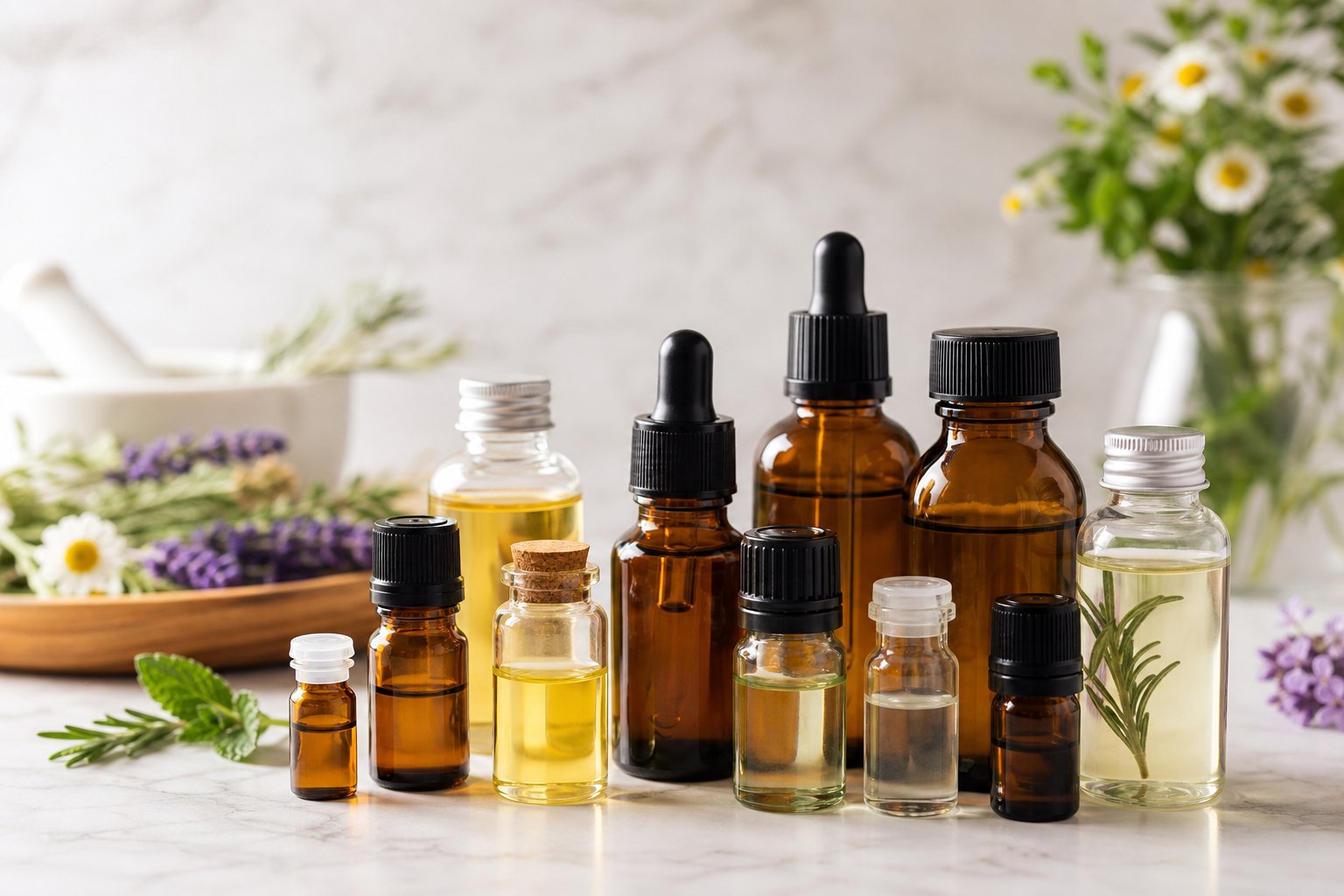
Standard essential oil bottles come in five main sizes: 1-3ml for samples and rare oils, 5ml for travel, 10ml for rollerballs, 15ml as the industry standard for retail, and 30ml or larger for carrier oils and bulk use. Each size works best for certain uses and depends on how fast you’ll go through the oil and how quickly it might oxidize.
Understanding the chemical constituents of essential oils explains why storage is a big deal.
This guide covers everything from picking the right bottle material to what’s trending in sustainable packaging. You’ll see how to match bottle sizes to different oils, choose the right closures, and keep your products in good shape over time.
Key Takeaways
- Bottle size really affects shelf life—too much air in a half-empty bottle speeds up oxidation.
- The 15ml amber or cobalt blue glass bottle is the top retail size for most major brands.
- Choosing the right bottle for your usage and oil type helps you avoid waste and protects your investment.
Importance of Bottle Size and Quality
Picking the right bottle size will impact how long your essential oils stay fresh. If you buy more than you use, or if there’s a lot of air in the bottle, your oil can lose its punch and you end up wasting money.
The amount of air (headspace) inside the bottle and how fast you use the oil make a big difference. If you don’t use it up quickly, that extra air speeds up oxidation and your oil loses quality.
The Impact of Headspace on Oil Oxidation
Headspace is just the empty gap between your oil and the bottle cap. As you use up oil, more air fills that space, and more oxygen gets to your precious drops.
Oxygen breaks down the active compounds in essential oils. Citrus oils like lemon and orange are especially quick to oxidize, while thicker oils like frankincense or sandalwood hold up longer.
If you leave a half-empty 30ml bottle of grapefruit oil sitting around, it’ll lose quality way faster than a freshly opened 10ml bottle. More headspace means more oxygen, and that’s bad news for your oil’s benefits.
You can help slow oxidation by moving oils from large bottles into smaller ones as you use them. Less air, longer life—it’s that simple.
Cost vs. Shelf Life Correlation
Buying big bottles saves you money per milliliter, but only if you actually use the oil before it goes bad. A 100ml bottle of lavender costs less per drop than five 15ml bottles, but if you only use it now and then, most of that oil will oxidize before you finish it.
Most essential oils stay at their best for 1-3 years if you store them right, but storage conditions matter. Figure out your monthly use before buying big. If you only use 2ml of peppermint oil a month, a 30ml bottle lasts you about 15 months—plenty of time. A 100ml bottle? That’ll take over four years, and you’ll probably end up tossing some.
Overview of Standard Essential Oil Bottle Sizes
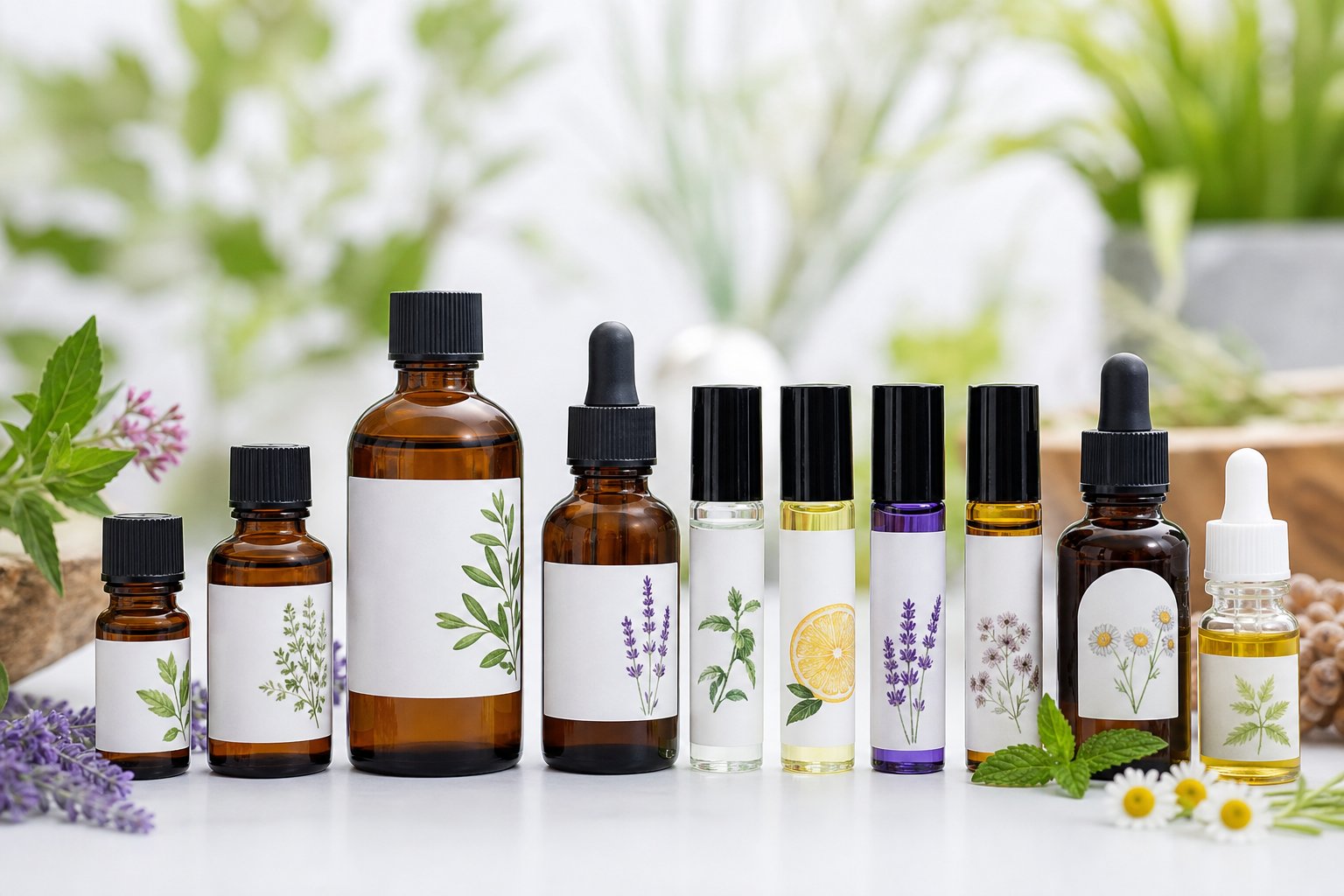
Essential oil bottles come in a handful of standard sizes to fit different needs. Most companies stick with a familiar set of sizes that have become the industry standard.
You’ll see bottles as small as 1ml sample vials and as large as 30ml or even 100ml containers. Each one has its own place and purpose.
| Bottle Size | Approximate Drops | Primary Use |
|---|---|---|
| 1ml – 3ml | 20 – 60 drops | Samples, rare oils |
| 5ml | 100 drops | Travel, samplers |
| 10ml | 200 drops | Rollerballs, personal use |
| 15ml | 300 drops | Retail standard |
| 30ml | 600 drops | Carrier oils, bulk use |
The 15ml bottle is by far the most popular size. Big brands go with this because it gives customers enough oil for regular use, but not so much that it sits around and oxidizes.
Bottles between 1ml and 5ml are great for samples or really premium oils. People want to try before buying a big bottle, and these sizes are perfect for travel kits too.
10ml bottles are everywhere in the rollerball market. You’ll see them used for pre-diluted blends made for direct skin application.
When you get into 30ml and up, these bottles usually hold carrier oils or go to commercial buyers. Massage therapists and spas use more product, so bigger bottles make sense. Storing oils in dark glass helps keep them fresh, no matter what size you pick.
Detailed Size Breakdown and Recommended Applications
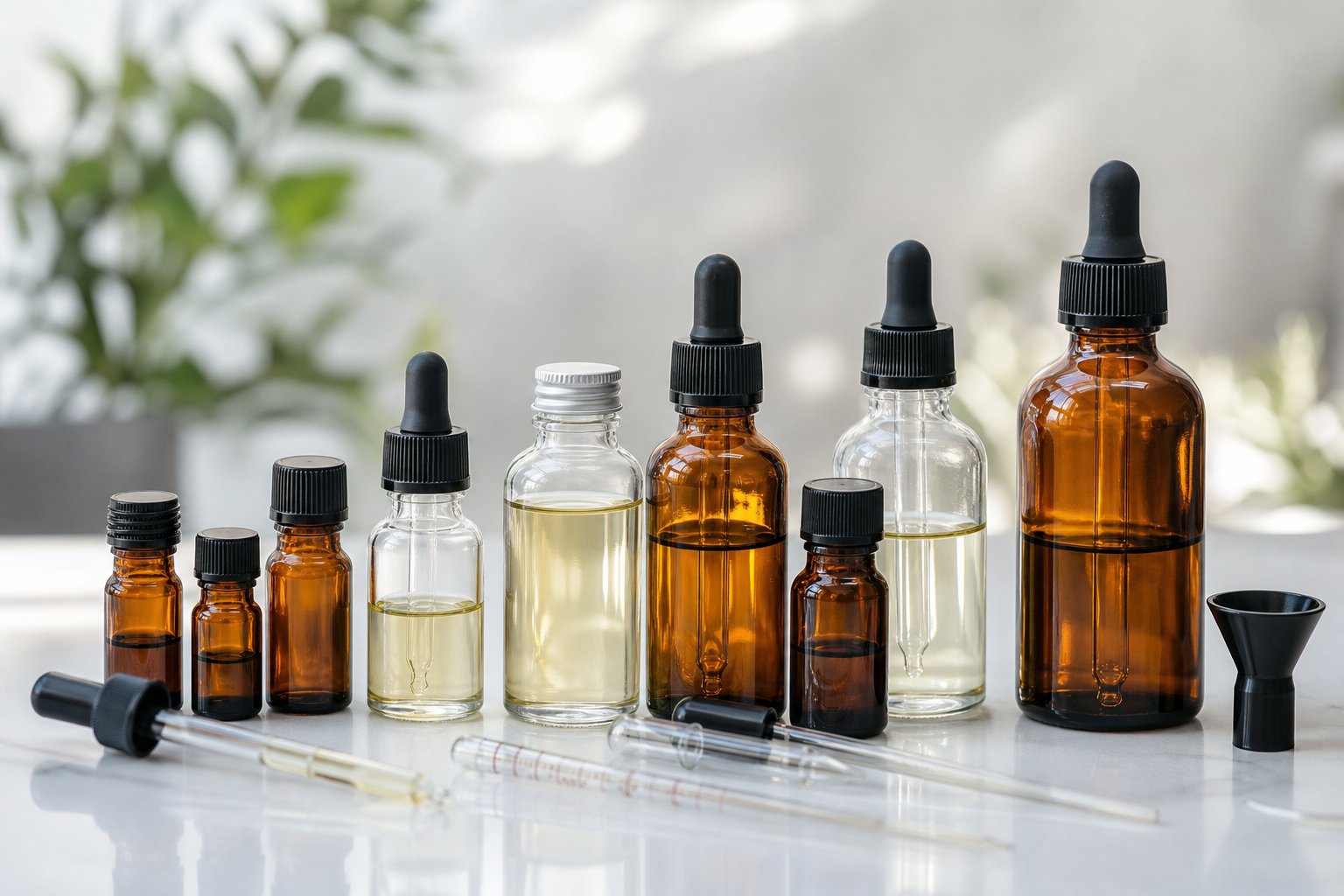
Essential oil bottles start at 1ml vials and go up to 30ml or more. Each size fits a certain need, and it really depends on things like oil cost, how often you use it, how fast it oxidizes, and whether you’re selling to regular folks or commercial buyers.
1ml – 3ml: Sample Vials and Premium Extracts
These little bottles do two main jobs. First, they let people try new oils without buying a full bottle. Second, they’re the go-to for really expensive or rare extracts.
Premium oils like Rose Otto, Jasmine Absolute, and Neroli can get crazy expensive—sometimes over $100 for just 5ml. A 1ml vial puts these luxury products in reach at $20-$30, so more people can test them out.
Sample vials are perfect for:
- Subscription box samples
- Trade show freebies
- Aromatherapy kits for consultations
- Educational sets
They also help limit oxidation. If you’re working with delicate floral oils that go bad quickly, a 2ml bottle makes sure you use it up before it starts losing quality.
5ml: Travel Sizes and Retail Samplers
The 5ml size sits right between samples and standard bottles. It’s a favorite for travelers (TSA-friendly!) and for folks just getting into aromatherapy who want to test things out.
You’ll get about 75-100 drops from a 5ml bottle, depending on the oil. If you use 3-5 drops a day in a diffuser, this bottle lasts two or three weeks—just right for fast-oxidizing citrus oils like Lemon and Grapefruit.
Retailers love 5ml bottles because they’re less intimidating price-wise. An $8-$12 bottle is an easy buy compared to $20-$25 for a 15ml. Gift sets often use 5ml bottles in themed collections like “Relaxation” or “Immune Support.”
Hotels and spas use 5ml bottles for in-room aromatherapy. They’re easy to include in welcome baskets and help prevent expensive inventory from walking away with guests.
10ml: Rollerballs for Direct Application
10ml bottles rule the rollerball market. These come with a rollerball top, so you can apply diluted oils straight to your skin—no mess, no fuss.
A 10ml bottle holds enough for 200-300 uses if you’re working with a standard 5% dilution in a carrier oil. That’s perfect for stuff like:
- Headache blends
- Focus formulas
- Sleep support
- Natural perfumes
Manufacturers like 10ml bottles for rollerballs because they fit easily in a purse, gym bag, or desk drawer. They don’t hog shelf space in stores, but you still get a decent amount of product.
Production costs stay reasonable, too, since most of what’s in there is carrier oil—jojoba or fractionated coconut—with just 5-10% essential oil. A 10ml rollerball usually sells for $12-$18, depending on the blend.
15ml: The Industry Gold Standard
Major brands like doTERRA and Young Living built their businesses around 15ml bottles. This size really hits the sweet spot—enough oil for regular users, but not so much that it sits around forever.
A 15ml bottle holds about 250 to 300 drops. If you diffuse oils twice a day with 4-6 drops each time, one bottle sticks around for 4-6 weeks.
That usage fits most reordering cycles and keeps oils fresh before oxidation sneaks in. Price positioning matters here, too.
The 15ml format tells shoppers, “Hey, this is a serious product”—not just a sample. Retail prices swing from $15 for basics like Lavender to over $80 for rare stuff like Sandalwood.
Storage gets a lot easier with 15ml bottles. You can keep a diverse collection without sacrificing your entire cabinet.
Ten 15ml bottles actually take up less space than five 30ml bottles, and you get twice the variety. This size also works well for drop-based dilution recipes.
Most aromatherapy formulas use drops as measurements, so 15ml bottles are just practical for following guides and safety protocols.
30ml & Above: Carrier Oils and Bulk Commercial Use
30ml bottles and up are for commercial operations and folks who use a lot of oil. Massage therapists, spa owners, and manufacturers need bigger quantities so they aren’t always reordering.
Carrier oils almost always come in 30ml or larger—think 60ml, 100ml, 120ml. Since proper dilution calls for 95-98% carrier oil, buying those in 10ml or 15ml bottles just doesn’t make sense.
A 30ml bottle of carrier oil only costs 20-30% more than a 15ml, but you get double the volume. Manufacturing and B2B applications need even bigger formats:
| Bottle Size | Primary Use | Target Customer |
|---|---|---|
| 30ml | Small batch production, active massage therapists | Small businesses, frequent blenders |
| 60ml – 100ml | Candle makers, soap manufacturers | Artisan product makers |
| 120ml+ | Commercial formulation, bulk redistribution | Wholesale buyers, large spas |
Grab 30ml bottles if you’re using an oil every day in different ways. Eucalyptus for steam, Peppermint for headaches, Tea Tree for cleaning—these really justify the larger size.
The cost per milliliter drops quite a bit, and you won’t run out at the worst moment.
Bottle Materials and Closure Options
Glass essential oil bottles protect those sensitive compounds from breaking down. The closure system matters, too—it keeps dispensing controlled and products safe.
Different colored glass blocks different amounts of UV, and each bottle size needs its own closure type.
The Importance of Amber and Cobalt Blue Glass
Amber glass blocks about 90% of light in the 10-400 nanometer range. That’s why it’s the go-to for glass essential oil bottles.
This protection keeps UV rays from wrecking delicate oils like citrus and chamomile. Cobalt blue glass gives similar UV protection but looks fancier, which helps brands stand out on shelves.
Both work much better than clear glass, which lets light in and speeds up oxidation. Wine packaging research backs this up—UV-resistant glass is still the top pick for light-sensitive liquids.
The bottle material you use really affects shelf life and potency.
Matching Closures to Capacities
Smaller dropper bottles (1ml-15ml) usually come with euro dropper assemblies—a glass pipette and a rubber bulb. The euro dropper is great for precise dispensing.
An orifice reducer pops right into the bottle neck and controls flow to one drop at a time. This works best for 5ml, 10ml, and 15ml bottles where you want to avoid waste.
Larger bottles (30ml and up) often just use screw caps or pour spouts. These usually hold carrier oils or blends that don’t need drop-by-drop precision.
Child-resistant caps are now pretty standard for all sizes, thanks to safety regulations. Common Closure Pairings:
- 1ml-3ml: Press-in caps or small euro droppers
- 5ml-15ml: Euro dropper or orifice reducer
- 10ml: Rollerball fitments for topical application
- 30ml+: Standard screw caps or disc top caps
Pick a dispensing method that fits your customer’s needs and meets safety rules in your area.
Selecting the Appropriate Bottle Size
Picking the right essential oil bottle size really depends on how fast you’ll use the oil and whether you’re buying for yourself or to resell. Some oils oxidize faster than others, and your buying strategy changes a lot between retail and wholesale.
Assessing Usage Frequency and Oil Types
Your usage frequency should drive your bottle size decision. If you’re using an oil daily for diffusing or on your skin, a 15ml or 30ml bottle is probably the way to go.
If you only use it now and then, stick with 5ml or 10ml. Oil chemistry is huge here.
Citrus oils like lemon, orange, and grapefruit start to oxidize within 6-12 months once opened. Buy these in smaller bottles unless you go through them quickly.
Resinous oils—frankincense, myrrh—can last 3-5 years. Larger bottles work fine for these since they hold up over time.
Highly volatile oils like tea tree and eucalyptus are somewhere in the middle. For most people, a 10ml or 15ml bottle makes sense.
Don’t forget about headspace. A half-empty 30ml bottle has way more air than a full 15ml, and that extra oxygen speeds up oxidation.
Purchasing Strategy: Retail vs. Wholesale Needs
Retail buyers should focus on freshness, not bulk discounts. Buy sizes you’ll finish before the oil’s shelf life runs out.
A 15ml bottle of lavender costs more per milliliter than a 30ml, but you won’t end up tossing stale oil. Wholesale buyers have a different game.
Buying 30ml or bigger bottles brings down per-unit costs and helps your margins. You’ll need to balance inventory costs against those volume savings.
Spas and massage therapists usually grab 30ml to 100ml bottles. They use oils fast enough to avoid oxidation anyway.
Small retailers do better stocking several 15ml bottles instead of one big one. This keeps oils fresh and reassures customers they’re getting quality.
Your shelf looks fuller and more inviting, too. Brand owners buying for private labeling need to watch minimum order quantities.
Custom bottle sizes often start at 5,000 to 10,000 units, so standard sizes are usually more practical for new businesses.
Custom Sizing and Packaging Trends
Brands are starting to move past standard bottle sizes to stand out, and environmental concerns are definitely reshaping packaging choices across the industry.
Custom Bottle Sizing for Brand Differentiation
Want your brand to pop? Try custom essential oil bottle sizes—not just the usual 5ml, 10ml, or 15ml.
Lots of companies now order unique sizes like 7ml, 12ml, or 20ml to catch the eye on crowded shelves. Custom molds let you create bottle shapes people recognize instantly.
This works especially well for premium markets where the packaging is part of the whole experience. Minimum order quantities for custom bottles usually start at 5,000 to 10,000 units.
You’ll pay more up front for tooling, but that investment can really boost brand recognition and cut down on direct competition. Key considerations for custom sizing:
- Production lead times can stretch 8-12 weeks longer than standard orders
- Tooling fees usually fall between $500 and $3,000, depending on how complex your design is
- Replacement caps and closures have to match your custom threads
- Inventory gets trickier with non-standard sizes
Sustainable and Eco-Friendly Packaging Shifts
Customers want essential oil packaging that’s gentler on the planet. The packaging industry’s evolution shows a real shift toward sustainable and biodegradable options.
Recyclable amber glass is still the gold standard, but it’s smart to check if your supplier uses post-consumer recycled (PCR) glass. More brands now highlight 30-50% PCR glass on their packaging as a selling point.
Closures are the tricky part. Traditional plastic droppers and reducers make recycling harder when they’re attached to glass bottles.
Some brands are switching to fully recyclable glass pipettes or biodegradable plastics made from plants. Sustainable packaging options:
- Refillable bottle programs that let customers return empties
- Minimalist labeling with soy-based inks and recyclable paper
- Bulk sizing to cut down on packaging waste
- Compostable boxes instead of plastic shrink wrap
Practical Storage and Handling Tips
How you store essential oils really affects their shelf life and aroma. Moving oils from big containers into smaller bottles and controlling your storage environment are the two most important things you can do.
Decanting Techniques to Preserve Freshness
If you buy oils in bulk, pour them into smaller bottles to cut down on oxidation. Every time you open a big bottle, more oxygen sneaks in and starts breaking down the oil.
Use a small funnel to transfer oils into clean, dry bottles. Fill to about 90% so there’s room for the dropper but not too much air.
Label each bottle right away with the oil name and date. This helps you avoid mix-ups and track how long the oil’s been open.
Use separate tools for each oil to prevent cross-contamination. Clean funnels and measuring tools with high-proof alcohol between uses.
Keep your bulk supply sealed and separate from your working bottles. Only open the big container when it’s time to refill.
Golden Rules for Light and Temperature Control
Essential oils lose their potency pretty fast if you leave them in direct sunlight or heat. Storage conditions for essential oils really do matter if you want to keep your oils fresh.
Keep your bottles in a cool, dark spot—think cabinet or drawer, not a bathroom shelf where the temperature jumps around. The sweet spot for storage is somewhere between 35°F and 70°F.
Don’t put oils near stoves, radiators, or sunny windowsills. Heat speeds up chemical changes and can make some parts of the oil evaporate faster, which just messes with the whole blend.
If you’ve got citrus oils, stick them in the fridge to make them last longer since they oxidize quicker than most. The rest can handle room temperature, as long as you keep them away from light and heat.
Frequently Asked Questions
Figuring out which essential oil bottle size to use isn’t just about picking a number—there are all sorts of measurements, standards, and real-world details that actually impact your product and business. Stuff like drop counts, which closures fit, and what’s trending in packaging all play a role, whether you’re just buying for yourself or running a shop.
What are the most common essential oil bottle sizes, and how many milliliters and drops does each typically hold?
You’ll see 5ml, 10ml, 15ml, and 30ml bottles pretty much everywhere. A 5ml bottle holds about 100 drops, while a 10ml gets you around 200 drops.
The standard 15ml size fits close to 300 drops, and a 30ml bottle comes in at roughly 600 drops. These numbers aren’t exact though—thicker oils like sandalwood make bigger drops than runny citrus oils, and the dropper style matters too.
Sample vials between 1ml and 3ml usually hold 20 to 60 drops. These little bottles are perfect for trying pricey oils before you commit to a full size.
How do I choose the right bottle size for personal use, sampling, gifting, or retail sales?
For yourself, think about how fast you’ll use the oil before it goes bad. Citrus oils go off fast, so grabbing a 5ml or 10ml is smart if you don’t use them often.
Want to sample? Go with 1ml to 3ml vials. They let you or your customers test new scents without spending much.
Gift sets usually stick to 5ml or 10ml bottles, since you can give a nice variety without overloading someone’s shelf (or wallet). It’s a good way to offer a mix of oils at a friendly price.
If you’re selling retail, the 15ml bottle is the go-to. It looks good on shelves, matches what most people expect, and lasts a few months with regular use.
What is the 20-30-50 rule for essential oils, and how does it guide purchasing or stocking bottle sizes?
The 20-30-50 rule is a blending trick—top notes are 20%, middle notes are 30%, and base notes are 50% of your mix. It helps you make blends that actually smell good for more than five minutes.
When you buy oils, this rule means you need less of those light, quick-to-evaporate top notes like citrus. Smaller bottles (5ml or 10ml) for these make sense, since they go bad fast anyway.
Base notes like patchouli and vetiver stick around, so you’ll want bigger bottles (15ml or 30ml). You use more of them in blends, and they don’t spoil as quickly.
If you’re stocking a store, order fewer bottles of expensive top notes and more of the heavy bases in larger sizes. It’s just more practical and saves you money.
What are the standard bottle thread and cap types for essential oils, and how do droppers, orifice reducers, and roller tops affect dispensing?
Most essential oil bottles use the 18/415 neck thread, which fits bottles from 5ml to 30ml. That means you can swap out different caps or droppers as needed.
Euro droppers are those glass pipettes inside a screw cap—they give you decent control but you’ll need both hands. Orifice reducers are little plastic inserts that slow things down to one drop at a time, and they’re super common because they keep things tidy.
Roller tops have a ball that rolls oil straight onto your skin. You’ll usually see these on 10ml bottles, especially for blends you want to use on the go.
How do glass color, material quality, and closure choice impact shelf life and oxidation for different bottle sizes?
Amber and cobalt blue glass block UV light, which helps stop oxidation from ruining your oils. Clear glass? Don’t bother—it won’t protect your oils and they’ll go off faster.
Thicker glass keeps temperatures steadier and holds up better when you ship or drop a bottle. Smaller bottles (under 10ml) usually use thin glass to stay lightweight, but 30ml bottles tend to be sturdier.
The cap is what really keeps air out. Standard black screw caps, like the phenolic cap, do a great job sealing bottles for the long haul.
Headspace—basically the air gap—matters more in bigger bottles. If you’ve got a half-empty 30ml bottle, there’s more air inside, so it’s better to pour your bulk oils into smaller bottles as you use them.
What current market trends are influencing demand for specific essential oil bottle sizes and packaging formats?
Sustainability is pushing brands to use more recyclable glass bottles with less plastic. Many are swapping out plastic droppers for glass euro droppers, and they’re ditching plastic reducers in favor of metal ones.
Roller bottles keep gaining traction, especially the 10ml size. People seem to love these for personal care and aromatherapy since they’re ready to use and don’t require any mixing know-how.
Travel-sized 5ml bottles are having a moment. Folks want to bring essential oils with them, and these tiny bottles fit airline rules and slip easily into a purse or pocket.
Brands are getting creative with custom bottle shapes to grab attention on busy retail shelves. They’re moving past the old-school cylindrical look, experimenting with geometric designs, but still sticking to standard neck threading so closures fit.
Refill programs are popping up, where customers bring back empty 15ml bottles for a cheaper refill. This move cuts down on packaging waste and encourages people to come back for more.