Wholesale Cream Jars: B2B Materials and Sizing Guide
Picking the right cream jar isn’t just about packaging. It shapes how customers see your brand and whether your product stays fresh.
The right jar protects your formula, meets legal rules, and helps your product stand out on the shelf. If you sell skincare or beauty products, your packaging is often the first thing a buyer notices.
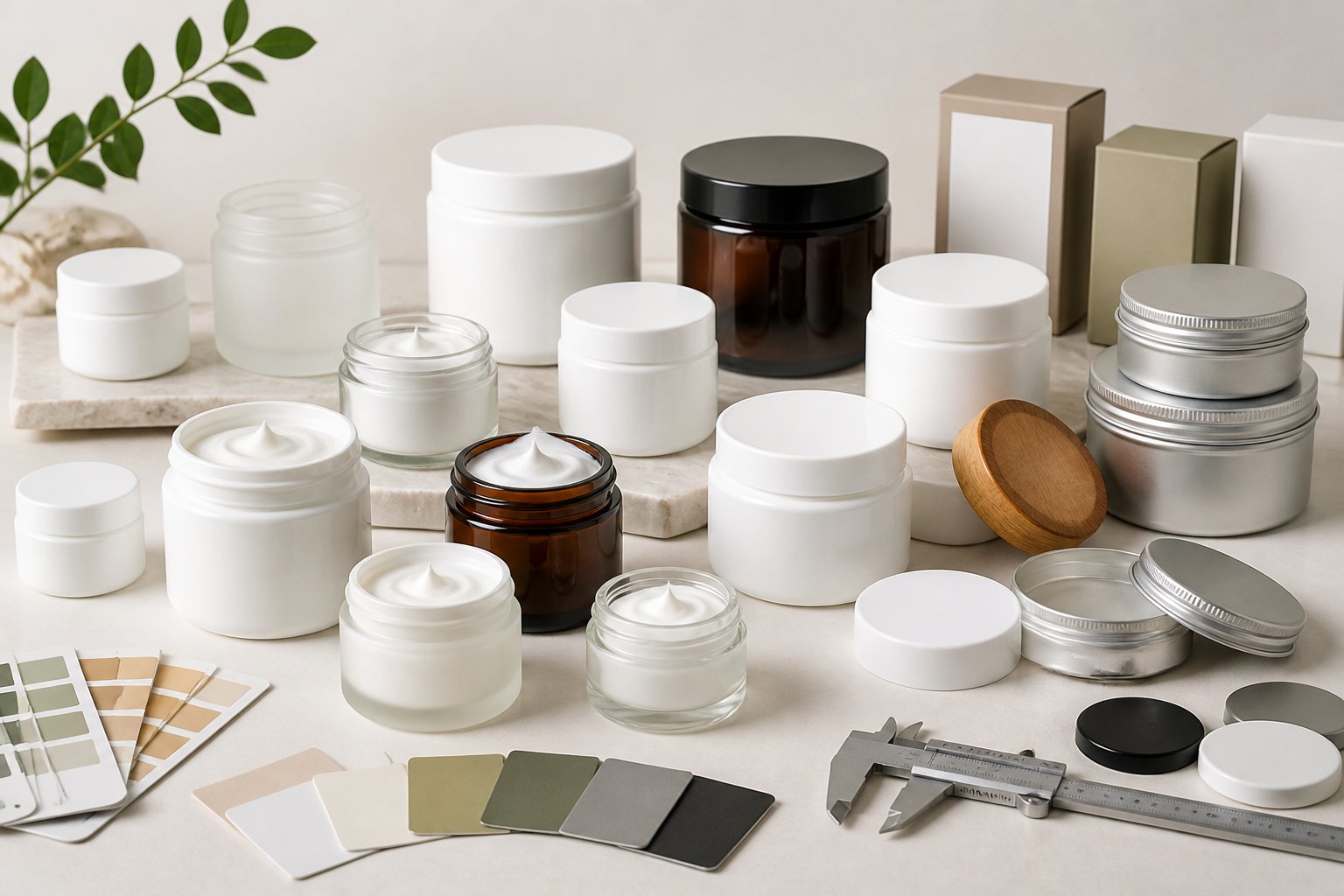
This guide covers the basics of wholesale cream jars, from glass and plastic to sustainable materials. You’ll figure out how to match jar sizes to your formula and pick decoration options that boost shelf appeal.
You’ll also find tips on regulatory standards, the difference between stock and custom molded jars, and ways to cut costs without sacrificing quality.
Whether you’re launching a new skincare line or updating your current packaging, this guide offers clear steps to help you make confident choices for your cosmetic packaging needs.
Key Takeaways
- Your jar material and size choices directly affect your brand identity and how customers perceive your beauty products.
- Airtight design and regulatory compliance are essential for protecting your formulation and avoiding legal issues.
- Comparing stock jars to custom molded options, along with smart sourcing strategies, can help you control costs while maintaining quality.
Material Selection Guide: Glass vs. Plastic vs. Sustainable Alternatives
Jar material affects cost, shelf life, brand image, and how eco-conscious buyers see your product. Each option has its pros and cons in weight, durability, and sustainability, so you’ll want to weigh those against your budget and brand goals.
Glass Cream Jars: Premium Weight, Zero Leaching, and Luxury Positioning
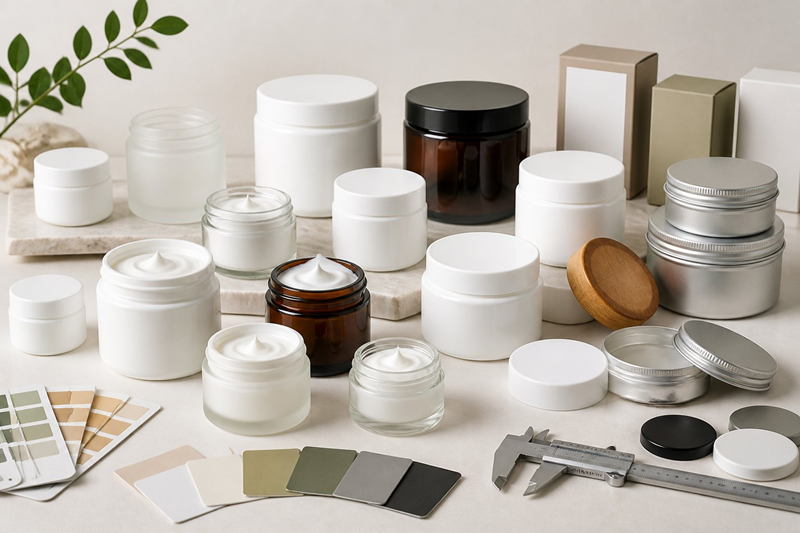
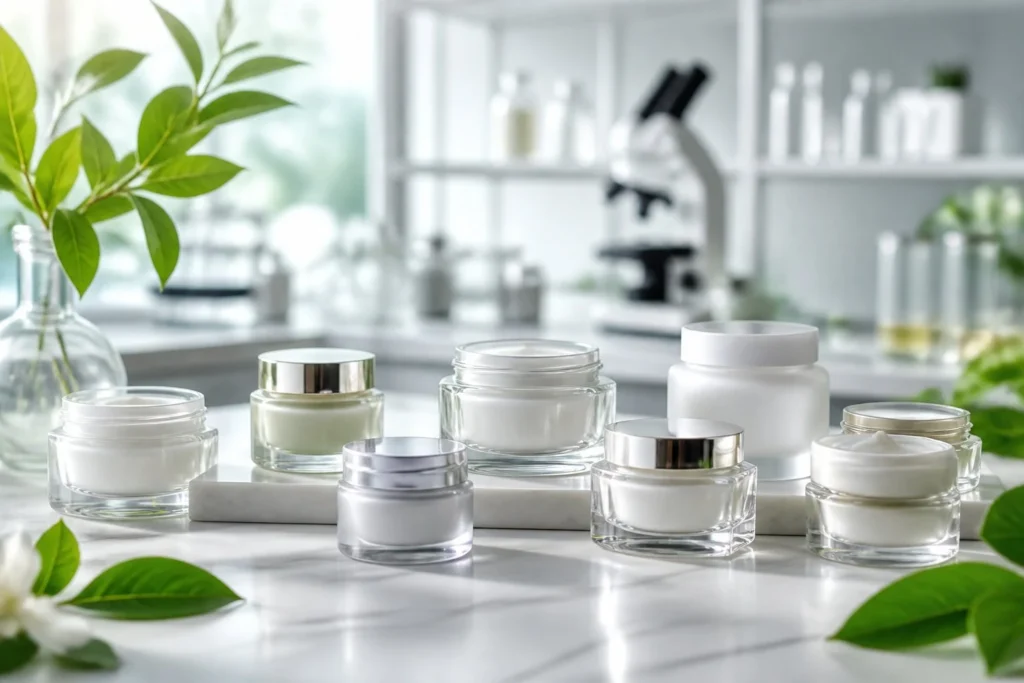
Glass cosmetic jars give your product a solid, high-end feel that plastic just can’t match. The weight alone signals quality to anyone picking up your jar in a store or unboxing it at home.
Glass doesn’t leach chemicals into your formula, so it’s a safe bet for sensitive skincare. It stands up to oils, acids, and other active ingredients without breaking down over time.
But glass costs more to ship because it’s heavier, and it breaks if dropped. You’ll also pay more upfront for glass jars than for plastic.
If you’re targeting a premium market, glass stays a strong choice despite the higher costs.
Plastic Options: PP, PET/PETG, and Double-Wall Acrylic Compared
Plastic cream jars come in several types, each with its own strengths:
- Polypropylene (PP): Lightweight, affordable, and tough against cracking. PP works for everyday jars that need to survive shipping and handling.
- PET/PETG: Clear and glossy, so you get a glass-like look at a lower price. PET jars are also usually recyclable in most cities.
- Double-wall acrylic: Adds a premium feel with an insulated look, popular for luxury skincare lines that want plastic’s practicality plus upscale style.
High-density polyethylene (HDPE) is another option, known for chemical resistance, but it’s less common for cream jars because it’s cloudier. Plastic jars are generally cheaper to produce and ship, making them practical for mid-market brands.
Sustainable Alternatives: PCR Plastics, Refillable Inner Pods, and Ocean Plastics
Eco-friendly packaging has gone from niche to basically expected. Post-consumer recycled (PCR) plastics let you use recycled material without losing the durability of regular PP or PET jars.
Refillable inner pods cut waste by letting customers reuse the outer jar and swap just the product insert. This keeps your branding visible across multiple purchases and reduces packaging thrown away.
Ocean plastics, made from reclaimed marine debris, appeal to eco-conscious buyers who want their purchase to support cleanup efforts.
These alternatives can cost more upfront than standard plastic jars, but they help you meet sustainability goals and match growing demand for less plastic waste in beauty.
Size & Capacity Matrix: Finding the Right Jar for Your Formulation
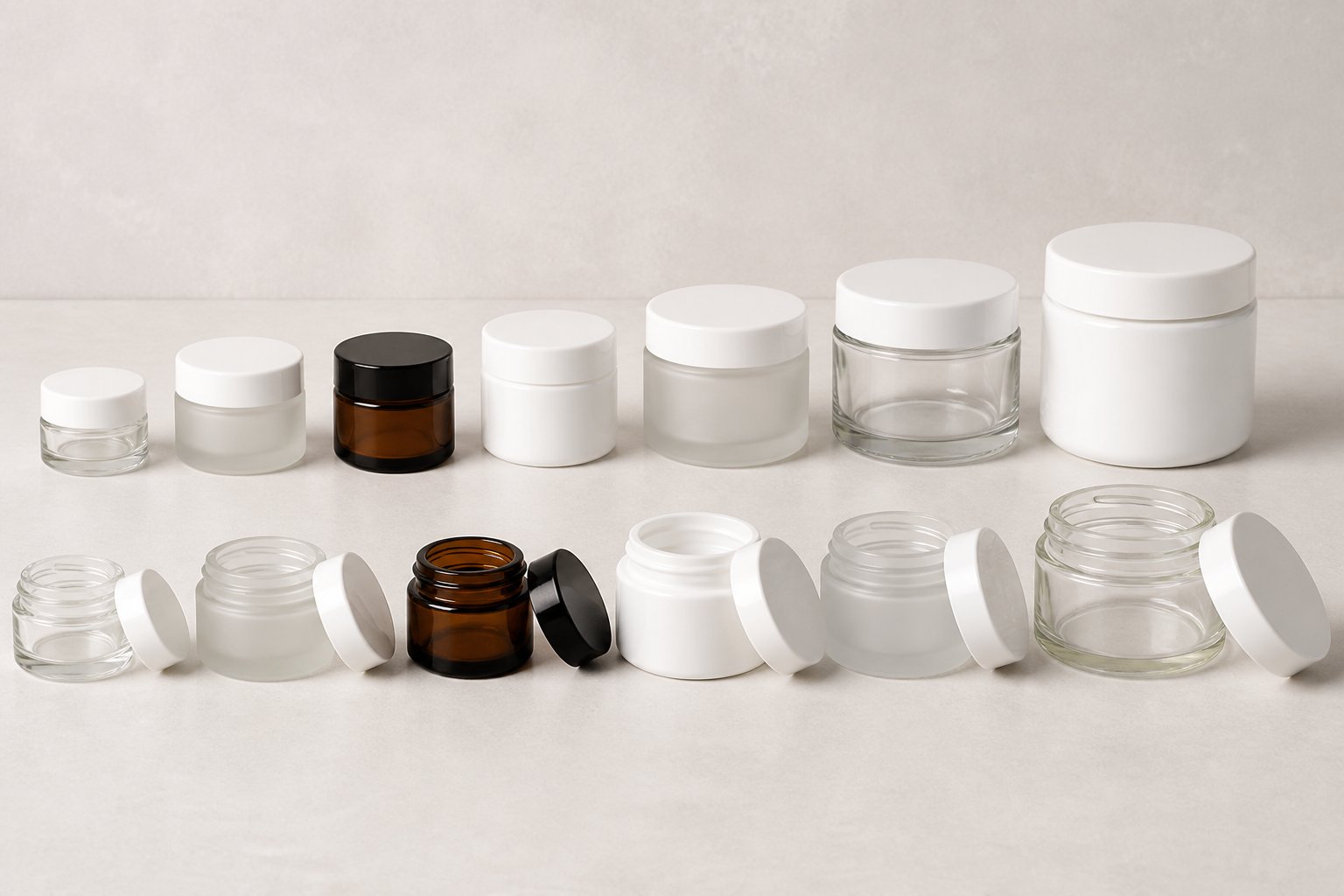
Jar size isn’t just about looks. It changes your cost per unit, shelf presence, and how customers actually use your product.
Picking the right volume for your formula helps control waste and keeps your pricing competitive.
15ml to 30ml (0.5 oz – 1 oz): Eye Creams, Spot Treatments, and Sample Kits
Small jars in this range work best for products used in tiny amounts. Eye creams and spot treatments only need a dab per use, so a big jar would just sit around.
This size is also common for sample kits and travel sets. Buyers can try a product without committing to a full-size jar.
Common uses:
- Eye creams
- Acne spot treatments
- Trial-size skincare
- Gift set inserts
Since the unit cost per jar is low, this size works well for brands testing new formulas or running limited promos.
50ml (1.7 oz): The Universal Industry Benchmark for Daily Face Creams
The 50ml jar is the go-to size for daily face creams. It holds enough for one to two months of regular use, based on average daily application.
This size fits standard shelf space and photographs well for online listings. Most manufacturers already have molds and packaging lines for 50ml jars, which keeps production costs lower than custom sizes.
Why 50ml works well:
- Matches typical daily use rates
- Fits most standard shelving and display cases
- Easy to source from multiple suppliers
- Balances product cost with retail price expectations
If you’re launching a new face cream line, 50ml is a safe starting point before testing other sizes.
100ml to 250ml+ (3.4 oz – 8.5 oz): Body Butters, Hair Masks, and Scrubs
Larger jars suit products applied to bigger areas, like body butters and scrubs. These formulas usually get used in bigger amounts per application than face creams.
Hair masks also fall into this range, since they cover more surface and are often used weekly, not daily.
Size breakdown by product type:
| Product Type | Typical Jar Size |
|---|---|
| Body Butter | 200ml – 250ml |
| Hair Mask | 150ml – 250ml |
| Body Scrub | 100ml – 200ml |
Larger jars lower the cost per milliliter. They also take up more shelf space and weigh more to ship, so keep that in mind when crunching your total cost per unit.
Customization and Decoration Techniques for High Shelf Appeal
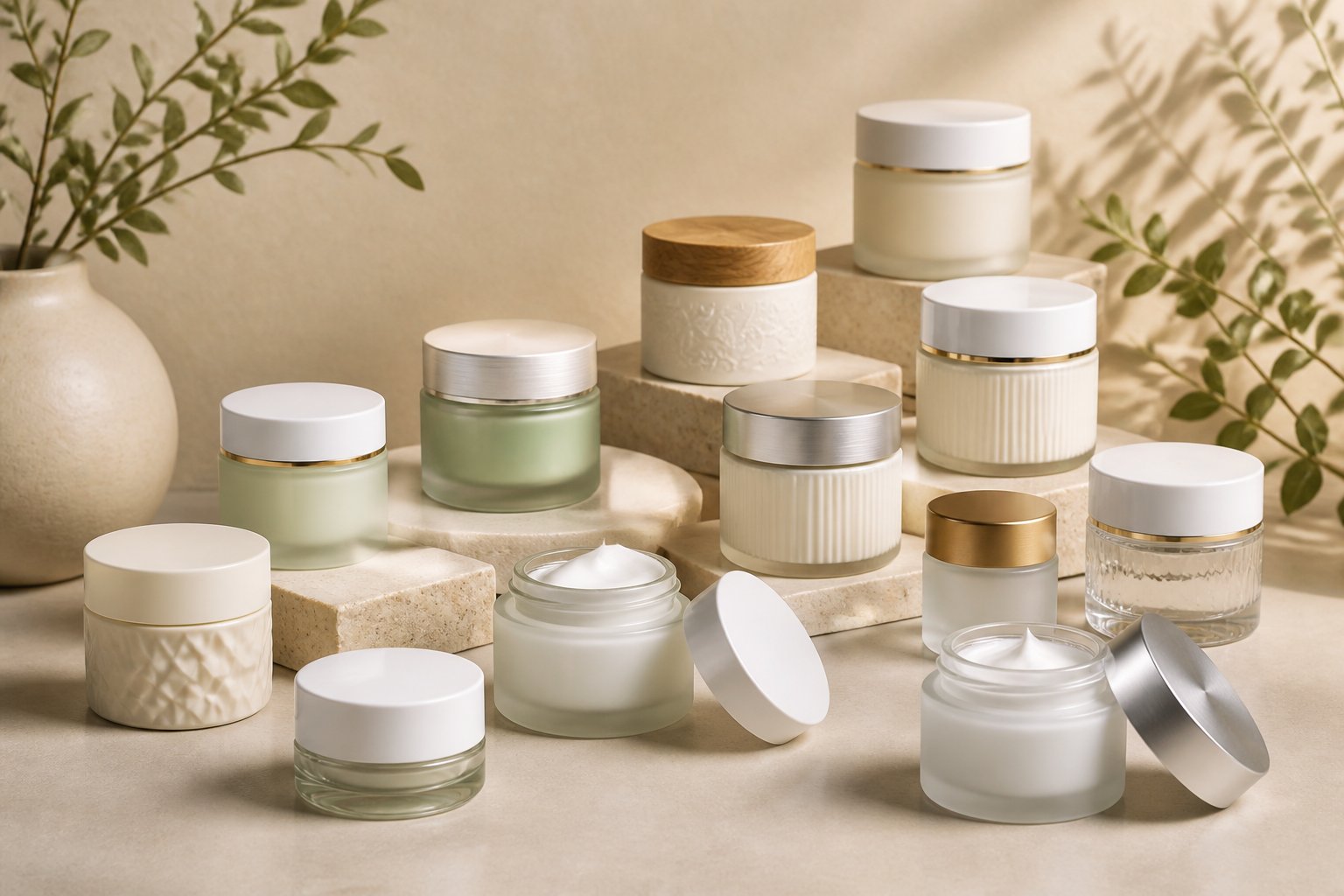
The finish and printing method you choose for your cream jars will shape how the product looks on a shelf and how well it holds up during shipping and use. You’ll want to balance brand image, budget, and how the decoration performs over time.
Surface Finishes: Frosted, Matte, Glossy UV, and Soft-Touch Sprays
Frosted glass gives jars a soft, diffused look and hides fingerprints. It works through etching or a coating on the outside of the jar.
Matte finishes create a flat, non-reflective surface. A lot of skincare brands go for matte because it looks clean and modern.
Glossy UV coatings add shine and a layer of uv protection. This helps slow down color fading on printed labels and makes colors pop under store lights.
Soft-touch sprays give jars a rubberized feel, which buyers often pick for premium lines since it stands out from standard glass or plastic.
Printing Methods: Silk-Screen, Hot Foil Stamping, and Embossing
Silk-screen printing puts ink directly onto the jar surface. It’s common for logo printing and works well for simple designs with up to four colors.
Hot stamping uses heat and pressure to transfer metallic foil onto the jar. It’s a favorite for gold or silver accents, giving a higher-end look than regular ink.
Embossing presses a raised design into the jar, adding texture you can actually feel. Some brands use this for their logo or brand name.
Custom labels and shrink sleeves are other solid options. Shrink sleeves wrap the entire jar and shrink to fit, letting you cover the whole surface with graphics without printing directly on the container.
Matching Decoration Choice to Order Scale (Low MOQs vs. High Volume)
Your order size should steer which decoration method makes sense financially.
| Method | Typical MOQ | Best For |
|---|---|---|
| Custom labels / shrink sleeves | Low (500–1,000 units) | Small batches, frequent design changes |
| Silk-screen printing | Medium (1,000–5,000 units) | Simple logos, moderate order sizes |
| Hot stamping / embossing | High (5,000+ units) | Large orders, premium branding |
Screen printing and shrink sleeves work well for smaller buyers, since setup costs stay manageable. Hot stamping and embossing, on the other hand, need more upfront tooling, so most suppliers only offer them for higher volumes. Some suppliers now support smaller custom production runs. That gives smaller brands more flexibility, so you don’t have to pay for huge batches upfront.
Airtightness & Leak Prevention: Protecting Formulations From Contamination
Your cream jars need more than a snug lid to keep formulas safe. Air, moisture, and outside gunk can break down active ingredients and shorten shelf life.
Always check seals, cap design, and thread quality before you place a bulk order.
The Importance of Gaskets and Inner Discs (PE/Induction Liners)
Inner liners are your first line of defense against air and moisture. Most wholesale cream jars use one of two liner types:
- PE foam liners: These compress against the jar rim to block leaks during shipping and storage.
- Induction liners: Heat-sealed foil bonds directly to the jar mouth, creating a barrier that shows if the seal’s been broken.
Ask suppliers whether their liners actually fit your formula’s needs. Water-based creams usually need a stronger moisture barrier than oil-based ones.
Induction liners also help with tamper evidence, which matters if you’re shipping to retailers or across state lines.
Airless Cream Jars vs. Traditional Open Jars
Airless jars use a pump or piston system that pushes product up as you use it. Air never touches the rest of the formula.
This design cuts down oxidation and helps keep active ingredients like vitamin C or retinol potent.
Traditional open jars rely on screw caps and liners for protection. But every time you open the jar, air and bacteria can sneak in.
They’re usually better for stable, less reactive formulas.
| Feature | Airless Jars | Traditional Jars |
|---|---|---|
| Air exposure | Minimal | Higher with each use |
| Best for | Sensitive/active ingredients | Stable formulas |
| Cost | Higher | Lower |
| User experience | Requires pump mechanism | Requires scooping |
Your pick really depends on how sensitive your formula is—and, of course, your budget.
Thread Precision and Cap Torque Specifications
Screw caps only seal well if the threads match the jar opening exactly. Loose or misaligned threads can cause leaks, even if the cap seems tight.
Ask for torque specs from your supplier, measured in inch-pounds. Most cream jars need 8 to 15 inch-pounds to seal without cracking anything.
Have your manufacturer test a sample batch for torque consistency before you go all-in. Tiny differences in thread depth or cap thickness can mess up the seal during shipping.
Getting this right means your product actually makes it from the factory to your customer’s shelf in good shape.
Navigating Regulatory Standards and Cosmetic Packaging Compliance
Before placing a bulk order, you’ve got to confirm your jars meet material safety rules, environmental laws, and labeling requirements for the markets where you sell. If you skip this, you might run into blocked shipments, fines, or even recalls—so double-check every detail with your supplier upfront.
FDA & EU REACH Compliance for Food/Cosmetic-Grade Materials
You need to verify that any jar touching your cream meets safety standards for your sales region. In the U.S., that means the plastic or glass must pass FDA food-contact or cosmetic-grade requirements, depending on your product.
In the EU, materials have to comply with REACH rules, which restrict certain chemicals like heavy metals and phthalates. Ask your supplier for:
- Certificates of Compliance (CoC)
- Material Safety Data Sheets (MSDS)
- Test reports from accredited labs
If you skip this, you risk customs seizures or recalls after your products are already on shelves. Not exactly worth the shortcut.
Sustainable Packaging Regulations (PCR & Recyclability Laws)
Many regions now require a minimum percentage of post-consumer recycled (PCR) content in plastic packaging. California’s SB 54 and the EU’s Packaging and Packaging Waste Regulation (PPWR) are two rules that directly affect cosmetic jars.
Recyclability rules are tightening up, too. In some places, you need clear labeling that tells consumers how to recycle the jar, lid, and any liner separately.
Ask your supplier:
- What percentage of PCR material is in the jar?
- Can the jar be recycled as a single unit, or does it need to be taken apart?
- Does the packaging meet local recyclability labeling laws?
Getting straight answers here shields you from compliance headaches as more regions crack down.
Labeling Clearance & Secondary Box Packaging Integration
Your jar labels need regulatory clearance before you can sell. This covers ingredient lists, warning statements, and any claims you make.
Also, make sure your jar design actually fits your secondary packaging—outer boxes, shrink sleeves, the works. If the jar’s too tall, wide, or oddly shaped, it may not fit in the box or could get damaged during shipping.
Check with your supplier early to confirm:
- Labels don’t cover required regulatory text
- Jar dimensions match your box specs
- Any tamper-evident seals don’t interfere with labeling
This step saves you from last-minute packaging headaches and keeps your launch on track.
Supply Chain Strategy: Stock Jars vs. Custom Molded Jars
Your choice between stock and custom jars impacts lead times, upfront costs, and how much control you have over brand identity. Good supply chain management means weighing these trade-offs against your order volume, budget, and timeline before you lock anything in.
Off-the-Shelf (Stock) Jars: Fast Lead Times & Low MOQs
Stock jars are pre-made and ready to go. You skip the wait for tooling or mold production.
Most suppliers offer low minimum order quantities (MOQs) for stock items. Some let you order as few as 500 to 1,000 units, which is great if you’re testing a new product or running a small business.
You’ll save on upfront costs since there are no mold fees. Lead times are usually two to four weeks, depending on your supplier and their stock levels.
The downside? Limited design choices. You’re picking from what’s already available—not creating something totally unique.
Custom OEM/ODM Molds: Brand Exclusivity & Unique Shapes
Custom molded jars give you a shape, size, or feature that no one else has. That’s helpful if you want a strong shelf presence or a signature look for your line.
OEM (Original Equipment Manufacturer) production uses your design specs. ODM (Original Design Manufacturer) means the supplier creates the design based on your requirements.
Both options require mold creation, which adds cost and time. Expect MOQs of 5,000 to 10,000 units or more, since suppliers need to recover mold expenses.
Mold development alone can take four to eight weeks, and then you add production time. This approach makes sense if you’ve got consistent sales and want packaging that builds long-term brand recognition.
Managing Inventory Lead Times & Sea/Air Shipping Costs
Your shipping method directly affects your lead time and budget. Sea freight costs less per unit but takes four to six weeks for most international routes.
Air freight is much faster—think five to ten days—but you’ll pay a lot more per kilogram. It’s really only worth it for urgent restocks or small batches.
Plan your reorders around both production and shipping timelines so you don’t run out of stock. If you’re using custom molds, remember to add mold lead time on top of shipping, since you can’t rush production without a finished mold.
Building a buffer or forecasting demand six to eight weeks out helps you dodge delays from customs, port congestion, or supplier hiccups.
4 Strategic Sourcing Tips to Reduce Wholesale Procurement Costs
Cutting costs on wholesale cream jars is all about smart planning before you order. You can lower your per-unit price by combining SKUs, testing for leaks early, optimizing shipping design, and setting clear quality standards with your factory.
SKU Consolidation With Interchangeable Inner Liners
Ordering fewer jar variations helps cut production costs. Many manufacturers offer jars with the same outer shell but different inner liner options.
This means you can order one base jar size and swap liners for different product viscosities. You avoid paying for multiple mold setups and can keep your minimum order quantities down.
Fewer molds mean lower tooling fees and shorter lead times. It also makes warehouse storage simpler since you keep fewer jar types in stock but still offer variety to your customers.
Formula Compatibility and Vacuum Leak Testing Protocols
Your cream formula needs to match the jar material you pick. Some plastics and glass coatings can react badly with certain oils, acids, or preservatives.
Before placing a bulk order, ask your supplier for compatibility test data. Make sure this includes exposure tests at different temperatures over several weeks.
Vacuum leak testing checks if your jar and lid actually seal. A weak seal can spoil your product, let in contaminants, or cause leaks during shipping.
Ask for test reports that show pressure differentials and seal failure rates. This step helps protect your product and lowers the risk of costly returns from cracked seals or spoiled inventory.
Freight Optimization With Lightweight/Stackable Designs
Jar weight and shape affect your freight costs. Heavier jars cost more to ship, and odd shapes waste container space.
Look for jars with stackable bases and thinner wall profiles that still meet strength needs. Some suppliers offer nested packaging to cut down on empty space during transport.
| Design Feature | Cost Impact |
|---|---|
| Lightweight material | Lower per-unit freight cost |
| Stackable shape | More units per pallet |
| Nested packaging | Reduced container volume |
These choices can lower your shipping costs by a noticeable percentage, especially for big international orders. Packaging efficiency, as noted in strategic sourcing procurement practices, directly impacts your total landed cost.
Factory QC Standards and Pre-Production Inspection
Quality assurance shields you from expensive defects and shipment delays. Make sure your factory follows a documented quality control process, ideally one that aligns with ISO 9001 standards.
Request a pre-production inspection before full manufacturing starts. This should check dimensions, material thickness, and surface finish.
A clear inspection checklist helps you spot problems early, like warping, discoloration, or thread issues on lids. Catching these things before mass production saves you from reordering costs and delays that could push back your launch.
Conclusion & Call-to-Action (CTA)
Picking the right wholesale cream jar means balancing material safety, looks, and supplier reliability. Your decision should protect your formula, fit your brand, and keep your supply chain running without hiccups.
Summary: Balancing Ingredient Safety, Aesthetics, and Supply Chain Stability
Your jar choice does more than look pretty. It keeps your formula safe, builds customer trust, and helps your business avoid delays.
Keep these priorities in mind:
- Material safety: Go for PCR plastic, PET, or glass that won’t mess with your ingredients
- Visual branding: Match jar shape, color, and finish to your line
- Supplier reliability: Stick with vendors who offer consistent lead times and good QC
- Cost balance: Compare unit price against minimum order quantities (MOQs)
Before placing your next order, get samples from at least two suppliers. Test them with your actual product for 30 days and see how they hold up.
Ask suppliers about their quality certifications and average shipping times. It’s a small step that protects your product line and your bottom line.
Frequently Asked Questions
Buyers always have questions before ordering cream jars in bulk. Here are answers about materials, sizing, customization, closures, and order requirements.
Which materials are best suited for wholesale cream jars, and how do they affect product compatibility?
Glass and plastic are the main choices for cream jars. Glass is great for oil-based creams and strong scents, since it doesn’t absorb odors or react with ingredients.
Plastic options like PET, PP, and acrylic weigh less and cost less to ship. PET works well for water-based creams, while PP resists oils and acids better.
Check how your product’s pH and ingredients interact with your chosen material. Some actives, like retinol or vitamin C, break down faster in certain plastics due to light or chemical reactions.
What cream jar sizes are most practical for skincare products, samples, and travel formats?
Skincare jars range from 15ml to 250ml, depending on the product. Full-size moisturizers usually use 30ml to 60ml, while body creams need 100ml to 250ml jars.
Sample sizes are often 2ml to 10ml. These let customers try before buying a full-size version.
Travel-size jars run from 15ml to 30ml. That fits airline carry-on rules and slips easily into a toiletry bag.
How can I determine the right jar capacity based on my product’s density and fill weight?
Cream density changes how much product fits in a jar. Thicker, heavier creams fill up faster by weight than lighter, whipped formulas, even if the jar size stays the same.
Calculate fill weight using your product’s specific gravity, not just volume. For example, a 50ml jar might hold 50 grams of a water-based lotion but only 35 grams of a dense, whipped cream because of air content.
Ask your supplier for a fill test before you lock in your order. That way, you know your jar size fits your target fill weight, and you won’t need expensive packaging changes later.
What customization options are available for cream jars, including colors, finishes, printing, and labeling?
Most suppliers offer color options by tinting plastic resin or using colored glass. Common finishes are matte, glossy, and frosted.
Printing options include silk screen printing, hot stamping, and labels. Silk screen is good for simple logos and text, while hot stamping adds metallic touches like gold or silver.
You can also customize jar shapes, but that usually means higher minimum orders. Custom molds cost more upfront but help you create a unique look.
Which closure and liner types provide the best protection against leakage, contamination, and moisture loss?
Screw-on lids are the most common closure for cream jars. They make a secure seal and fit most shapes and sizes.
Inner liners add extra protection. Foam liners help stop leaks during shipping, while induction seals create a tamper-evident barrier that customers break on first use.
If your product is sensitive to air, look for jars with airless pump systems or barrier liners. These options cut down on oxidation and help your product last longer on the shelf.
What minimum order quantities, lead times, and quality requirements should B2B buyers consider when sourcing cream jars?
Minimum order quantities (MOQs) for cream jars usually fall somewhere between 1,000 and 10,000 units. If you want custom colors or printed designs, you’ll probably need to order on the higher end of that range.
Lead times really depend on what you’re ordering and how much customization you want. Stock jars might ship out in two to four weeks, but if you’re going for something custom—like a new mold—you could be waiting eight to twelve weeks, maybe even longer.
Definitely ask your suppliers for quality certifications, like material safety data sheets or compliance documents for your market. It’s smart to get physical samples before you commit to a big order, just to double-check the jars fit your needs for material and size compatibility.