How Cannabis Companies Make Sure Packaging Follows State Rules
Cannabis packaging is not just about looking good on a shelf. It is about safety, trust, and following the law. In the United States, each state can set its own cannabis rules. That means a package that works in one state might break the rules in another. Because of this, cannabis companies must be very careful. They build step-by-step systems to make sure every package and label meets state cannabis regulations.
This guide explains how companies do it, from the first design idea to the final product going out the door.
Why cannabis packaging rules are so strict
Cannabis products can be strong. Some look like candy or snacks. States worry about kids getting into them by accident. States also want adults to know what they are buying and how strong it is.
Most state rules focus on these goals:
- Keep products away from kids
- Make sure the package shows clear warnings
- Make sure labels tell the truth
- Stop leaks, spills, and damage
- Help regulators track products from start to finish
If a company fails packaging rules, it can face fines, product holds, or even recalls. That is why packaging compliance is a big part of running a cannabis brand.
Step 1: Companies build a state rule map
The first big step is building a “state rules map.” Many companies call it a packaging and labeling matrix. It is a document that lists the rules for each state the company sells in.
This map usually includes:
- Does the package need to be child-resistant
- Does it need tamper seals
- Does it need to be resealable for multi-use items
- Does the product need an opaque package so you cannot see inside
- Does the state require a special cannabis symbol
- What warning words must be printed
- What designs are not allowed, like cartoons or candy looks
- What tracking info must be included
This map helps companies avoid guessing. It also helps them plan ahead so they do not waste money printing labels that cannot be used.
Step 2: They treat packaging like a controlled item
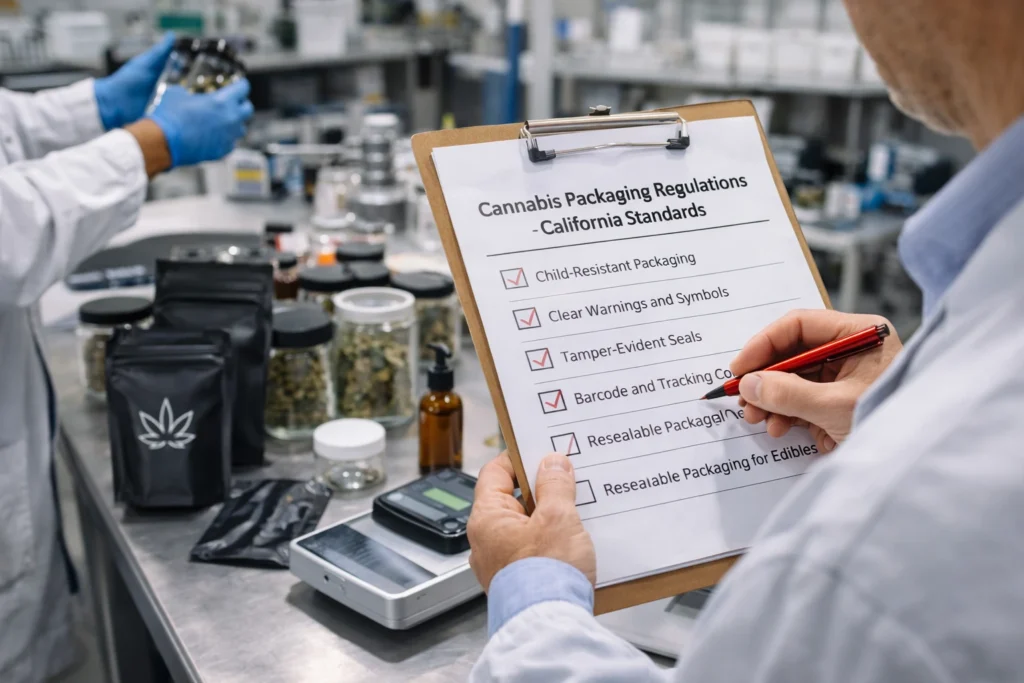
In many industries, companies control parts like medicines or food. Cannabis companies often do the same with packaging. They write packaging specs that describe exactly what should be used.
A packaging spec can include:
- The size and shape of the container
- What it is made from
- The type of cap or zipper
- How it must close
- If it needs a seal band or heat seal
- How thick the plastic or glass must be
- How the label must fit on the package
They also control label files. That means they keep the “final approved” design in a safe system. Only the newest version can be printed. Old versions are blocked so workers do not use the wrong label.
This helps stop errors like using an old warning statement or the wrong symbol size.
Step 3: They prove child-resistant packaging the right way
One of the biggest rules in many states is child-resistant packaging. People often shorten it to “CR.” CR packaging is made to be hard for kids to open, but still possible for adults.
Many states use a federal testing standard for child-resistant packs. It comes from the Consumer Product Safety Commission and the Poison Prevention Packaging Act.
Companies do not rely on a supplier saying, “Yes, it is child-resistant.” Instead, strong companies ask for proof.
They often request:
- Testing reports from a real lab
- Proof that the exact package type was tested
- Proof that the same closure style was tested
- Proof it is tested as a reclosable or non-reclosable pack, depending on the product
This part matters a lot. Even small changes can break compliance. If a pouch is tested with one zipper type, a new zipper type may not count. If a jar is tested with one cap style, a new cap style may fail.
That is why companies keep a “CR proof folder” for each package. It includes test papers and supplier details. If an inspector asks, they can show it quickly.
Step 4: They check tamper seals and reseal rules
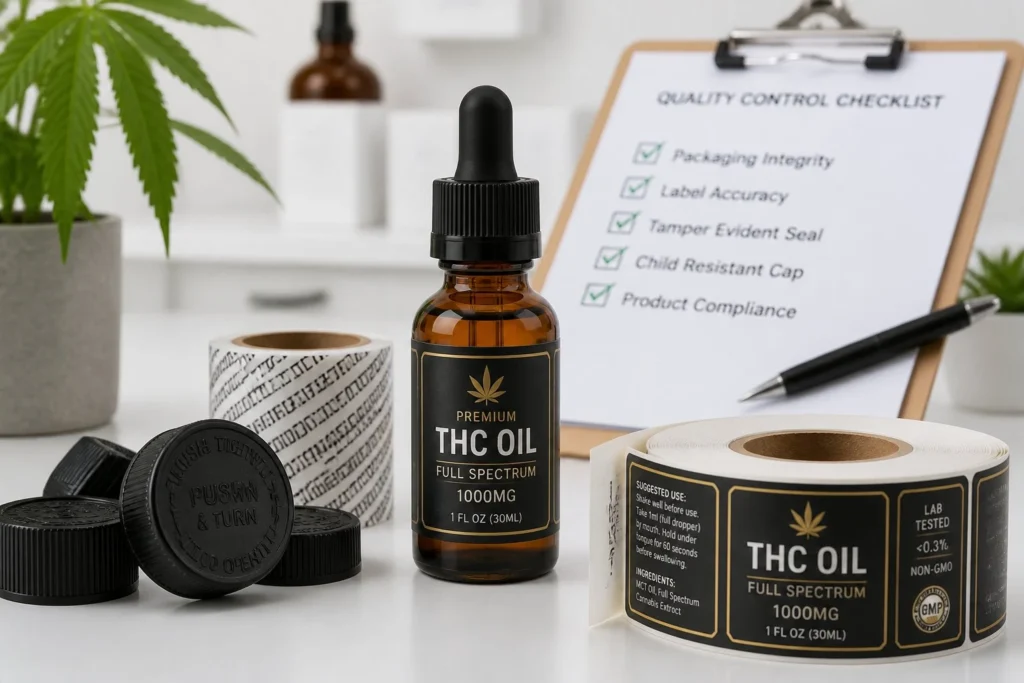
Many states also want tamper-evident packaging. That means a buyer can tell if the package was opened before purchase. This protects customers and helps stop product tampering.
Common tamper methods include:
- Heat seals on pouches
- Shrink bands on jars
- Tear bands on bottles
- Stickers or seal labels that break when opened
Some states also require resealable packaging for items with more than one serving. That means if a package holds multiple servings, it must be able to close again after opening. This is common for edibles like gummies or chocolates.
Companies make sure these rules are met by doing checks like:
- Testing seal strength during production
- Inspecting seals during packing
- Making sure the reseal feature works after the first open
- Training staff not to weaken seals to “make opening easier”
These checks sound simple, but they stop many real compliance issues.
Step 5: They build a label review system
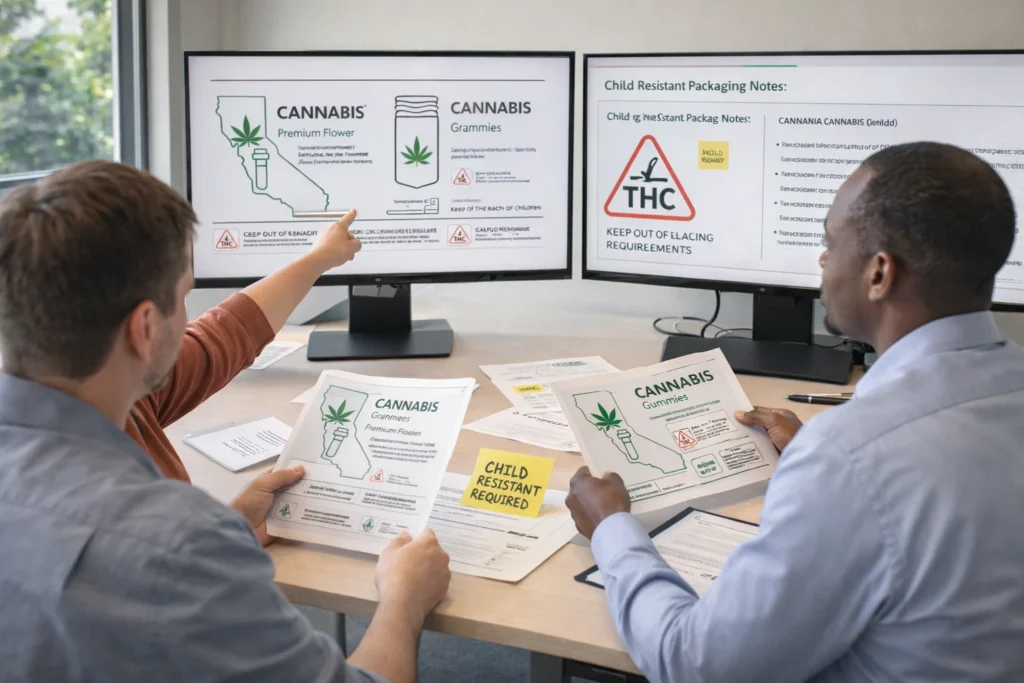
Labels are often where companies get in trouble. Why? Because label rules change. A state may update warning language, symbol rules, or what info must be shown.
To avoid mistakes, companies create a label approval workflow. It is like a set path every label must follow before printing.
A common label workflow looks like this:
- Track rule updates and change the state rule map
- Update label text in a controlled system
- Create a label proof
- Review it for compliance, often with QA and a compliance manager
- Check details like font size, symbol size, and placement
- Approve the final version and lock it
- Print only the approved version
They also keep versions. That means every label has a version number and date. If a problem happens, they can trace which version was used.
Step 6: They build packaging around tracking and inspections
Many states require cannabis tracking, often called track-and-trace. States want to know where products come from, where they go, and who handled them.
In many states, companies use systems like Metrc. These systems can require special ID labels, barcodes, or QR codes.
To match packaging with tracking rules, companies do things like:
- Make sure each package has space for IDs and barcodes
- Test barcode scanning before full production
- Match product info on the label with tracking records
- Reconcile labels so the right ID goes on the right item
This helps in inspections too. If an inspector checks a product, the label and the tracking record must match.
Step 7: They qualify packaging vendors and control changes
A lot of packaging comes from outside suppliers. That is fine, but it brings risk. A supplier might change a material, a mold, or a zipper style. Even a small change can affect child resistance or seal strength.
Good cannabis companies treat packaging suppliers like important partners. They often do vendor qualification. This means they check the supplier before buying big amounts.
Vendor qualification can include:
- Reviewing test reports
- Checking quality controls
- Confirming the supplier can keep the same specs
- Asking for proof of food-safe materials for edibles
- Reviewing lead times and consistency
Companies also use change control. This means the supplier must tell them before making any changes. If a change is needed, the company reviews it and may require new testing.
This is a big deal for CR packages. If the package changes, the old test report might not apply.
Step 8: They do incoming checks and line checks
Even if a package design is compliant, errors can happen in real production. A wrong cap can be used. A wrong label roll can be loaded. A seal can fail.
So companies build checks into the process.
Incoming packaging checks can include:
- Confirming the right item arrived
- Measuring key parts
- Testing closures
- Checking for damage
- Confirming packaging is clean and odor-free where needed
Line checks during packing can include:
- Verifying the right label is used for the right state
- Checking that required warnings are printed clearly
- Checking seals every set number of units
- Doing “line clearance” before a run starts, so no old labels are left behind
These steps prevent mix-ups that can become big compliance issues.
Step 9: They keep proof ready for regulators
Cannabis is a regulated industry. Inspections can happen. Products can be checked at a facility or even at retail.
That is why companies keep an evidence packet. It is a folder, digital or physical, that shows they followed the rules.
A strong evidence packet may include:
- Child-resistant test reports
- Packaging spec sheets
- Tamper seal method description
- Final approved label files
- Label approval records
- Batch packing records
- Tracking and label reconciliation logs
- Complaint logs and how issues were handled
If a state asks, “Show me proof this is child-resistant,” the company can answer fast. If a recall happens, the company can trace what packaging and labels were used.
Common mistakes companies work hard to avoid
Even careful teams can slip. Here are common packaging mistakes and how companies prevent them:
Mistake 1: Using one label for many states
Fix: Build state-specific labels or use a smart label system that changes required text based on state.
Mistake 2: Child-resistant proof is missing or outdated
Fix: Keep test reports on file and review them when packaging changes.
Mistake 3: Package is child-resistant but not tamper-evident
Fix: Add a seal method and test it on the line.
Mistake 4: Label design breaks “not for kids” rules
Fix: Review packaging art for child appeal risks before printing.
Mistake 5: Barcode or tracking info does not scan
Fix: Test scanning before full runs and check printing quality.
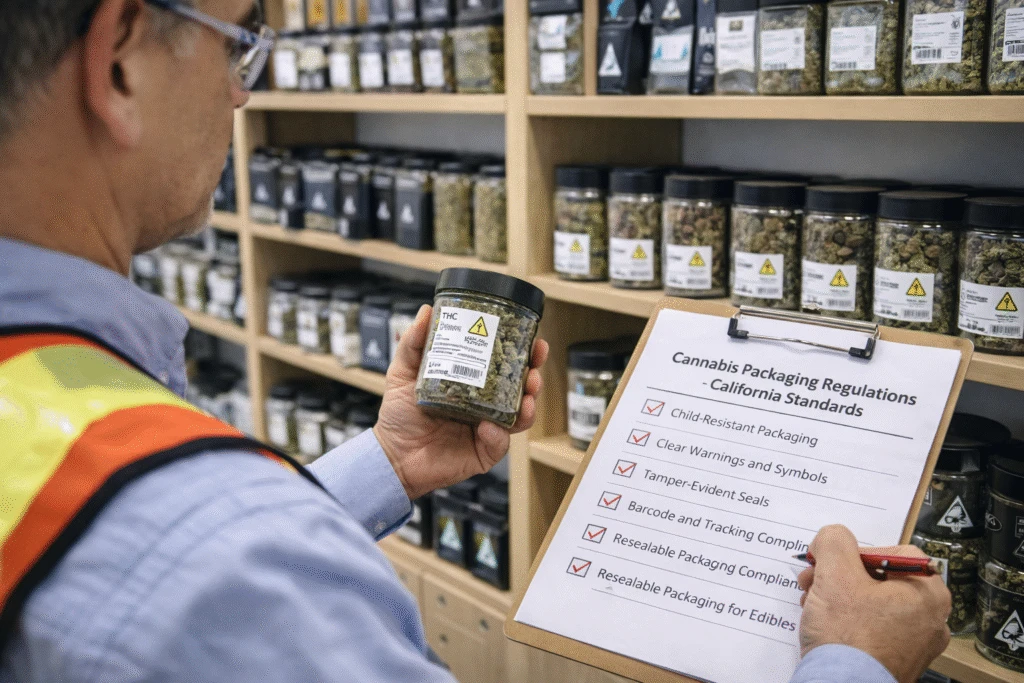
Final thoughts: Compliance is a system, not a one-time task
Cannabis packaging compliance is not just one checklist. It is a full system that connects design, suppliers, printing, production, and tracking. Companies that do it well build clear documents, test packages the right way, control label versions, and keep proof ready for inspections.
If you are a cannabis brand, a packager, or even a designer, the best approach is simple:
- Know each state’s rules
- Build packaging specs and label controls
- Ask for real proof of child resistance
- Use tamper seals and reseal features when required
- Check work at every step
- Keep records like you will be inspected tomorrow
When companies follow these steps, they protect customers, reduce risk, and stay ready for growth across more states.