
Pre-Roll Glass Tube Sizing Chart: Matching Diameter to Joint Size
If you sell or pack pre-rolls, picking the right tube is a big deal. A tube that is too small can crush the cone, bend the tip, or make packing slow. A tube that is too big can let the joint move around and look cheap on the shelf.
This guide is made to help you choose the right pre roll tube size for glass tubes. You will learn what diameter means, why the neck matters, and how to match tube size to common joint sizes like 70mm, 84mm, 98mm, and 109mm.
What “pre roll tube size” really means
When people say pre roll tube size, they often mean one of two things:
- Tube length: how tall the tube is (like 90mm, 116mm, 120mm, 125mm)
- Tube diameter: how wide the tube is
But for glass tubes, there is one more detail that matters a lot:
- Opening or neck inner diameter (ID): the usable opening at the top of the tube
This opening is the “gate” your cone must pass through. Even if the tube body is wide, the neck can be tighter. That is why many fit problems happen at the top.
Why glass tube neck size matters most
A pre-roll cone is widest near the top. That is the part that must slide into the tube. If the tube opening is too tight:
- the cone can get stuck
- the paper can tear
- the joint can get scraped
- your packing team will move slower
- you may get more damaged units
Glass tubes often have a neck opening around 12mm or 13mm, depending on the model. Some listings show neck IDs like about 12.1mm, while others show opening sizes around 13mm. In real packing, that small difference can change everything.
The simple rule for matching diameter to joint size
Here is a rule that works well for most brands and most cones:
Minimum tube opening ID = cone widest outside diameter (OD) + 1.5mm to 2.5mm
This extra space is called clearance. You need clearance because:
- cones are not always perfectly round
- packed cones can swell a little
- paper seams add thickness
- small size changes happen between batches
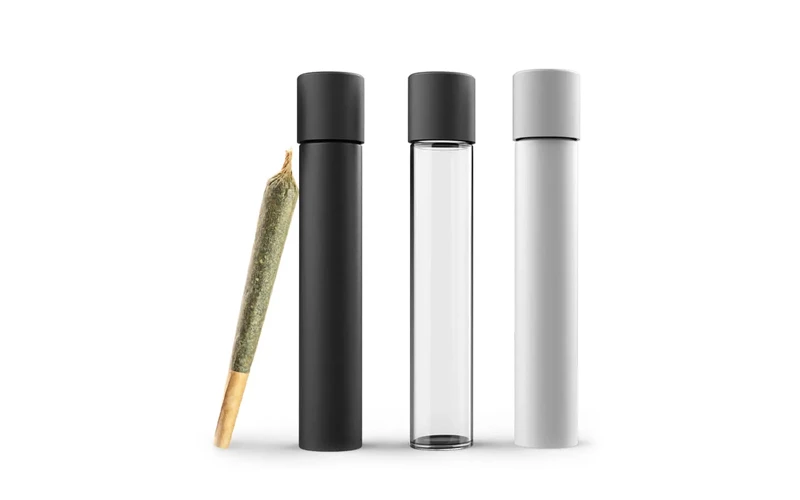
Pre-roll joint sizes and typical cone widths
Cone “joint size” is usually talked about by length. Common sizes include:
- 70mm mini cones (often called dogwalkers)
- 78mm mini cones
- 84mm standard cones (often called 1¼)
- 98mm cones (often called 98 special)
- 109mm king size cones
But length alone does not tell you the cone width. Some cones are slim. Some are fat. Some are “reefer style” and can be narrower.
Still, many cone makers list an opening width for the wide end. You can use that number as your cone’s max OD reference.
Typical wide-end cone diameters you may see:
- 70mm minis: about 10.2mm to 10.8mm
- 78mm minis: about 10.5mm
- 84mm reefer style examples: about 9.2mm
- 98mm reefer style examples: about 9.2mm
Pre-Roll Glass Tube Sizing Chart (Diameter vs Joint Size)
Below is a practical Pre-Roll Glass Tube Sizing Chart. It matches common joint sizes to a safe tube opening ID.
Remember: the key number is the opening ID, not just the body width.
Pre-Roll Glass Tube Sizing Chart: Match Diameter to Joint Size
| Joint size (cone length) | Common use | Typical wide-end cone OD | Recommended tube opening ID | Notes |
| 70mm mini | 0.25g to 0.35g | 10.2mm to 10.8mm | 12mm minimum, 13mm easy fit | 12mm can feel snug if packed tight |
| 78mm mini | small pre-rolls | about 10.5mm | 12mm to 13mm | 13mm reduces jams |
| 84mm standard (1¼) | common 0.5g | about 9.2mm to 10mm | 12mm | Most 84mm cones fit well in 12mm ID |
| 98mm | often 0.75g to 1.0g | varies by style | 12mm to 13mm | Choose 13mm if you use thicker cones |
| 109mm king size | 1.0g and up | varies widely | 13mm | Best for smooth packing and fewer rejects |
| Blunt or very fat cones | thick formats | often over 11mm | 15mm to 16mm | Use larger tubes to avoid tearing |
Quick reading guide
If you want one fast answer:
- Most standard cones fit 12mm opening tubes.
- If you pack tight or use thicker cones, go 13mm.
- For blunt or very wide cones, use 15mm to 16mm.
This sizing chart is built to help you pick a pre roll tube size that works in real packing, not just on paper.
Tube length guide: pick the right height too
Diameter is only half the job. Tube length must match joint length too. If the tube is too short, the cap will not close. If it is too tall, the joint can rattle.
Here are common tube length pairings:
- For 70mm, 78mm, and 84mm cones, many brands use tube lengths around 90mm to 92mm.
- For 98mm and 109mm cones, many brands use tube lengths around 116mm.
- Some glass tubes are listed at 120mm or 125mm, which can work well for longer cones or for a premium look.
So, when you choose your pre roll tube size, decide:
- joint length fit, and
- opening ID fit
Both matter.
Common sizing mistakes (and how to avoid them)
Mistake 1: Buying by “tube diameter” only
Some listings show tube diameter like 12mm or 13mm, but that may be body width, not opening ID. Always ask for the opening ID.
If you ignore the opening, your pre roll tube size choice can fail even if the tube looks wide.
Mistake 2: Using one tube for many cone styles
Two 84mm cones can have different widths if paper type and cone style change. If you plan to run multiple products, choose a safer pre roll tube size with more clearance.
Mistake 3: Packing too tight with a small opening
A tight pack can push the cone wall outward. Then it will scrape or jam in a 12mm opening. If your team packs firm, a 13mm opening is often easier.
Mistake 4: Forgetting the cap liner
Some caps have liners that sit inside the opening. That reduces the usable space. If you are right on the edge, this can cause stuck cones. Choose a pre roll tube size with extra clearance.
Mistake 5: Not testing with real product
A dry run with empty cones is not enough. Test with filled cones, with labels on, and with your real cap type. That is how you confirm the correct pre roll tube size.
Tips for testing before you buy in bulk
You can save money and avoid stress by testing first. Here is a simple test plan:
Step 1: Measure your cone width
Use a simple caliper. Measure the widest outside point near the top. Measure 10 cones, not just 1.
Step 2: Check your tube opening ID
Ask your supplier for the opening ID. If you have samples, measure the opening.
Step 3: Do the clearance math
Use this target:
Tube opening ID = max cone OD + 1.5mm to 2.5mm
If you want faster packing, lean closer to +2.5mm.
Step 4: Test for real-world fit
Try these checks:
- Drop test: does it slide in without force?
- Twist test: does it scrape paper when you rotate slightly?
- Speed test: can a worker load 20 tubes quickly without jams?
If any test fails, your pre roll tube size may be too tight.
Child-resistant caps and safety notes
If you sell in a regulated market, child-resistant packaging may be required. Many child-resistant packaging claims are based on testing rules tied to 16 CFR 1700 in the United States.
Here is the key point:
A cap that “looks CR” is not always certified for your market.
So when choosing a pre roll tube size, also check:
- Is the cap truly child-resistant for your target market?
- Has it been tested?
- Does the liner reduce the opening ID?
If you are unsure, ask the supplier for proof of compliance. This protects your business and your customers.
Final checklist for choosing the best pre roll tube size
Use this checklist before you place a large order:
Diameter and opening
- ✅ I know my cone max OD
- ✅ I know the tube opening ID (not just body width)
- ✅ I have at least 1.5mm to 2.5mm clearance
- ✅ My cones slide in without scraping
Length
- ✅ Tube length matches cone length
- ✅ Cap closes fully with no pressure
- ✅ Joint does not rattle too much
Operations
- ✅ Packing speed is smooth
- ✅ Low jam rate in testing
- ✅ Works with my labels and seals
Safety
- ✅ Cap type matches my market needs
- ✅ Any CR claim is verified if required
Conclusion: Use the sizing chart and choose with confidence
Choosing a glass tube is not hard when you focus on the right details. The best pre roll tube size is the one that matches your cone’s widest point and gives you enough clearance for smooth packing.
Start with the opening ID:
- 12mm works for many standard cones
- 13mm is safer for tight packs and bigger cones
- 15mm to 16mm is best for blunt or fat styles
Then match tube length to joint length, test with real filled cones, and confirm your cap style.
Use the Pre-Roll Glass Tube Sizing Chart above as your guide. With the right pre roll tube size, your pre-rolls stay fresh, look premium, and ship safely.