How to Make a Glow-in-the-Dark Cannabis Jar
PARTNERSHIP AT A GLANCE: Earlier this March, we faced one of our most fascinating engineering requests to date: a client approached us to custom-manufacture 100,000 units of 3 oz glow-in-the-dark cannabis jars.
In the competitive landscape of cannabis packaging, standing out on dispensary shelves requires more than just standard compliance and functionality—it demands innovation. Brands are constantly looking for packaging that captures consumer attention, elevates the unboxing experience, and communicates a unique brand identity.
Earlier this March, we faced one of our most fascinating engineering requests to date: a client approached us to custom-manufacture 100,000 units of 3 oz glow-in-the-dark cannabis jars.
While our team brings over 15 years of industry expertise and has mastered nearly every standard surface treatment available—from custom frosting and multi-color silk-screen printing to hot stamping and electroplating—glow-in-the-dark technology was entirely uncharted territory for us.
True to our commitment to pushing packaging boundaries, we didn’t shy away. We told the client candidly: “We haven’t done this before, but let’s pioneer it together.”
Phase 1: The R&D Breakthrough and the Color Balance Dilemma
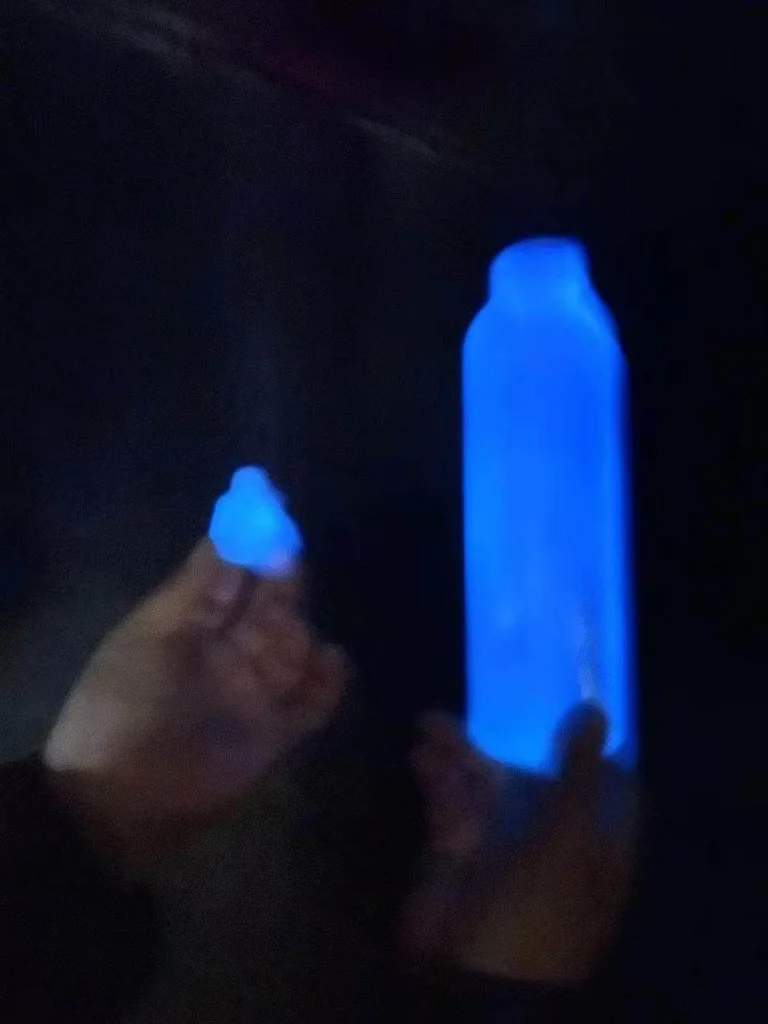
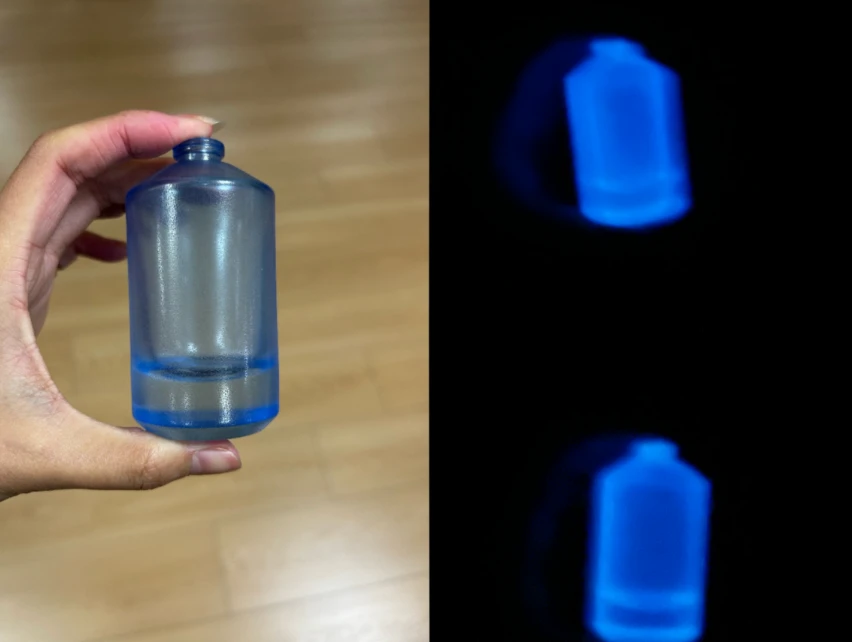
Our initial step involved deep material research. We collaborated closely with advanced pigment manufacturers to source specialized luminous (glow-in-the-dark) powders. For our first trial, we applied the coating to test glass containers.
The early results were humbling. While the jars did emit a glow in the dark, the luminosity was faint, and the surface texture exhibited an undesirable, rough graininess.
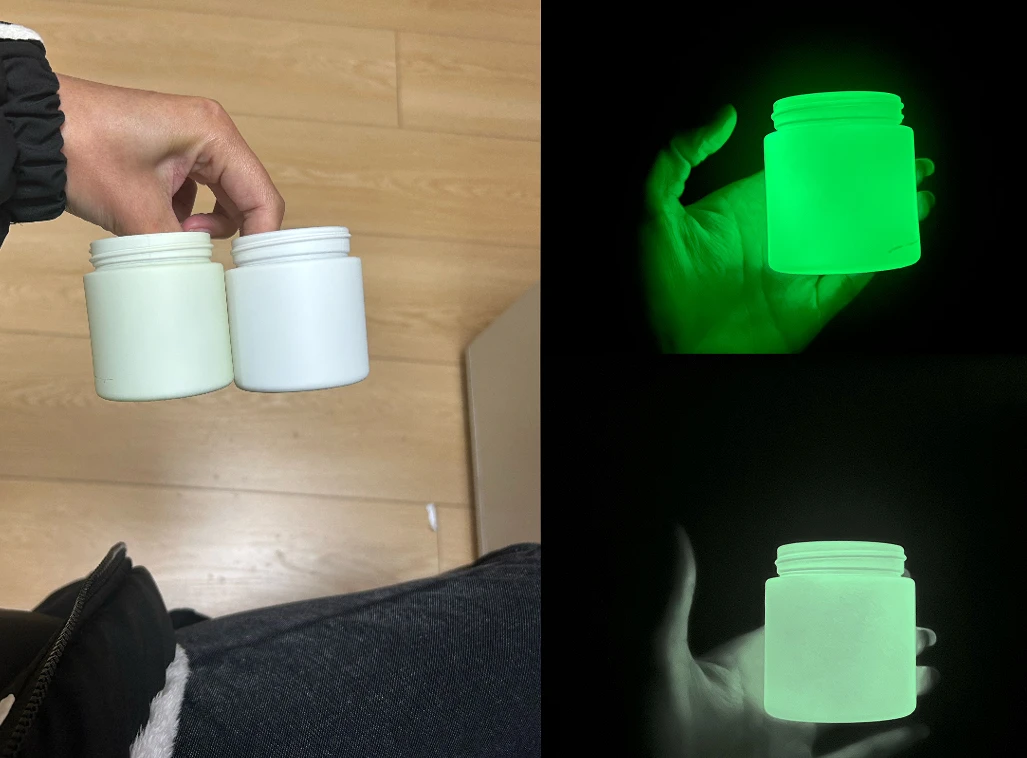
When we presented these initial samples, the client remained enthusiastic but refined their vision: The jars needed to look clean, matte white in daylight, emit a vibrant glow in the dark, and maintain an impeccably smooth surface finish.
Solving the Color Matching Paradox
The core technical hurdle lay in the luminous powder itself, which naturally presented as a pale, translucent green. To achieve a crisp, solid matte white under daylight without dampening the nighttime glow, we had to experiment with precise pigment-to-paint ratios.
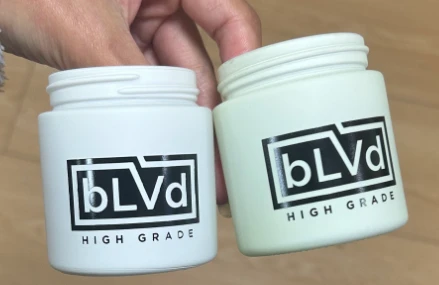
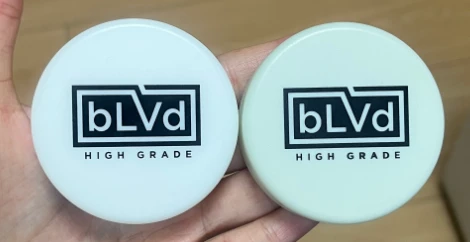
Sample A (Low White Paint Ratio): Preserved the raw luminous color, resulting in an exceptionally bright nighttime glow, but retained a greenish tint in daylight.
Sample B (High White Paint Ratio): Achieved a pristine matte white finish in daylight, but the high density of white pigment partially masked the luminous particles, weakening the nighttime glow.
Through iterative color-matching trials—balancing transparency, daylight aesthetics, and phosphorescent intensity—we successfully dialed in the exact formulations. When we shared both options, the client was blown away by the breakthrough.
Phase 2: Expanding the Scope and Encountering Real-World Engineering Walls
Encouraged by the success of the glass jars, the client expanded the project scope. They requested:
Matching child-resistant (CR) caps featuring the same glow-in-the-dark effect.
Custom silk-screen printed logos on both the caps and the glass bodies.
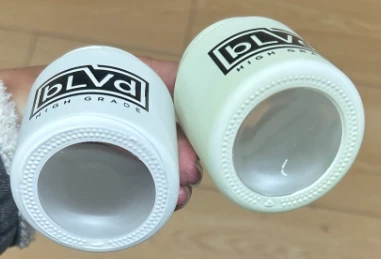
A clear bottom window on the glass jars to allow consumers to inspect the contents.
This expansion introduced complex manufacturing bottlenecks that tested our technical limits:
Challenge 1: Cap Production — Spray Coating vs. Masterbatch Injection
Should the polypropylene (PP) caps be spray-coated like the glass, or should we mix the luminous powder directly into the raw resin during injection molding? Spraying PP material requires entirely different curing dynamics than glass, and during trial runs, the luminous powder suffered from severe sedimentation, leading to an uneven, patchy surface finish. While injection molding provided better uniformity, the fixed ratio of powder mixed into the raw polymer resulted in a slightly lower glow intensity compared to the glass.
Challenge 2: The Triple-Layer Coating & Bottom-Window Conundrum
Achieving the desired finish on the glass jar required a meticulous three-layer coating process:
Base coat for color grounding.
Luminous powder layer for the glow effect.
Matte UV protective topcoat to ensure a silky-smooth tactile finish and seal the phosphorescent layer.
However, the client’s requirement for a bottom window meant we had to mask the bottom of the jar using high-temperature adhesive stickers. Because each of the three coating layers required high-temperature curing, standard stickers warped, melted, or left stubborn adhesive residue after the first bake. Manually re-applying masking stickers three times precisely in the exact same position was labor-intensive, costly, and prone to human error.
Phase 3: Innovation Through Process Engineering
When standard methods hit a wall, we looked at re-engineering our production workflow rather than compromising on the client’s design.
Refining Cap Production via Injection Molding: Since spray-coating the caps presented insurmountable issues with luminous powder sedimentation, we shifted our focus entirely to injection molding. By conducting multiple trials to optimize the ratio of luminous powder blended into the raw PP polymer, we successfully maximized the caps’ glow intensity while ensuring a uniform, flawless finish.
Redefining Glass Coating Lines: Instead of forcing a single line through multiple baking cycles with repeated masking, we synchronized a dual-booth spray system.
Booth 1 applied the base color, followed by a light, low-temperature flash cure.
Booth 2 applied the luminous layer, which underwent the primary high-temperature bake (where the single-use masking sticker naturally released).
For the final matte topcoat, we recalibrated our automated spray nozzles to precisely sweep only the sidewalls, completely avoiding the bottom window.
This breakthrough allowed us to reduce the masking process to a single step, preserve flawless window clarity, eliminate adhesive residue, and guarantee structural coating integrity.
The Final Result: Lighting Up the Market
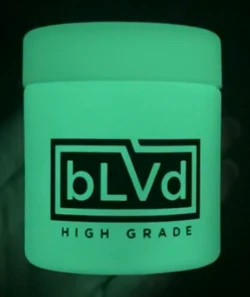
When the final batch of 100,000 custom 3 oz glow-in-the-dark cannabis jars and CR caps arrived at our client’s facility, the response was overwhelmingly positive. The seamless matte finish in daylight transformed into an arresting, vibrant luminescence in dimly lit dispensary environments, perfectly complemented by crisp silk-screened branding.
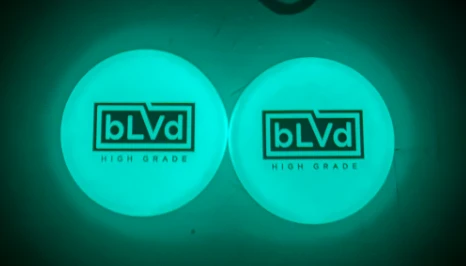
Conclusion: What This Project Teaches Us About Modern Cannabis Packaging
The success of the glow-in-the-dark cannabis jar project highlights a broader truth about the evolving packaging industry: True partnership goes beyond mere manufacturing—it requires relentless problem-solving.
In a saturated market, cannabis brands cannot afford to settle for off-the-shelf uniformity. Innovations like phosphorescent finishes, custom tactile coatings, and intricate multi-component matching (pairing glass bodies with specialized child-resistant closures) come with steep technical barriers.
At our core, we believe that an “impossible” request is simply an invitation to innovate. Whether you are looking to explore unique surface treatments, precise Pantone color matching, or functional structural modifications, our team bridges the gap between creative vision and industrial reality.
Ready to bring your next packaging concept to life? Contact our engineering team today to discuss how we can turn your boldest designs into market-ready packaging.
Do You Operate a Packaging Wholesale Business?
If you are looking to expand your food, cosmetics, candle or home-fragrance packaging range, we can recommend products based on your target market, existing customer base and purchasing plan.
Tell us about your current product categories, target market and estimated order volume. Our team will prepare a targeted packaging proposal for your business.